

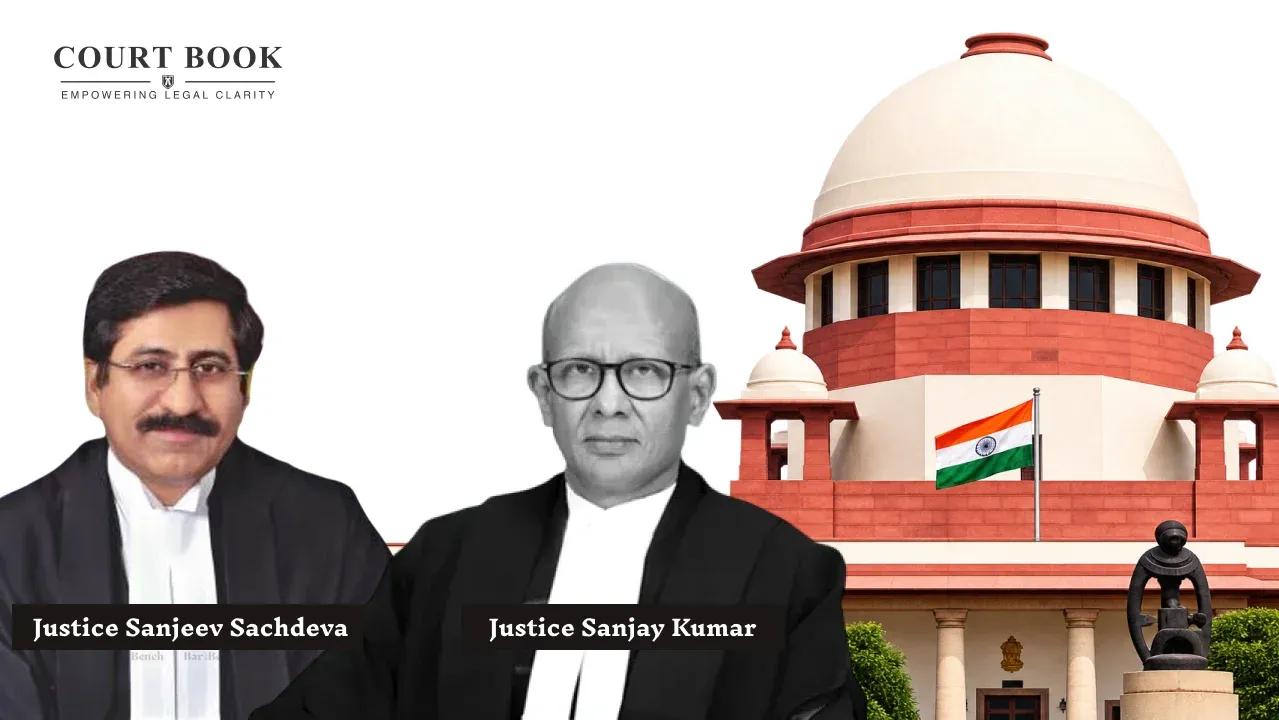
The Supreme Court has ruled that a High Court cannot dictate the terms on which a trial court must grant regular bail after rejecting an accused person's anticipatory bail application. A bench of Justice Sanjay Kumar and Justice Sanjeev Sachdeva held that such directions exceed the High Court's jurisdiction and leave the trial court without the freedom to decide the bail applications independently.
Background
The matter arose from a criminal case registered in Rayagada, Odisha, involving allegations under Sections 120B, 302, 201, 364 and 34 of the Indian Penal Code, 1860.
The complainant, Jagannath Mandangi, challenged the Orissa High Court's order dated January 22, 2026. Although the High Court declined to grant anticipatory bail to the respondents, it directed them to surrender before the trial court and apply for regular bail within two weeks. It further directed the trial court to release them on bail subject to specified conditions.
Following these directions, the Sub-Divisional Judicial Magistrate, Rayagada, granted regular bail to the respondents on January 30, 2026.


The Supreme Court found that the High Court had gone beyond its authority by not only rejecting anticipatory bail but also prescribing the subsequent course of action and the conditions for regular bail.
The bench observed:
"Once the High Court came to the conclusion that no case was made out for grant of anticipatory bail, it was not for the High Court to direct as to how the future should unfold."
The Court emphasised that the trial court must independently examine regular bail applications on their merits and in accordance with the law. The High Court's directions effectively deprived the trial court of that discretion.
It further observed:
"The positive directions of the High Court, apart from being in excess of the jurisdiction that it was exercising under Section 438 of the Code of Criminal Procedure, 1973, completely usurped the role to be played by the trial Court."
The Supreme Court partly set aside the Orissa High Court's order dated January 22, 2026. It upheld the rejection of anticipatory bail but quashed the directions concerning regular bail and the conditions imposed on the respondents.
Consequently, the trial court's January 30, 2026, bail order was also set aside. The respondents were directed to surrender within two weeks, and their bail bonds and sureties would stand discharged upon surrender.
The Court clarified that the respondents remained free to seek appropriate relief before the competent forum in accordance with law.