

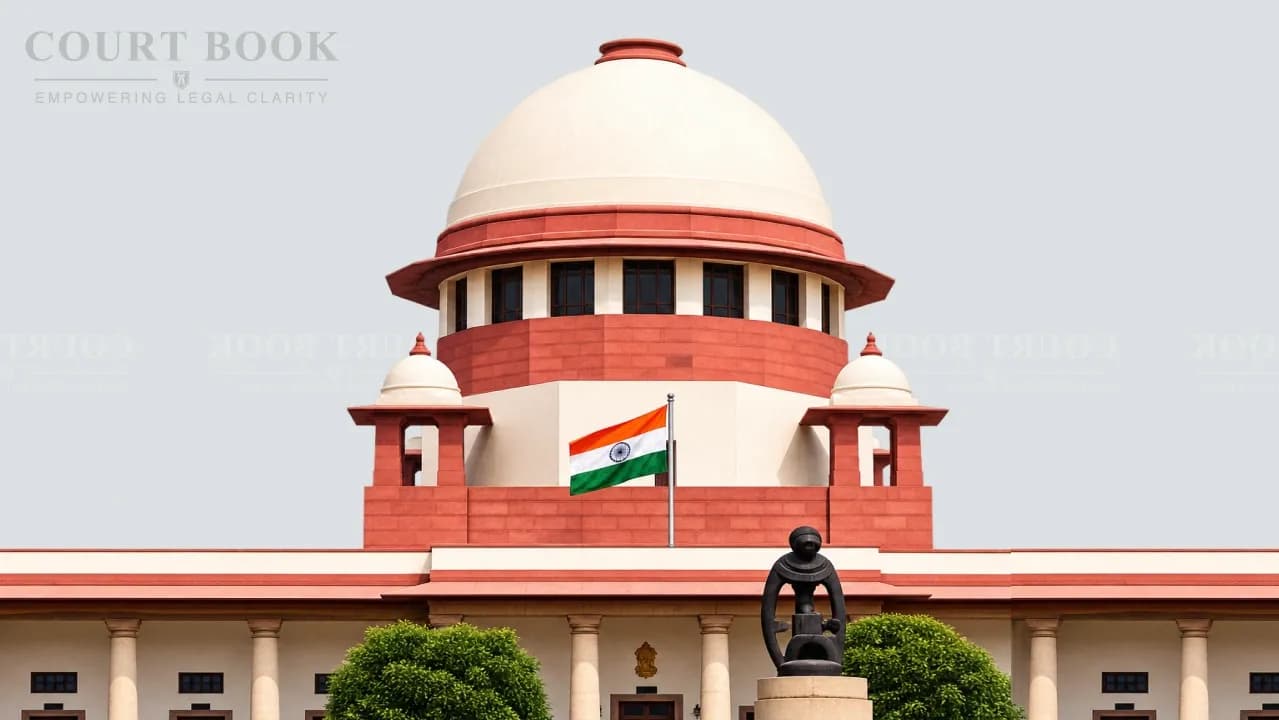
The Supreme Court has dismissed the Central government’s appeal against a Delhi High Court ruling that allowed enforcement of foreign arbitral awards involving Vedanta Limited and Ravva Oil (Singapore) Pte Limited. The Bench of Justice J.B. Pardiwala and Justice Manmohan found no legal defect in the High Court’s decision that warranted its intervention.
During the hearing, the judges raised concerns about the government’s continued challenge to awards that had emerged from a contractual dispute spanning several years. The proceedings also brought renewed attention to the difficulties parties can face when seeking enforcement of arbitration decisions.
The dispute traces back to a production sharing contract signed in 1994 between the Central government and a consortium of companies for developing the Ravva oil field in the Krishna-Godavari Basin.
Differences over the interpretation of the agreement led to arbitration proceedings in Kuala Lumpur. In October 2004, the tribunal issued a partial award, leaving the calculation of the amounts payable for later determination. The Malaysian Federal Court upheld that award in 2011.


The matter continued after the government issued show-cause notices in July 2014 seeking recovery of approximately $99 million from the companies. A reconstituted arbitral tribunal subsequently delivered its final award in October 2016.
The Centre opposed enforcement on several grounds, including limitation, public policy and the contention that the tribunal no longer had the authority to continue deciding the dispute.
On July 1, 2026, the Delhi High Court rejected the Centre’s objections. Justice Jasmeet Singh held that the enforcement petition had been filed within the applicable limitation period and that the tribunal retained authority to determine the amounts payable. The court also directed the release of bank guarantees.
Before the Supreme Court, the government challenged the High Court’s findings. The Bench questioned why enforcement remained contested after such a lengthy legal process and expressed concern about the implications for India's arbitration framework.
The judges also highlighted the contradiction between promoting arbitration as an effective means of resolving disputes and the prolonged litigation that can follow when a successful party seeks to enforce an award.
The Bench further considered the circumstances surrounding the tribunal’s reconstitution after the government issued notices seeking recovery from the companies.
After considering the challenge, the Supreme Court concluded that the Delhi High Court had committed no error of law or other material error justifying interference.
The dismissal leaves the High Court’s ruling in place, including its directions permitting enforcement of the arbitral awards involving Vedanta Limited and Ravva Oil (Singapore) Pte Limited.



