

The Calcutta High Court has halted a demolition and eviction drive launched by the Syama Prasad Mookherjee Port (formerly Kolkata Port Trust) against residents of the Calcutta Dock Labour Board (CDLB) and Calcutta Port Trust (CPT) quarters at Brooke Lane, Garden Reach, Kolkata. The Division Bench held that authorities could not bypass the procedure laid down under the Public Premises (Eviction of Unauthorised Occupants) Act, 1971, merely because they believed the occupants were unauthorized.
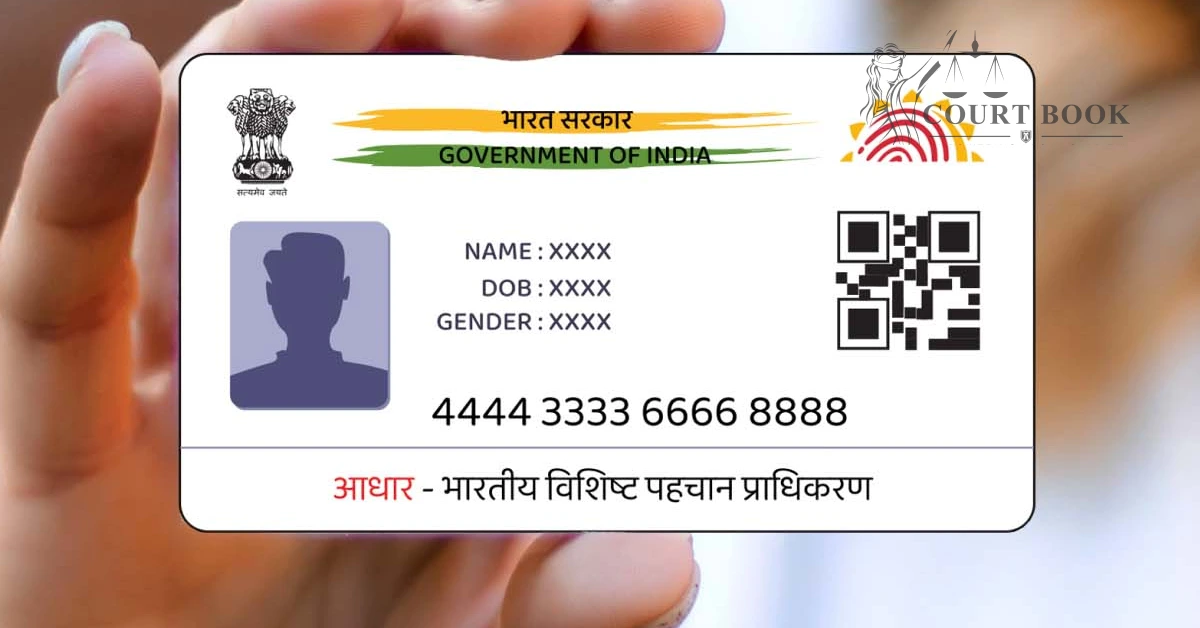
The court also observed that while an Aadhaar card is not conclusive proof of residence, it can serve as prima facie (initial) evidence of occupation for starting proceedings under the 1971 Act.
Background of the Case
The appeal arose after a Single Judge dismissed a writ petition filed by Md. Idrish and Others, who challenged the proposed demolition of the residential quarters where they claimed to be living. The petitioners argued that they had been occupying the premises and that the Port authorities initiated demolition without issuing notices or following the statutory process required under the Public Premises Act.
To establish their occupation, the residents relied on documents including Aadhaar cards, voter identity cards and gas supply bills. The Port authorities, however, contended that these documents did not conclusively prove occupation and maintained that the buildings were in a dangerous condition requiring immediate demolition.
Court's Observation
The Division Bench of Justice Sabyasachi Bhattacharyya and Justice Supratim Bhattacharya disagreed with the approach adopted by the Single Judge.
The Bench clarified that the issue before the court was not whether the residents had conclusively proved their legal right to remain in the premises, but whether they had produced sufficient material to show prima facie occupation so that the statutory procedure under the Public Premises Act became applicable.
The court observed:
"Even if an Aadhaar Card is not conclusive proof of residence, it is definitely a prima facie proof of occupation in respect of a property."
According to the Bench, documents such as Aadhaar cards, voter identity cards and gas connection bills are recognized under the Aadhaar enrolment framework as valid proof of address. At the initial stage of proceedings, these documents are sufficient to trigger the safeguards provided under Sections 4 and 5 of the Public Premises Act.
Eviction Procedure Cannot Be Ignored
The High Court emphasized that before treating anyone as an unauthorized occupant, the Estate Officer must issue a notice, allow the person to file objections, produce evidence and seek a personal hearing. Only after considering these materials can an eviction order be passed with recorded reasons.
"The Bench observed, 'Several layers of protection have been given to an unauthorised occupant under Sections 4 and 5 of the 1971 Act.'"
The judges found that none of these statutory safeguards had been followed before the demolition drive was initiated.
No Power to Demolish Existing Residential Buildings
The court further held that the provisions relating to demolition under the Public Premises Act apply only to unauthorized constructions and not to existing structures owned by public authorities but occupied by alleged unauthorized occupants.
It also rejected the Port's argument that the buildings could be demolished because they were old and unsafe. The Bench noted that such action, if permissible, must be taken by the competent municipal authority under the relevant municipal law and not by the Port authorities under the 1971 Act.
The judges additionally noted that the Port's own records described the premises as residential quarters housing thousands of residents, contradicting its claim that the properties were vacant or abandoned. No individual statutory notices had been produced before the court.
Court's Decision
Allowing the appeal, the Calcutta High Court set aside the earlier judgment and restrained the Port authorities from carrying out any demolition or eviction of the CDLB and CPT residential quarters at Brooke Lane, Garden Reach, Kolkata.
However, the court clarified that the authorities remain free to initiate fresh proceedings under Sections 4 and 5 of the Public Premises (Eviction of Unauthorised Occupants) Act, 1971, in accordance with law.
Case Details
Case Title: Md. Idrish and Others v. Union of India and Others
Case Number: M.A.T. No. 1072 of 2026 (Arising out of W.P.A. No. 12272 of 2026)
Judge: Justice Sabyasachi Bhattacharyya and Justice Supratim Bhattacharya
Decision Date: 21 July 2026


