

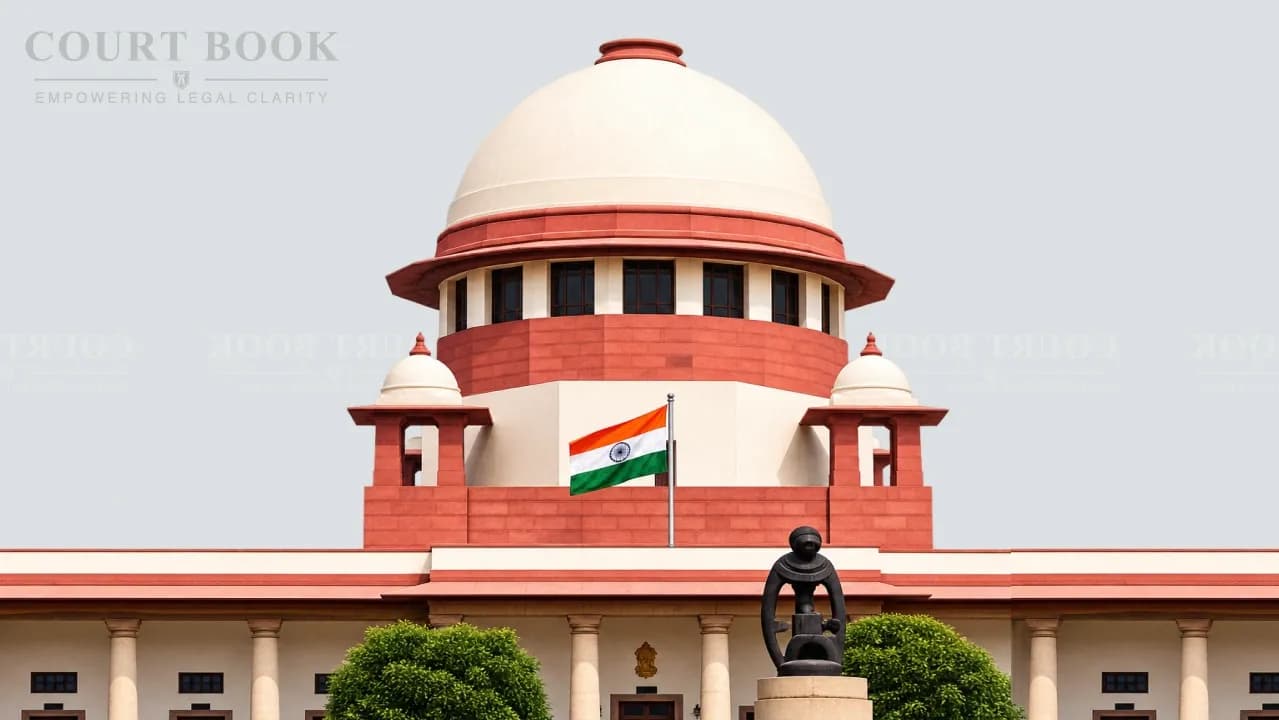
The Supreme Court held that procedural hurdles like obtaining administrative approvals, changing lawyers, and collecting certified court copies must be evaluated together rather than in isolation when deciding whether to excuse a filing delay. A bench of Justice Vikram Nath and Justice Aparesh Kumar Singh condoned a 95-day delay by the Delhi Development Authority (DDA) in approaching the top consumer commission, sending a long-running Narela flat allotment dispute back for a full hearing on its merits.
Background
The dispute goes back nearly three decades to 1996, when the late Bachhi Devi applied for a home under DDA’s Expandable Housing Scheme and was allotted a flat in Narela in March 1997. While DDA maintained it sent payment demand letters in January 2000, the allottee denied ever receiving them, eventually leading to the cancellation of her flat in October 2003.
In 2015, a district consumer forum dismissed her complaint against the cancellation, but the Delhi State Consumer Commission overturned that ruling in April 2021 and ordered DDA to provide an alternative flat at old rates. DDA challenged this before the National Consumer Disputes Redressal Commission (NCDRC) in December 2022. After accounting for the Supreme Court’s COVID-19 limitation extensions, 95 days of delay remained unexplained to the satisfaction of the NCDRC, which dismissed the petition in June 2024. The Delhi High Court upheld that dismissal in October 2024, prompting DDA to approach the Supreme Court.
Examining the record, the Supreme Court observed that the length of a delay is less important than whether the explanation offered is acceptable and serves substantial justice. The judges pointed out that because the district forum and state commission had reached opposite conclusions, the dispute deserved to be tested on its actual facts rather than thrown out on technicalities.


"It is true that DDA ought to have acted with greater diligence and that change of counsel or internal administrative procedures cannot, by themselves, justify every delay. Nevertheless, these circumstances must be considered cumulatively rather than in isolation. The explanation furnished discloses the steps undertaken in pursuing the remedy, and there is nothing on record to suggest that the delay was deliberate or intended to secure any undue advantage."
Faulting both the consumer commission and the High Court for taking an overly strict view, the bench noted that shutting down a case at the threshold harms the broader cause of fairness.
"While we do not approve of the lack of diligence exhibited by DDA, we are of the view that the interests of justice would be better served by permitting the revision petition to be considered on merits rather than terminating the proceedings at the threshold."
Allowing DDA's appeal, the Supreme Court set aside both the October 2024 Delhi High Court judgment and the June 2024 NCDRC order. The bench condoned the filing delay and restored DDA's revision petition before the NCDRC to be heard and decided on its merits after hearing both sides, clarifying that it had not expressed any opinion on who was right in the underlying flat dispute.



