

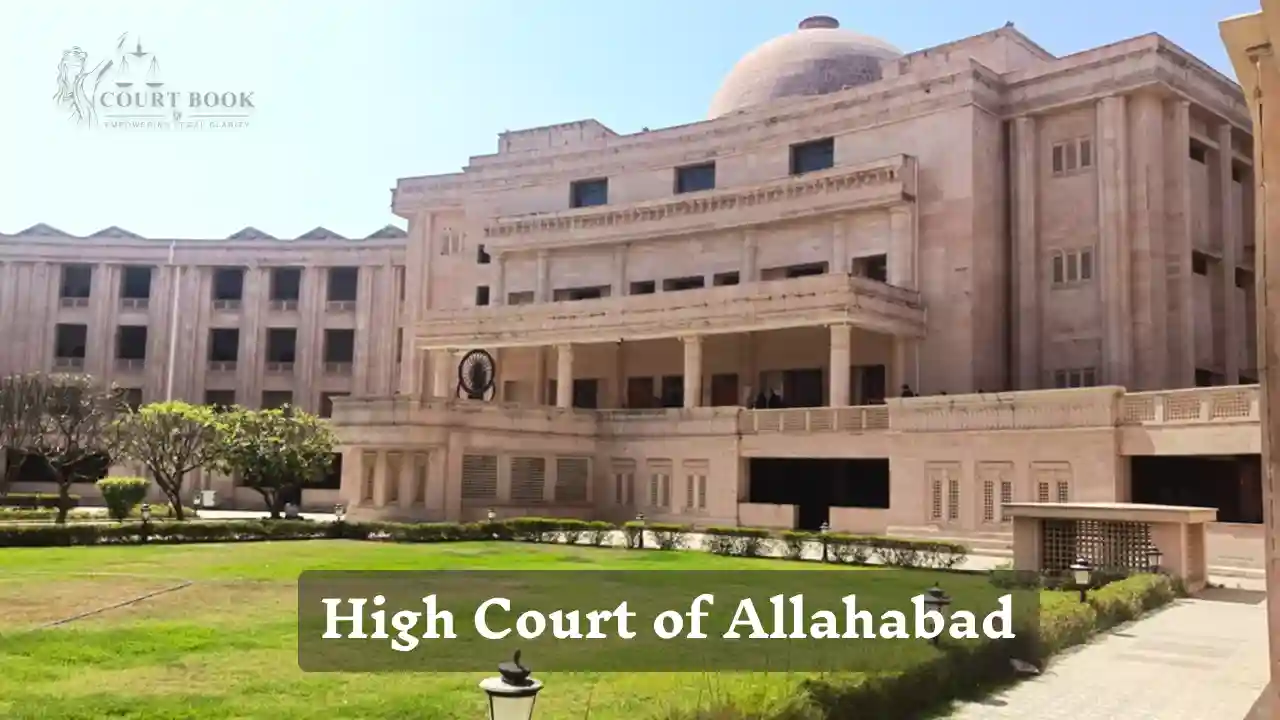
The Allahabad High Court, in its October 6, 2026 order, directed the Lucknow Marriage Officer to process an interfaith couple’s marriage under the Special Marriage Act, 1954, without publishing the marriage notice or inviting objections, while allowing verification of their identity, age and valid consent.
The petition was filed by two adults who had been living together for around two years and had a child born on December 5, 2025, at Safdarjung Hospital, New Delhi. Since they belong to different religions, they intended to solemnise their marriage under the Special Marriage Act, 1954.
The petitioners told the court that they feared for their safety because their parents and relatives opposed their relationship. An FIR was registered on June 26, 2025, at the PGI Police Station in Lucknow on a complaint by the mother of petitioner No. 1 under Section 140(1) of the Bharatiya Nyaya Sanhita, 2023. The petitioners also submitted that they had been moving between residences because of concerns for their safety.
The petitioners approached the Allahabad High Court seeking directions to the authorities to accept and process their marriage application under the Special Marriage Act, 1954, on the basis of their permanent address mentioned on their Aadhaar cards. They also requested permission to solemnise and register their marriage without publishing the notice of intended marriage or inviting objections under Sections 6 and 7 of the Act, citing concerns for their safety.
A division bench comprising Justice Shekhar B. Saraf and Justice Amitabh Kumar Rai examined the statutory procedure for marriages under the 1954 Act. The court noted that Section 5 permits notice to be given to the Marriage Officer of a district where either party has resided for at least 30 days immediately before submitting it.
Considering the couple’s circumstances and their stated apprehension of danger, the bench referred to an earlier Allahabad High Court ruling concerning the publication of marriage notices and objections under Sections 6 and 7.
The court reiterated the constitutional protection afforded to an adult’s choice of partner, irrespective of religion. It observed:
“Right to live with a person of his/her choice, irrespective of religion professed by individuals is intrinsic to right to life and personal liberty. Decision of individuals who are of majority age to live together and solemnize marriage is right to freedom of choice, to choose a partner and live with dignity which is a fundamental right enshrined in Article 21 of Constitution of India.”
The bench also referred to the Supreme Court’s decision in Shafin Jahan v. Asokan K. M. and Others (2018) 16 SCC 368, which recognised an adult’s right to choose a life partner and held that the right to marry a person of one’s choice is integral to Article 21 of the Constitution.
The High Court directed the couple to submit their intended marriage notice to the Lucknow Marriage Officer within ten days of the order. It dispensed with publication of the notice and the invitation or consideration of objections in this case. The officer may verify the couple’s identity, age and valid consent before solemnising the marriage and issuing the certificate in accordance with law.
The court also directed the Commissioner of Police, Lucknow, to provide protection and necessary assistance during the relevant period and after the marriage, based on an assessment of the threat perception. The writ petition was disposed of accordingly.
Case Title: 'X' and Another v. State of U.P. through Principal Secretary, Home, Lucknow and 3 Others
Case Number: Writ-C No. 9850 of 2026


