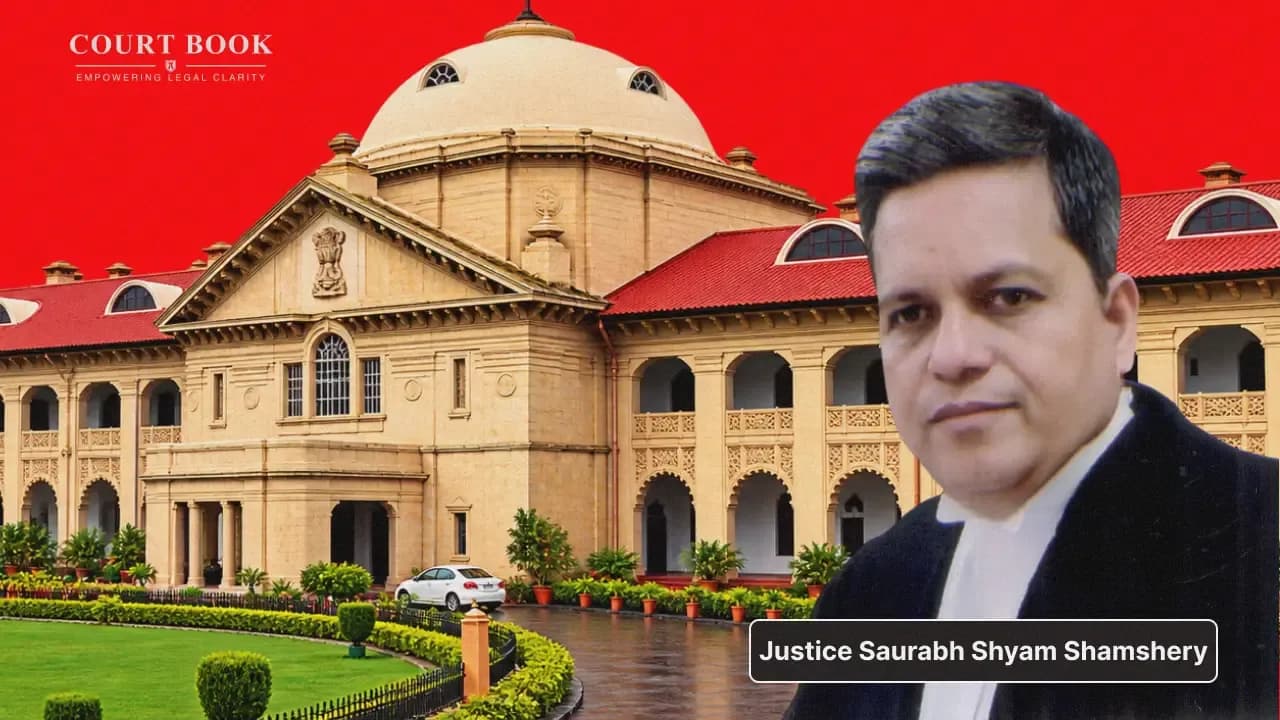
The Allahabad High Court has set aside a Labour Commissioner’s order directing Bharat Heavy Electricals Limited (BHEL), Jhansi, to pay 265 contract workers the same wages and allowances as regular unskilled employees. Justice Saurabh Shyam Shamshery directed the Labour Commissioner to reconsider the matter and pass a fresh order within six months, applying the legal tests governing equal pay for equal work.
BHEL challenged the Labour Commissioner’s January 5, 2005, order, which granted pay parity to 265 contractual workers. The workers, represented by the BHEL Contract Workers Union, argued that they had worked for years through contractors and performed duties similar to those of regular employees.
The Labour Commissioner had relied on duty rosters, logbooks, wage slips, gate passes and other records to conclude that the workers were performing comparable duties. BHEL disputed the decision, arguing that the evidence did not establish the level of similarity required under the law.
The High Court examined the Supreme Court’s rulings on equal pay for equal work and observed that performing similar functions alone does not automatically establish a right to equal wages. The workers must demonstrate parity in the nature, quality and responsibilities of their work.
The High Court referred to the Supreme Court’s ruling in State of Punjab v. Jagjit Singh, which states: “The ‘onus of proof’ of parity in the duties and responsibilities of the subject post with the reference post under the principle of ‘equal pay for equal work’ lies on the person who claims it.”
The Court found that the Labour Commissioner had not adequately explained how the documents established equality between contractual and regular employees. The comparative material largely listed workers, their designations, departments and assigned work without demonstrating that their duties were equivalent in the legally relevant respects.
“I have perused the documents and of the view” would not be sufficient since there must be specific consideration and reasons to come to a conclusion that it was a case of equal pay for equal work.
Concluding that the Labour Commissioner had not undertaken the required assessment, the High Court set aside the January 5, 2005, order and remitted the matter for fresh consideration. It directed that a fresh order be passed within six months of the certified copy of the judgment being placed before the authority. The writ petition was disposed of accordingly.
Case Title: Bharat Heavy Electricals Limited Through Executive Director v. State of U.P. Through Secretary, Ministry of Labour and Others
Case Number: Writ-C No. 22701 of 2005