

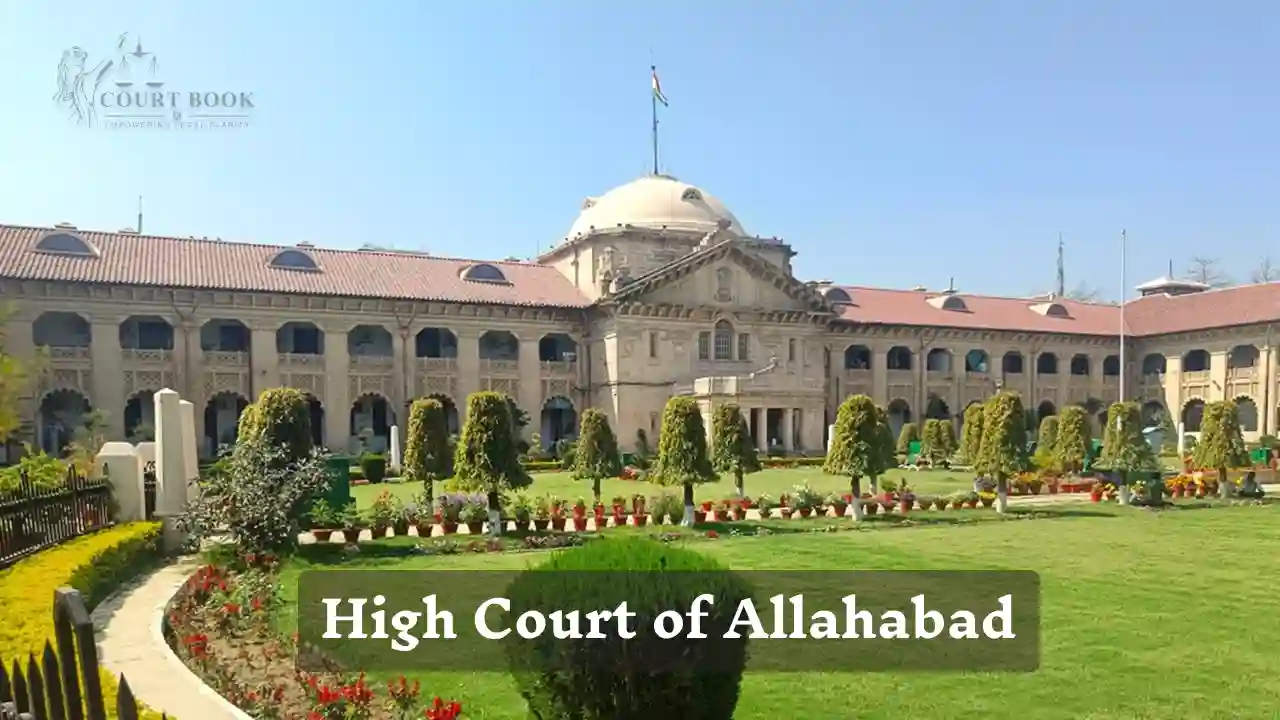
The Allahabad High Court has asked the Law Commission of India to examine the Protection of Children from Sexual Offences (POCSO) Act, 2012, and recommend amendments that account for India's social realities. The Court suggested giving Special Judges greater discretion in exceptional cases to determine appropriate punishment, including considering alternatives such as community service.
A Bench of Justice Atul Sreedharan and Justice Achal Sachdev made the observations while allowing a habeas corpus petition concerning a woman whose age was disputed by her family.
Background
The petition was filed by a man seeking the production of his wife, who had been placed in a children's home after being recovered in connection with a pending POCSO case. The petitioner was the accused in that case, while the woman was the survivor.
According to the petitioners, the couple had eloped and subsequently claimed to be married. The woman's father opposed the plea, maintaining that his daughter was a minor and that the couple also fell within a prohibited sapinda relationship.
The Court was informed that the woman had given birth to a child who was more than two months old. The Bench also examined her educational background and the family's financial circumstances, noting that she had studied only up to Class V and could not read a Hindi newspaper.
The Bench observed that poverty, illiteracy and limited awareness of legal consequences could contribute to situations in which the strict application of the law had serious implications for families. However, it made clear that a lack of legal awareness could not justify violating the law.
The Court observed:
"Undoubtedly, ignorance of law is no excuse. However, if this principle is applied in a purely pedantic manner, the implementation of the POCSO Act may, in certain factual situations, result in consequences which may appear to advance injustice rather than justice."
The judges questioned why the woman had not continued her education and expressed concern about the quality of education available to children. They said the State should ensure that minors remain engaged in education and receive opportunities to develop vocational skills.
The Bench asked the Law Commission to consider amendments that would allow Special Judges to account for exceptional circumstances while deciding punishment. It also suggested examining community service as an alternative form of punishment in appropriate cases.
On the question of age, the Court noted that the record did not contain a school-issued date-of-birth certificate or a birth certificate from the relevant civic authority. An ossification test had assessed the woman's age at approximately 18 years.
Relying on the material before it, the Bench held that she was a major and had expressed her wish to live with her husband. It therefore allowed the habeas corpus petition and permitted her to leave the Court premises with him.
The Court clarified that its factual observations in the habeas corpus proceedings would not influence the pending POCSO trial, which must be decided independently on the evidence recorded in that case.
A copy of the order was directed to be sent to the Law Commission.
Case Details
- Case Title: R.K. and Another v. State of U.P. and 4 Others
- Case Number: Habeas Corpus Writ Petition No. 987 of 2026
- Judges: Justice Atul Sreedharan and Justice Achal Sachdev
- Decision Date: October 5, 2026


