

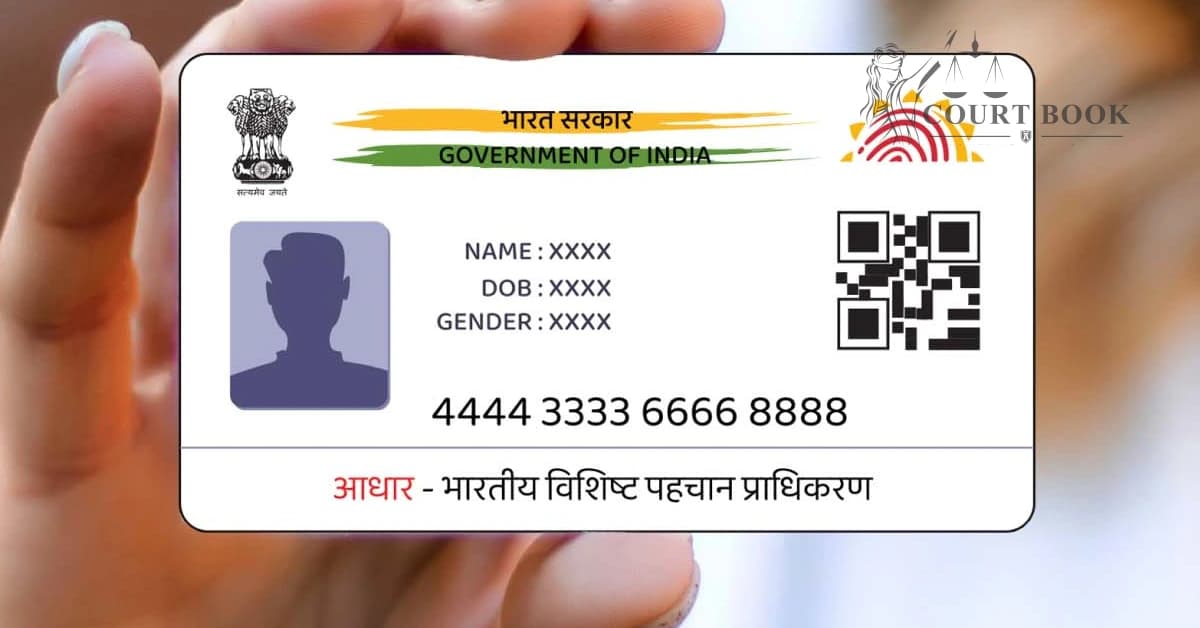
The Andhra Pradesh High Court has held that the age mentioned in an Aadhaar card cannot be treated as conclusive proof while calculating motor accident compensation. The Court revised the deceased man's age from 48 to 45 years and enhanced the compensation payable to his family from ₹7.33 lakh to ₹11.27 lakh.
Background
The case arose from a fatal road accident on November 4, 2014, when S. Sudhakar Reddy was riding his TVS-50 motorcycle on the Chittoor–Vellore Road. A Tavera car allegedly driven negligently hit his motorcycle near Gudipala Cross Road. He succumbed to his injuries shortly afterwards.
His wife and two children approached the Motor Accidents Claims Tribunal, Chittoor, seeking compensation. The Tribunal awarded ₹7,33,400. Dissatisfied with the amount, the family approached the High Court seeking enhancement. The insurance company also filed a separate appeal challenging the compensation award.
The principal issue before the High Court concerned the deceased's age. The Tribunal had considered him to be 48 years old based on his Aadhaar card. However, the claimants relied on the postmortem certificate and other relevant records, which indicated that he was 45.


Justice Tuhin Kumar Gedela rejected the insurance company's argument that the Aadhaar entry should be treated as conclusive.
The Court observed:
"This Court finds it difficult to accept the said contention since it is settled law that the date of birth in the Aadhaar card is not conclusive and cannot be taken into consideration. This Court is of the opinion that the age of the deceased should be taken as 45 years and not 48 years."
The Court consequently applied a multiplier of 14 instead of the multiplier used by the Tribunal.
The Court also examined the deceased's monthly income. The family claimed that he earned ₹15,000 from painting work and ₹25,000 from agricultural activities, making his total monthly income ₹40,000. However, the Tribunal had assessed his income at only ₹4,500 because the claimants could not produce reliable documentary evidence.
Justice Gedela observed that workers in the unorganised sector cannot always be expected to maintain documents proving their earnings. Referring to the Supreme Court's decision in Syed Sadiq v. Divisional Manager, United India Insurance Company Limited, the Court considered the practical difficulties faced by self-employed workers and labourers.
The Supreme Court had observed:
"It is difficult for us to convince ourselves as to how a labour involved in an unorganized sector doing his own business is expected to produce documents to prove his monthly income."
Following this principle, the High Court considered ₹6,500 per month to be a reasonable assessment instead of ₹4,500.
The Court calculated the compensation by adding 30% towards future prospects, deducting one-third towards the deceased's personal and living expenses, and applying a multiplier of 14. The resulting loss of dependency was ₹9,46,400.
The Court also recalculated the amounts payable under other compensation heads. After applying the prescribed periodic enhancement, it assessed consortium at ₹1,45,200 and combined funeral expenses and loss of estate at ₹36,300.
The total compensation was consequently revised to ₹11,27,900.
Allowing the claimants' appeal partly, the Andhra Pradesh High Court enhanced the compensation from ₹7,33,400 to ₹11,27,900, carrying interest at 7.5% per annum.
The Court directed the driver and Cholamandalam MS General Insurance Company Limited to deposit the enhanced amount before the Tribunal within eight weeks of receiving a copy of the judgment, after adjusting any amount already deposited. The claimants were permitted to withdraw their respective shares.
The insurance company's appeal challenging the compensation award was dismissed. There was no order as to costs.



