

The Supreme Court has restored an interim injunction granted by a Delhi High Court Single Judge in a long-running family property dispute, holding that an appellate court cannot ordinarily replace the trial judge’s discretion merely because it may reach a different view on the same material.
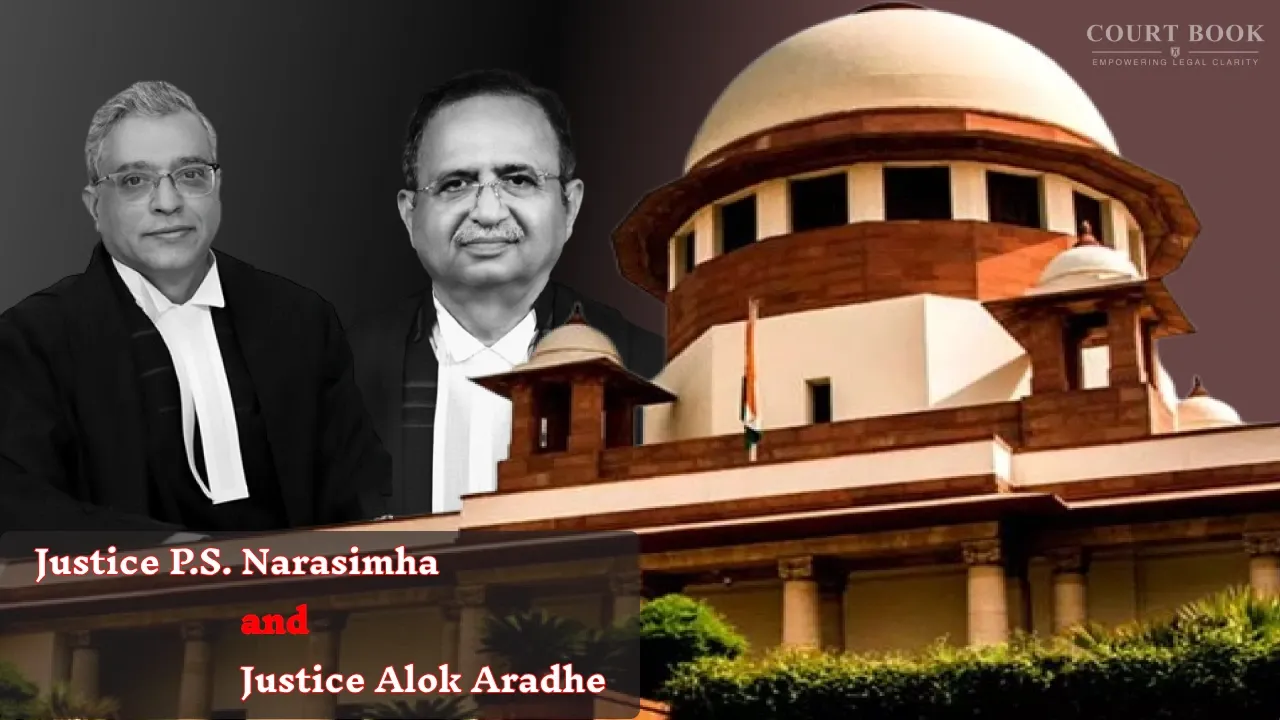
A Bench of Justice Pamidighantam Sri Narasimha and Justice Alok Aradhe delivered the judgment on August 12, 2026. The Court also cautioned courts against conducting a “mini-trial” while deciding applications for temporary injunctions.
Background of the Case
The dispute arose from the estate of Devinder Singh Chaudhary, who had established several companies, partnerships and trusts holding family assets. After his death in 2009, questions arose over the Will governing his estate. One Will was dated March 26, 2004, while another Will dated October 4, 2008 was subsequently propounded, with probate proceedings pending.
The original plaintiff, Sita Chaudhry, later executed several gift deeds and LLP transfer agreements between December 2018 and June 2019. These transactions involved substantial shareholdings and LLP interests. The dispute also concerned properties and funds allegedly connected with these transfers.
In 2021, she instituted a suit alleging that certain family members had procured the transfers by taking advantage of her age and circumstances. She sought cancellation of the transfers, restoration of shareholding and LLP interests, and protection against further alienation of the disputed properties.
Delhi High Court Proceedings
The Single Judge initially ordered the parties to maintain status quo. On July 29, 2022, the judge found that a prima facie case existed and that the balance of convenience favoured preservation of the disputed assets. The order restrained creation of third-party interests in specified properties and restricted further transfers by the concerned defendants.
The defendants challenged the order before a Division Bench. On March 20, 2026, the Division Bench reversed the injunction, holding, among other things, that questions concerning the Will, the plaintiff’s conduct, the Companies Act and the connection between disputed transfers and certain properties required closer examination.
Supreme Court’s Observation
The Supreme Court disagreed with the approach adopted by the Division Bench. It reiterated that a prima facie case at the interim stage does not require proof of title. It is enough if there is a serious question requiring investigation at trial.
The Bench observed that the competing claims concerning the 2004 Will, the later Will, the alleged undue influence and the disputed transfers were matters requiring evidence. The Court said these issues could not properly be determined at the interlocutory stage.
Importantly, the Court stressed that an interim injunction is meant to preserve the subject matter of litigation.
“An interlocutory injunction decides nothing; it is a holding operation,” the Bench observed, explaining that the purpose is to ensure that the final proceedings do not become meaningless because the disputed property or rights have already been transferred.
The Court also found that all three requirements for interim protection - prima facie case, balance of convenience and irreparable injury - were present. It held that allowing further alienation of the disputed shareholding and properties could create third-party rights that a later decree might not be able to undo.
Court Warns Against “Mini-Trial”
The Bench criticised the practice of examining rival documents and deciding difficult questions of title, undue influence or fraud at the interim stage. It said such an approach effectively turns interlocutory proceedings into a “mini-trial”.
According to the Court, both the trial court and an appellate court reviewing an injunction must remain focused on whether a serious dispute exists and whether interim protection is necessary. The final merits should be left for determination after evidence is led at trial.
Decision
The Supreme Court allowed the appeals and set aside the Delhi High Court Division Bench’s March 20, 2026 judgment. It restored the Single Judge’s July 29, 2022 interim injunction, which will remain in force until further orders in the suit.
The Court clarified that its judgment does not decide the validity or interpretation of either Will, the plea of undue influence or fraud, the applicability of the relevant statutory provisions, or the claim concerning self-acquired properties.
Those issues were left for the trial court to decide on evidence. The Single Judge was directed to dispose of the suit, preferably within eight months.
There was no order as to costs.
Case Details
Case Title: Shruti Manav Sharma & Anr. v. Sunanina Singh & Ors.
Case Number: Civil Appeal Nos. of 2026 (@ SLP (C) Nos. 12592–12597 of 2026)
Judge: Justice Pamidighantam Sri Narasimha and Justice Alok Aradhe
Decision Date: August 12, 2026


