
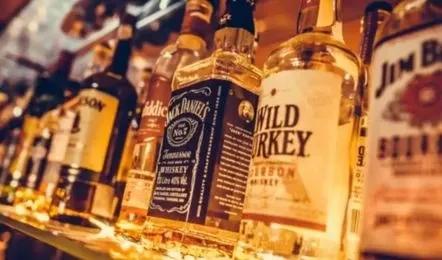
The Calcutta High Court has directed the West Bengal Government to allow temporary liquor shop licensees to resume operations for the remaining period of their six-month licences, after finding that their businesses had been kept suspended beyond the 2019 General Election without sufficient justification. The Division Bench of Justice Arijit Banerjee and Justice Apurba Sinha Ray held that although the State has the authority to regulate liquor licences, such powers must be exercised fairly, reasonably and with valid reasons.
Background
The appeals arose from disputes involving temporary liquor licences granted under the West Bengal Excise Rules, 2003. The licensees had obtained six-month licences after fulfilling the prescribed requirements and paying the necessary fees.
However, on March 2, 2019, the Excise Commissioner ordered the suspension of these liquor shops in connection with the General Election. Even after the election concluded on May 23, 2019, the suspension continued.
On August 22, 2019, the suspension order was withdrawn, but the licensees were not permitted to resume their businesses for the remaining licence period. Subsequently, notifications dated December 27, 2019, discontinued the relevant licence category.


The affected licensees challenged these actions, arguing that they had made substantial investments and were deprived of their licensed business without any allegation of default on their part.
The Division Bench examined whether the State could indefinitely suspend temporary licences without explaining the reasons behind its decision. It also considered the statutory powers available under the Bengal Excise Act, 1909.
The Court noted that the licences had been granted by the District Collector, while the suspension order was issued by the Excise Commissioner. It further observed that the suspension order did not specify the legal provision under which it had been issued.
The Bench emphasised:
"It is true that the State has the absolute right to cancel or suspend temporary licenses, but after granting a temporary license, if the State chooses to suspend it for an indefinite period, the State is under an obligation to disclose the reasons for such action."
The Court also highlighted that the State could not justify its prolonged suspension merely by arguing that the six-month licence period had expired.
It observed:
"In our view, although the appellants do not have any fundamental right in running a liquor shop, the privilege or legal right granted to them cannot be withdrawn without assigning any conscionable reason."
Allowing the appeals, the Division Bench directed the West Bengal Government to permit the appellants to resume their businesses from December 15, 2026, until completion of the remaining portion of their original six-month licence period. The permission was granted to enable them to clear the stock accumulated in their respective shops.
The Court also granted liberty to the appellants to submit fresh applications under Rule 9(1)-F of the West Bengal Excise Rules, 2003. The authorities were directed to decide such applications within three months.
Further, pending representations were directed to be decided within three months, and Notifications dated December 27, 2019, were ordered to remain in abeyance, only for the limited purpose of allowing the appellants to complete their remaining licence period.
Accordingly, all three appeals were disposed of without any order as to costs.