The Karnataka High Court has ruled that the biological father of a monk who had renounced worldly life and become the head of a religious institution cannot claim enhanced compensation under the Motor Vehicles Act solely on the basis of their biological relationship. The Court held that once a person completely severs ties with the family and embraces ascetic life, the religious institution represented by that person may become the appropriate legal representative for compensation purposes.
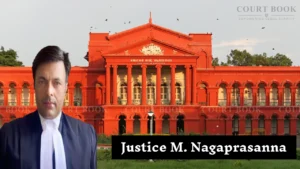
Justice Geetha K.B. delivered the judgment while dismissing an appeal seeking enhancement of compensation awarded by the Motor Accident Claims Tribunal.
Background of the Case
The appeal arose from a fatal road accident that occurred on December 12, 2009. Harinathji Maharaj, who had become the head of Kirawala Math after embracing ascetic life, was travelling on a Bajaj M-80 motorcycle when a truck allegedly hit his vehicle. He sustained fatal injuries in the accident. His biological father, Gurupeer Harinathji, later filed a compensation claim under the Motor Vehicles Act.
The Motor Accident Claims Tribunal had accepted the accident claim only to a limited extent and awarded ₹50,000 as compensation under the head of "loss of estate." It declined to grant compensation towards loss of dependency or other conventional heads, holding that the claimant was not a dependent of the deceased. Dissatisfied with the award, the father approached the High Court seeking enhancement.
Court's Observations
Before the High Court, the appellant argued that being the biological father, he qualified as the deceased's legal representative and was therefore entitled to compensation under all applicable heads. The insurance company opposed the appeal, contending that the deceased had renounced worldly life long before the accident, became a sanyasi and the head of a Math, thereby severing his legal and social ties with his biological family.
After examining the provisions of the Motor Vehicles Act and earlier judicial precedents, the Court observed that the expression "legal representative" is not specifically defined under the Act and must be interpreted based on the facts of each case.
Referring to a recent Division Bench ruling on a similar issue, the Court noted that compensation law should be interpreted broadly. However, it emphasized that the decisive question was who legally represented the estate of the deceased after he had embraced monastic life.
The bench observed,
"Once the person renounces the world and became Swamiji of the Math, then he severed his ties with his biological family."
The Court further held that in such circumstances, the Math, being the institution that benefited from the deceased's services and which he represented, would stand in the position of the legal representative. If any claim was to be pursued, it should have been filed on behalf of the Math through its authorised representative, not by the biological father in his personal capacity.
Decision
The High Court concluded that the appellant could not seek enhanced compensation merely because he was the deceased's biological father. Since the Tribunal had already granted ₹50,000 towards loss of estate and that part of the award had not been challenged by the respondents, the Court left it undisturbed.
Accordingly, the appeal was dismissed, and the Tribunal's award dated March 28, 2015, was affirmed. No order was passed as to costs.
Case Details
Case Title: Gurupeer Harinathji v. Rafiq M. Patvegar & Others
Case Number: MFA No. 101808 of 2015 (MV-D)
Judge: Justice Geetha K.B.
Decision Date: July 20, 2026