

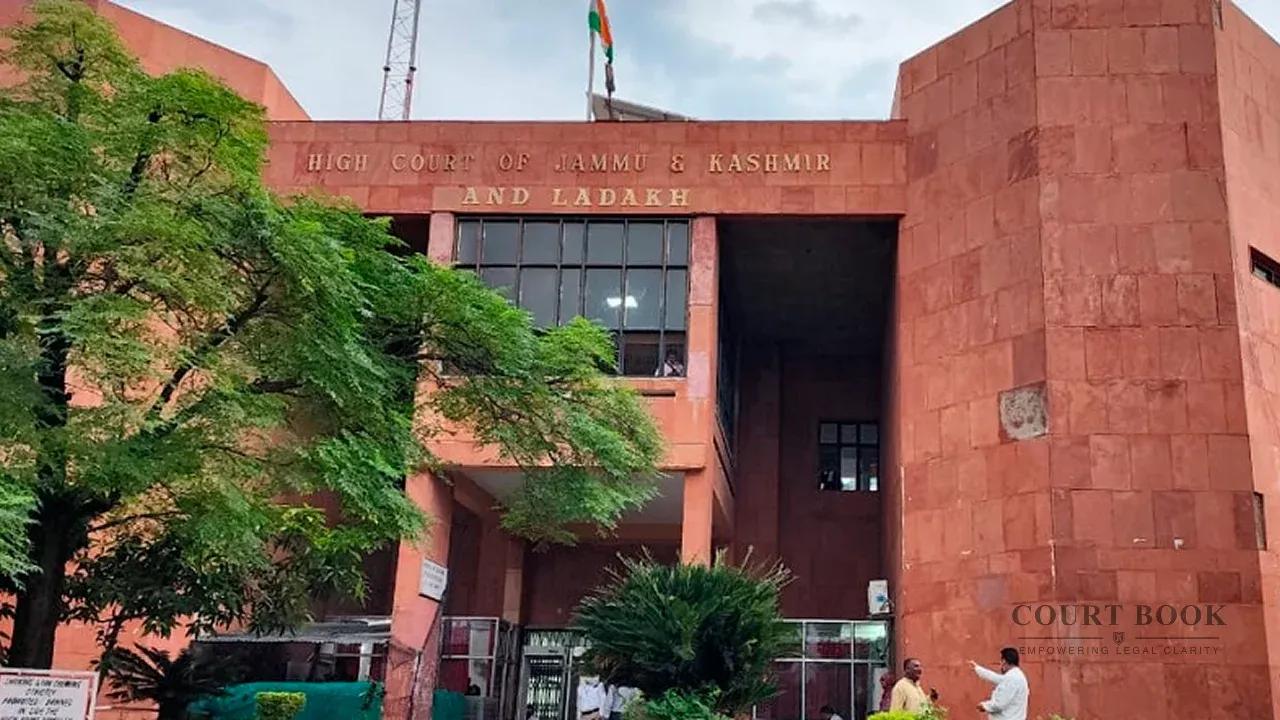
The Jammu & Kashmir and Ladakh High Court has upheld the conviction of a man sentenced to 14 years of rigorous imprisonment for sexually assaulting an eight-year-old girl, observing that the child survivor’s detailed and consistent recollection of the incident demonstrated what the Court described as a “photographic memory”.
A Division Bench of Justice Sanjay Dhar and Justice Shahzad Azeem dismissed the criminal appeal, holding that the survivor's testimony was trustworthy and received substantial support from medical evidence and other prosecution witnesses. The Court found no reason to interfere with the trial court's judgment.
Background
The case arose from an incident dated April 23, 2017, when the eight-year-old girl had gone to a neighbour's house to play hide-and-seek with other children.
According to the prosecution, the accused, who was known to the child as her uncle, took her into a separate room, where the alleged sexual assault took place. The child subsequently returned home crying and bleeding. She disclosed the incident to her mother, following which a complaint was lodged at the police station and she was taken to the hospital for medical examination.


The trial court convicted the accused under Sections 376 and 342 of the Ranbir Penal Code (RPC). He was sentenced to 14 years of rigorous imprisonment and a fine of ₹1 lakh under Section 376, along with one year's imprisonment under Section 342.
The accused challenged the conviction, alleging inconsistencies in the prosecution's case, delay in recording witness statements and the possibility of false implication arising from a land dispute between the families.
The Bench paid particular attention to the child's ability to recall specific details of the incident. She remembered the game she was playing, the structure of the room, the clothes she was wearing and the sequence of events. Even during cross-examination, she remained consistent and rejected suggestions that her parents had tutored her.
Describing the significance of her recollection, the Court observed:
"These minute, consistent details given by a child witness after a considerable time from the occurrence demonstrate that the occurrence was firmly imprinted in her memory and was not reconstructed or improved upon. The trial court held that her statement inspired confidence precisely because of this consistency and the absence of any material contradiction."
The Bench also considered the medical evidence. The doctor who examined the child on the same evening found a torn hymen, a first-degree vaginal wall tear requiring stitches and bleeding. The medical opinion indicated recent sexual intercourse within 12 hours of the examination.
The Court held that the medical findings supported the child's account and strengthened the prosecution's case.
It further rejected the argument that delays in recording the statements of the child and her parents undermined the prosecution's credibility. The child's statement had been recorded after 14 days, while her parents' statements were recorded after 23–24 days. However, the investigating officers had provided explanations for the delay.
The Bench observed:
"The explanations offered are plausible and consistent with the ordinary course of investigation, particularly in a case involving arrest of the accused and other urgent steps. The delay, therefore, does not by itself, cast any doubt on the credibility of the prosecution version."
The Court also noted that minor inconsistencies concerning the sequence of events and the witnesses' presence did not affect the central prosecution account.
After examining the evidence collectively, the Division Bench concluded that the child's testimony was reliable, consistent and supported by medical findings and other witnesses. It also rejected the defence allegation of false implication arising from a land dispute, finding it unsupported by the evidence.
Accordingly, the High Court dismissed the appeal and affirmed the trial court's judgment of conviction and sentence, including the 14-year rigorous imprisonment term and ₹1 lakh fine under Section 376 RPC, along with one year's imprisonment under Section 342 RPC.



