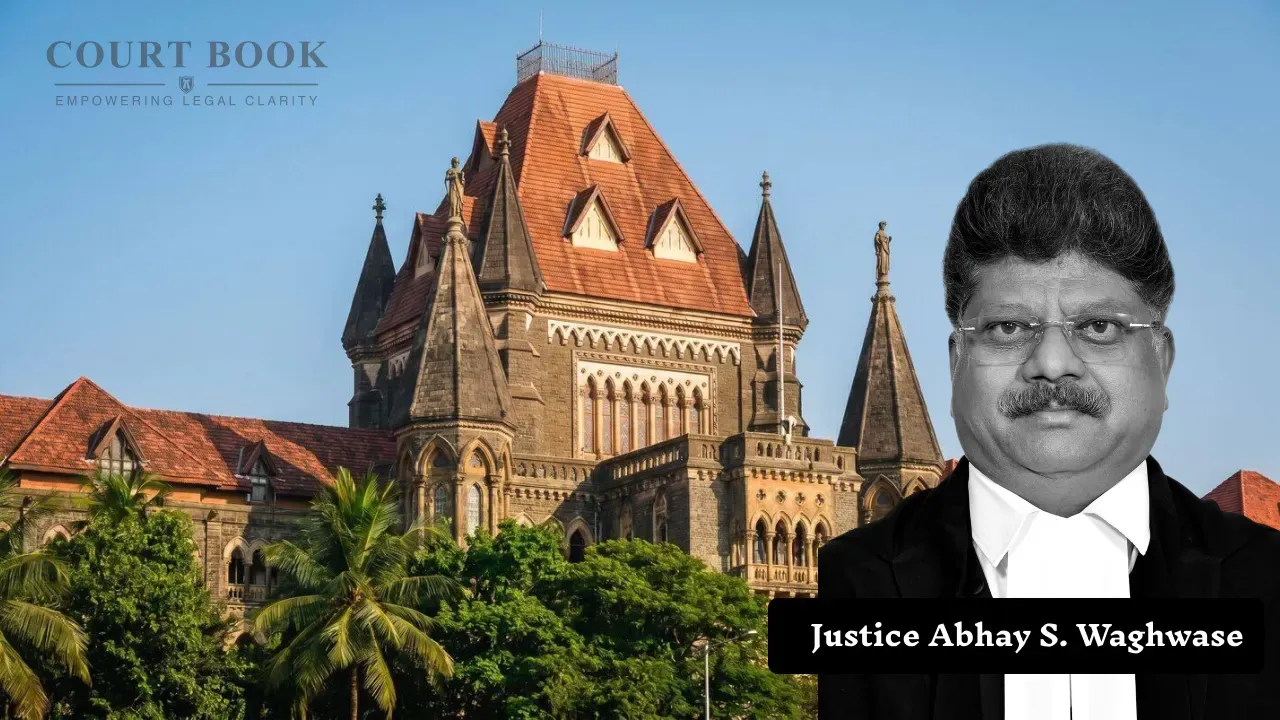
The Bombay High Court has dismissed the Maharashtra State’s appeal against the acquittal of two persons in a food adulteration case, holding that microscopic examination was not an analytical or chemical analysis test under the Prevention of Food Adulteration Act, 1954.
Justice Abhay S. Waghwase delivered the judgment on September 10, 2026, in Criminal Appeal No. 538 of 2006. The Court also found that the prosecution had failed to establish proper compliance with the statutory requirement of delivering the Public Analyst’s report to the accused.
Background
The case arose from an inspection of the premises of Gorakh Arjun Marathe, a vendor, and Mohan Arjun Marathe, proprietor of Marathe Industries at Nandurbar. A Food Inspector collected a sample of chilli powder and sent it for analysis.
The Public Analyst reported that the sample contained synthetic red and orange oil-soluble colour during microscopic examination. However, the comparative figures recorded in the report showed that parameters including moisture, total ash, ash insoluble in dilute hydrochloric acid, non-volatile ether extract and crude fibre were within the prescribed limits.
The trial court had acquitted the accused in 2006, following which the State approached the High Court.
The High Court noted that although the analyst detected synthetic colour through microscopic examination, the report did not specify its exact percentage. The Court also observed that the relevant standard required chilli powder to be free from extraneous colouring matter and other specified substances.
Referring to the Supreme Court’s decision in Jagdish Chandra v. State of Uttar Pradesh, the High Court held:
“In the light of above settled position, there is no error on the part of learned trial court in precluding the results which were yielded on microscopic examination as, neither the very Act nor legislature provides or acknowledges such test to be carried out or relied. Microscopic examination is not analytical test or chemical analysis test, and as such, has no sanctity.”
The Court found that the trial court had therefore committed no error in excluding the results obtained through microscopic examination.
The Court also examined whether the accused had been properly supplied with the Public Analyst’s report under Section 13(2) of the PFA Act. The provision gave an accused an opportunity to seek analysis of the preserved sample by the Central Food Laboratory.
Although a prosecution witness claimed that the requirement had been complied with, the acknowledgment showing receipt of the analyst’s report was not produced. The record showed only a postal receipt bearing a vague address for the accused at Nandurbar, while the accused’s specific postal address was not mentioned.
Referring to earlier decisions, the High Court noted that mere production of a copy of the covering letter was not sufficient evidence of delivery.
It held that failure to follow this mandatory procedure caused prejudice to the accused.
Justice Waghwase concluded that there was no infirmity or illegality in the trial court’s appreciation of the evidence and found no ground to interfere with the acquittal. The Bombay High Court accordingly dismissed the State’s criminal appeal.
Case Title: The State of Maharashtra v. Gorakh Arjun Marathe & Anr.
Case Number: Criminal Appeal No. 538 of 2006