The Himachal Pradesh High Court has dismissed a long-pending challenge to the selection of a Post-Graduate Teacher (Political Science) at Government Senior Secondary School, Gai Ghat, Solan, holding that courts cannot reassess the comparative merit of candidates or substitute their own assessment for that of a duly constituted Selection Committee in the absence of proven bias, mala fides or violation of the governing rules.
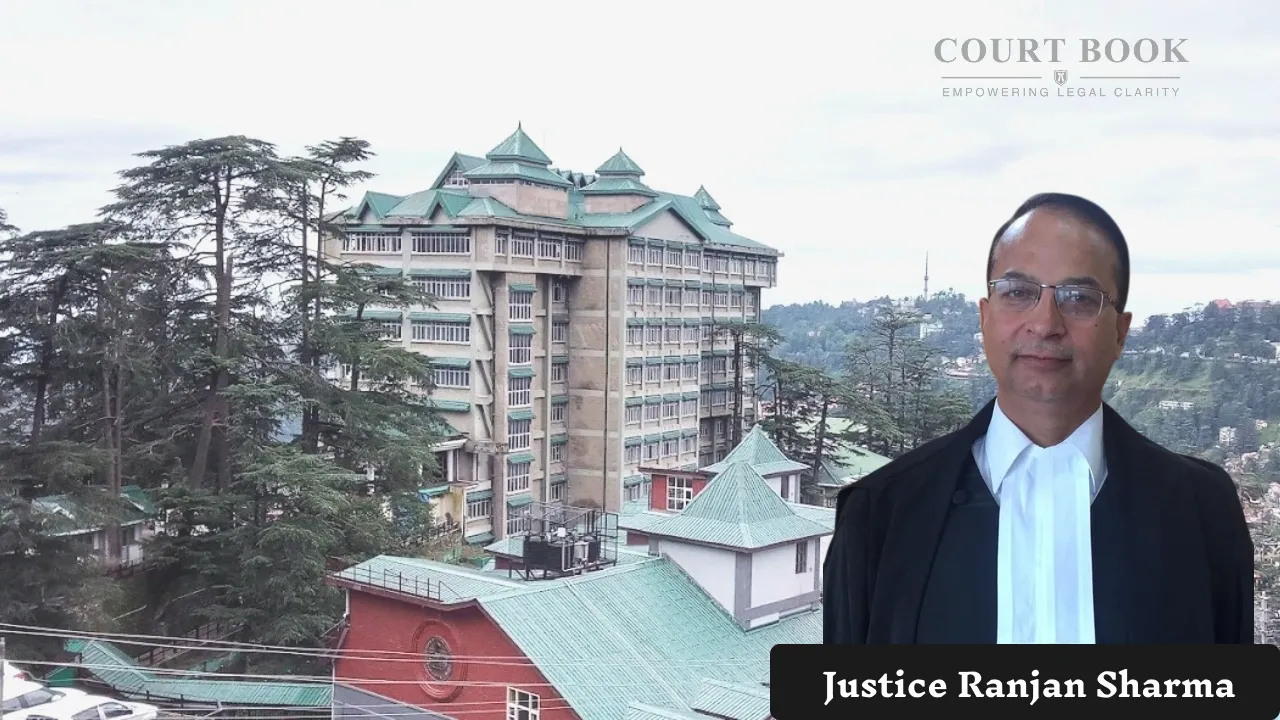
Justice Ranjan Sharma delivered the judgment on September 10, 2026, in Manju Devi v. State of Himachal Pradesh and Others.
Background
The dispute arose from the selection process for one post of Post-Graduate Teacher in Political Science at GSSS Gai Ghat. The selection was conducted under the School Management Committee (SMC) Policy. A total of 23 candidates participated in the selection process, including petitioner Manju Devi and private respondent Gitanjali.
Manju Devi challenged Gitanjali's selection, arguing that she was a local eligible candidate and therefore deserved preference. She also questioned the interview marks, pointing out that she received 2.33 out of 10, while Gitanjali received 9.5 out of 10.
The State, however, maintained that the selection was based on the overall marks awarded under the prescribed criteria. Gitanjali secured 30.52 marks, while Manju Devi obtained 30.33 marks.
The High Court noted that the Selection Committee consisted of the Sub-Divisional Magistrate as Chairman, the President of the concerned SMC as a member, and the Head of Institution/Secretary of the SMC as the third member.
Justice Sharma relied upon several Supreme Court decisions concerning the limited scope of judicial review in selections. The Court observed that merely questioning the marks awarded during an interview does not permit the High Court to reassess the comparative merit of candidates.
“This Court cannot assume the role of a Selection Committee or an Expert Body or an Appellate Authority.”
The Court further noted that no material had been placed before it showing mala fides, bias, violation of statutory rules or breach of the SMC Policy.
Manju Devi also relied upon the SMC Policy provision stating that preference would be given to local eligible candidates. The Court noted that she had already received 10 marks under the “concerned Patwar Circle” category, which was part of the overall assessment.
The Court held that such preference could not override comparative merit where the candidates had unequal overall marks. Since Gitanjali secured higher overall marks, the petitioner could not claim appointment merely on the basis of local preference.
The High Court dismissed the writ petition and upheld Gitanjali's selection as Post-Graduate Teacher in Political Science pursuant to the October 31, 2014 interview.
The Court also affirmed her appointment and continuance in service, noting that she was already working in the post.
The parties were directed to bear their respective costs.
Case Details
- Case Title: Manju Devi v. State of Himachal Pradesh and Others
- Case Number: CWP No. 1077 of 2015
- Judge: Justice Ranjan Sharma
- Decision Date: September 10, 2026