

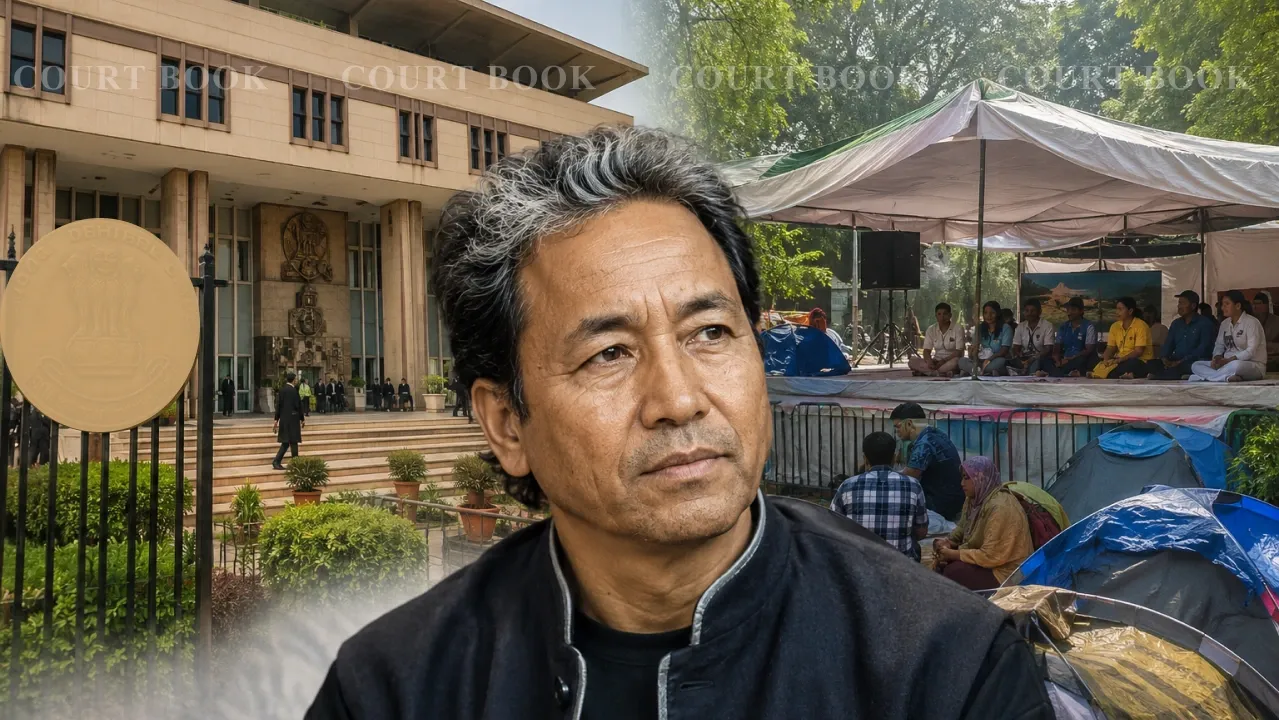
The Delhi High Court on Sunday (19 July) declined to pass an interim order directing the discharge of activist Sonam Wangchuk from Safdarjung Hospital, holding that the government's decision to shift him from the Jantar Mantar protest site for medical care could not be termed arbitrary. The Court observed that Wangchuk's health was being monitored by doctors and that medical intervention had been undertaken only with his consent where applicable.
Background of the Case
The petition was filed by Dr. Gitanjali Angmo, Wangchuk's wife, after he was shifted to Safdarjung Hospital on July 18 following an 18-day hunger strike. Wangchuk had joined the protest at Jantar Mantar on June 28 in solidarity with students raising concerns over alleged irregularities in competitive examinations, including NEET-UG.
Dr. Angmo challenged his continued hospitalisation, alleging that he had been removed from the protest site without consent and was being denied access to his lawyers and independent doctors. She also sought permission to transfer him to a private hospital chosen by the family.
Court's Observations
Hearing the matter in a special sitting, Justice Mini Pushkarna noted that Wangchuk had not voluntarily admitted himself to any hospital despite his deteriorating health. The Court held that, in such circumstances, the government was justified in shifting him to a medical facility.
The bench observed,
"Considering the fact that Mr. Sonam Wangchuk on his own volition did not check himself into any hospital facility, the Government was within its rights to take such action."
The Court also recorded that doctors at Safdarjung Hospital and AIIMS were continuously monitoring Wangchuk's condition. It noted that oral rehydration solution and potassium supplements had been administered only after obtaining his consent, and therefore his right to bodily autonomy had not been violated.
Arguments Before the Court
Senior Advocate Kapil Sibal, appearing for Dr. Angmo, argued that Wangchuk was neither under arrest nor facing any criminal case and should therefore be free to receive treatment at a hospital of his choice. He submitted that Medanta Hospital was willing to admit him and contended that his lawyers and personal doctors were being denied access.
Representing the Union government, Additional Solicitor General Chetan Sharma argued that Wangchuk's prolonged fast had created a serious medical situation requiring immediate intervention. He informed the Court that doctors from both Safdarjung Hospital and AIIMS were supervising his treatment and urged the Court to rely on the medical assessment of government specialists.
The Court also heard from an AIIMS doctor, who informed the bench that Wangchuk had accepted oral fluids and potassium tablets but had declined intravenous fluids and certain other medical treatment despite medical advice.
Court's Decision
After considering the submissions, the Delhi High Court declined to grant any interim relief. The Court accepted the Centre's statement that Wangchuk's wife and family members had unrestricted access to him and had been provided separate accommodation at the hospital. It further observed that no immediate judicial intervention was warranted at this stage.
The bench directed that Wangchuk's medical reports be shared with his family members, issued notice to the respondents, and listed the matter for further hearing.
It clarified that the medical team would continue to take decisions regarding his treatment in accordance with established medical protocols.
Case Details
Case Title: Gitanjali J. Angmo v. Union of India & Ors.
Judge: Justice Mini Pushkarna
Decision Date: 20 July 2025


