

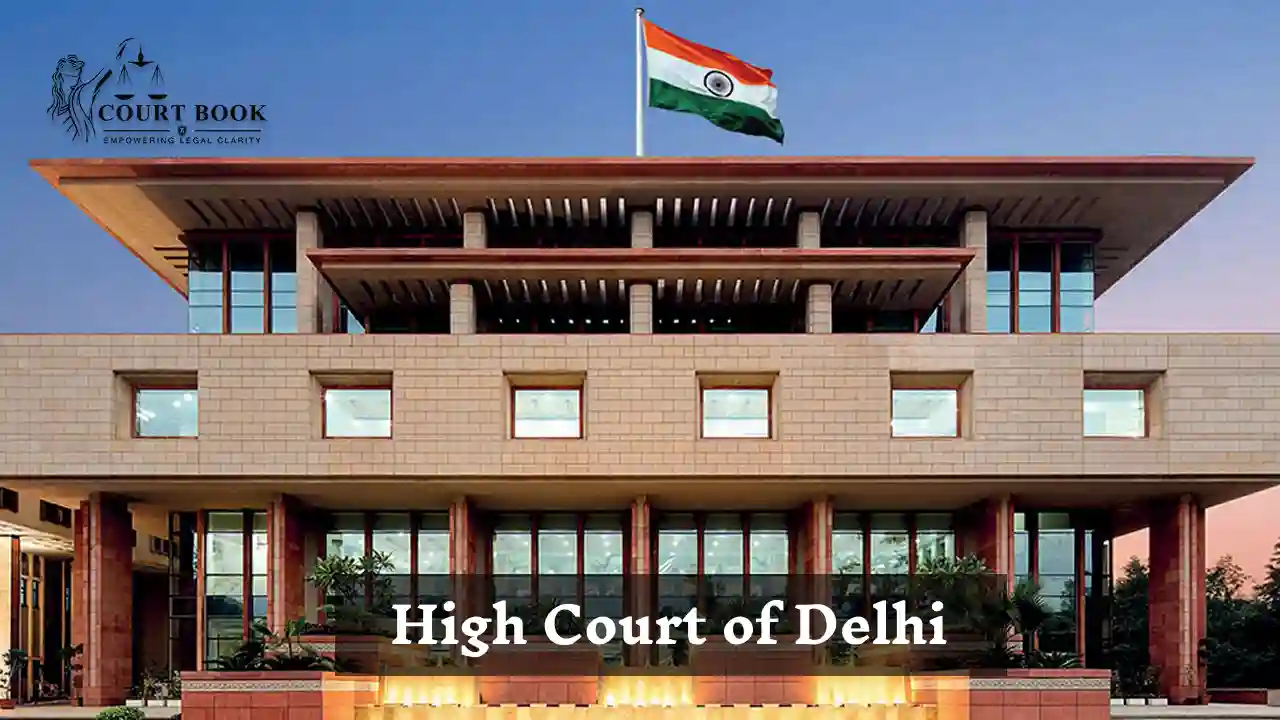
The Delhi High Court has dismissed a writ petition filed by the Khan Market Welfare Association challenging the manner in which the New Delhi Municipal Council (NDMC) determines rateable value and assesses property tax.
A Division Bench of Justice Anil Khetarpal and Justice Shail Jain held that the reliefs sought could not be granted through a writ of mandamus under Article 226 of the Constitution.
Background of the Case
The association represents property owners, entrepreneurs and residents in commercial and mixed-use areas under the NDMC. It alleged that similarly situated properties were being assigned substantially different rateable values, resulting in significant differences in property tax liability.
The association sought directions for NDMC to formulate a uniform method for determining rateable values, constitute an expert committee to examine alleged irregularities, and ensure compliance with various provisions of the NDMC Act.
The dispute also arose against the backdrop of the Supreme Court’s 2019 decision declaring NDMC’s 2009 Bye-laws, which incorporated the Dual Method of assessment, ultra vires. The Supreme Court, however, protected assessments already accepted and paid under those Bye-laws in view of the circumstances of the case.
Court’s Observation
The High Court explained that a writ of mandamus requires a legally enforceable right corresponding to a legal duty on the authority.
“A mandamus is issued to enforce a legal right in the Petitioner corresponding to a legal or public duty cast upon the authority against whom the writ is sought.”
The Bench said the association was essentially asking the Court to prescribe how NDMC should formulate and administer its property-tax assessment methodology. According to the Court, such a direction would amount to the judiciary taking over a function entrusted to the statutory authority.
The Court also rejected the request for an expert committee, noting that the petition did not identify any statutory duty requiring such a committee to be constituted.
It further clarified that judicial review remains available where a particular tax assessment is alleged to be contrary to law, without jurisdiction or otherwise legally impermissible.
Association’s Maintainability
The Court also noted that the petition had been filed by an association, while the alleged prejudice primarily concerned individual property owners and assessees.
The Bench held that an association could not merely aggregate individual grievances of its members to seek a mandamus unless it established an independent legally enforceable right or satisfied the requirements of representative or public interest proceedings.
Decision
The Court clarified that it had not examined the merits of the allegations concerning NDMC’s assessment practices. The dismissal was confined to the reliefs sought in prayers (a), (c) and (d), which the Court found could not be granted through Article 226 in their present form.
The Court also clarified that individual assessees would remain free to pursue remedies available under the NDMC Act against particular assessments or issues concerning rateable value and statutory procedure.
The writ petition was accordingly dismissed.
Case Details
Case Title: Khan Market Welfare Association (Regd.) v. UOI & Ors.
Case Number: W.P.(C) 3534/2024
Judge: Justice Anil Khetarpal and Justice Shail Jain
Decision Date: August 21, 2026


