Holding that the State bears an absolute duty to protect the life of every person in its custody, the Delhi High Court has awarded ₹18.44 lakh as compensation to the father of a man who died an unnatural death while lodged at Karawal Nagar Police Station. The Court ruled that compensation for custodial death flows directly from the violation of the fundamental right to life under Article 21 of the Constitution and is not restricted by statutory victim compensation schemes.
Background of the Case
The petitioner approached the High Court seeking compensation after his adopted son, Deepak, died on 16 January 2018 while in police custody. According to the petition, the deceased had been arrested a day earlier in connection with an FIR registered at Karawal Nagar Police Station.
The petitioner alleged that both he and his son were mistreated while at the police station and that money was demanded for the son's release. The following morning, he was informed that his son had allegedly died by suicide while in custody.
A post-mortem conducted by a medical board recorded the cause of death as asphyxia due to ante-mortem hanging. A departmental inquiry later found lapses on the part of certain police officials, and disciplinary action was initiated against them.
Arguments Before the Court
The petitioner argued that irrespective of whether the death was caused by suicide or otherwise, the State remained responsible because the deceased died while under its custody. He also contended that departmental punishment imposed on police officials did not prevent the Court from awarding constitutional compensation.
The State opposed the petition, submitting that compensation should be determined only under the Delhi Victim Compensation Scheme framed under Section 357A of the Code of Criminal Procedure. It further argued that the medical evidence did not establish custodial violence.
Court's Observations
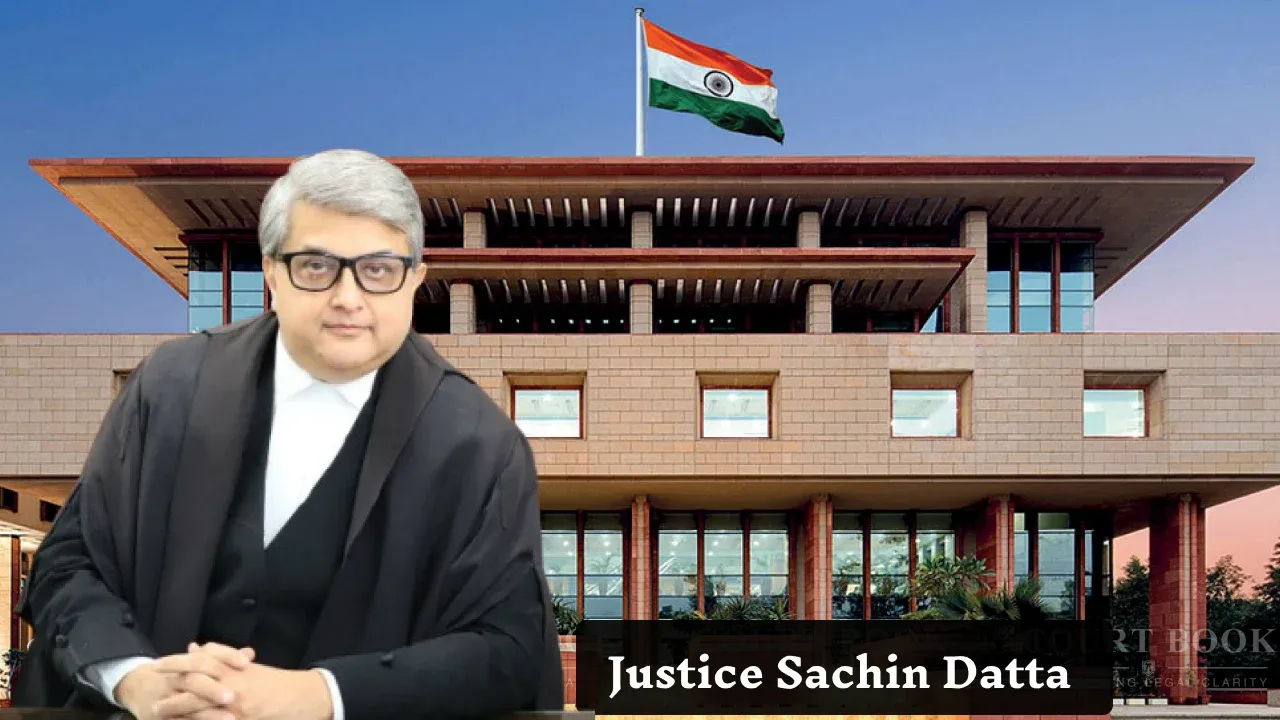
Justice Sachin Datta observed that the case before the Court was not about deciding criminal liability or determining whether foul play had occurred. Instead, the issue was whether an unnatural death in custody entitled the victim's family to compensation.
The Court emphasized that when a person is taken into custody, the State assumes a heightened duty to safeguard that person's life.
Quoting settled constitutional principles, the bench observed:
“Custodial death is not merely an individual tragedy but a matter of systemic concern, striking at the very foundation of the rule of law.”
The Court further held:
“The very fact of custodial death, being unnatural, attracts liability and obliges the Court to mould relief in the form of compensation.”
Relying on Supreme Court and High Court precedents, the Court said that even if a custodial death results from suicide, it does not automatically absolve the State of its constitutional responsibility under Article 21.
Why the Court Rejected the State's Stand
The High Court rejected the argument that compensation must remain confined to the statutory victim compensation framework.
It held that compensation awarded by constitutional courts under Article 226 is an independent public law remedy for violation of fundamental rights and exists in addition to statutory remedies.
The Court also accepted the petitioner's submission that, while calculating compensation, the multiplier method used in motor accident claims could serve as an appropriate guideline, relying on earlier Delhi High Court decisions.
Compensation Calculation
Applying the multiplier principle laid down in Sarla Verma v. Delhi Transport Corporation, the Court assessed the deceased's notional monthly income at ₹12,000, added future prospects, deducted personal expenses, applied the relevant multiplier, and included conventional amounts towards loss of estate and funeral expenses.
The total compensation was calculated at ₹18,44,400.
Court's Decision
Allowing the writ petition, the Delhi High Court directed the respondents to pay ₹18,44,400 as compensation to the petitioner within eight weeks from the date of the judgment.
The Court disposed of the petition along with the pending application.
Case Details
Case Title: Shyam Sundar v. State (NCT of Delhi) & Others
Case Number: W.P.(C) 9558/2020
Judge: Justice Sachin Datta
Decision Date: 1 July 2026