

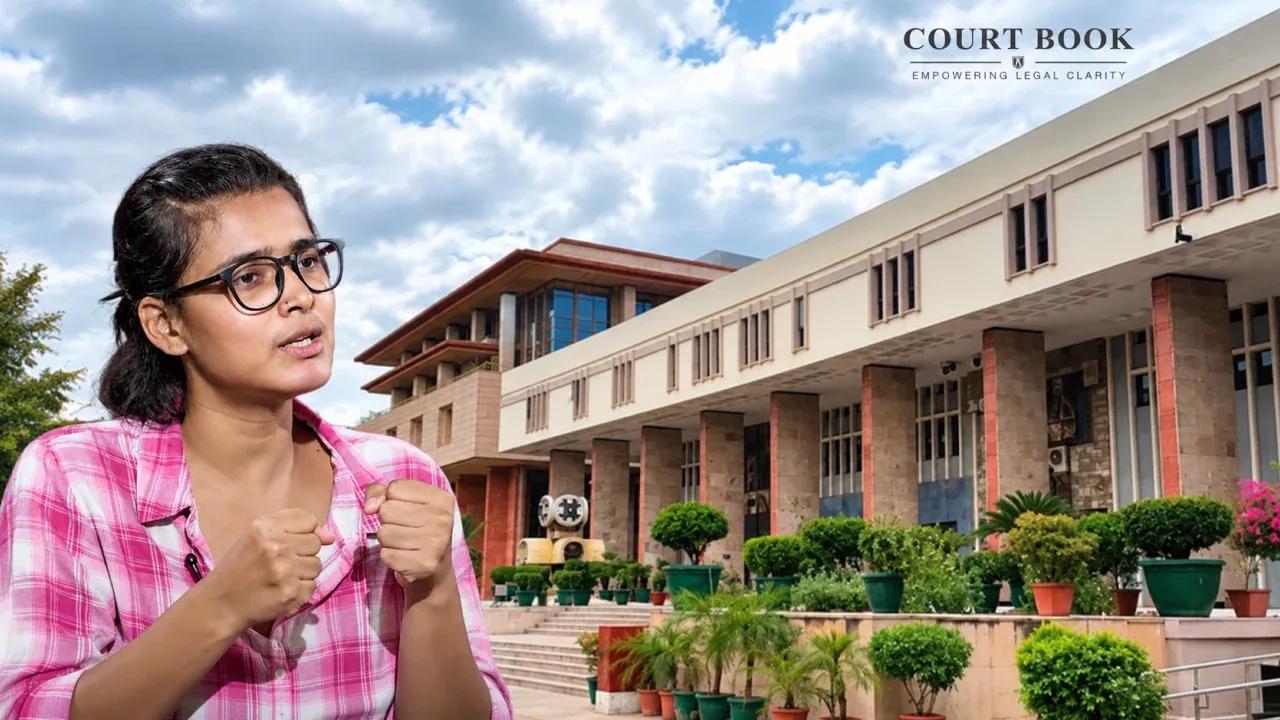
The Delhi High Court has dismissed a petition filed by All India Students’ Association (AISA) president Neha Bora challenging a notice requiring her to explain why she should not furnish a ₹10,000 personal bond with one surety of the same amount to maintain peace during an inquiry. Justice Subramonium Prasad delivered the judgment on October 23, 2026, while directing the authorities to follow the procedural safeguards prescribed under the Bharatiya Nagarik Suraksha Sanhita (BNSS).
Background
The dispute arose after Bora was detained by Delhi Police at Mandi House on October 16, 2026, following a gathering linked to protests concerning the Election Commission of India and the revision of electoral rolls. The Special Executive Magistrate issued a notice on October 17 under Sections 126 and 130 of the BNSS, referring to alleged protest-related activities and apprehensions of a breach of public peace.
Bora approached the High Court seeking to quash the notice. Her counsel argued that it lacked sufficient supporting material and did not reflect an independent application of mind by the magistrate. The defence also disputed the allegations concerning a proposed gathering at Connaught Place.
Opposing the petition, Additional Solicitor General Chetan Sharma submitted that the magistrate had considered the police report and supporting material before initiating preventive proceedings. The State argued that the notice should not be set aside before the statutory inquiry had taken place.


Justice Prasad explained that proceedings under Chapter IX of the BNSS are preventive rather than punitive. At the notice stage, the High Court’s role was to examine whether relevant material existed and whether the magistrate had applied his mind, rather than independently deciding the sufficiency of that material.
The Court observed,
“Since the purport of Chapter IX of the BNSS is preventive in nature and not punitive, the object of the provisions is to prevent breach of peace and take such preventive steps to ensure that peace and tranquillity in the area is not disturbed.”
The judgment also noted that the notice stage was not ordinarily the appropriate point for the High Court to conduct a detailed inquiry into disputed facts. However, the Court directed the State to provide Bora with all material relied upon for initiating the proceedings and instructed the magistrate to ensure compliance with the principles of natural justice.
On the question of an interim bond, the Court emphasised that Section 135(3) of the BNSS permits such a direction where immediate measures are considered necessary during the inquiry, subject to the statutory requirements.
The Court further stated,
“Undoubtedly, the SEM would apply his own mind to the material/information placed before him and only then, arrive at a conclusion regarding furnishing of a personal bond or bail bond.”
The High Court held that the challenged notice met the requirements of a show-cause notice under Chapter IX of the BNSS and dismissed Bora’s writ petition along with pending applications.
It left open her right to challenge the proceedings at an appropriate stage and directed the magistrate to consider the statutory safeguards before deciding whether a bond should be insisted upon.



