

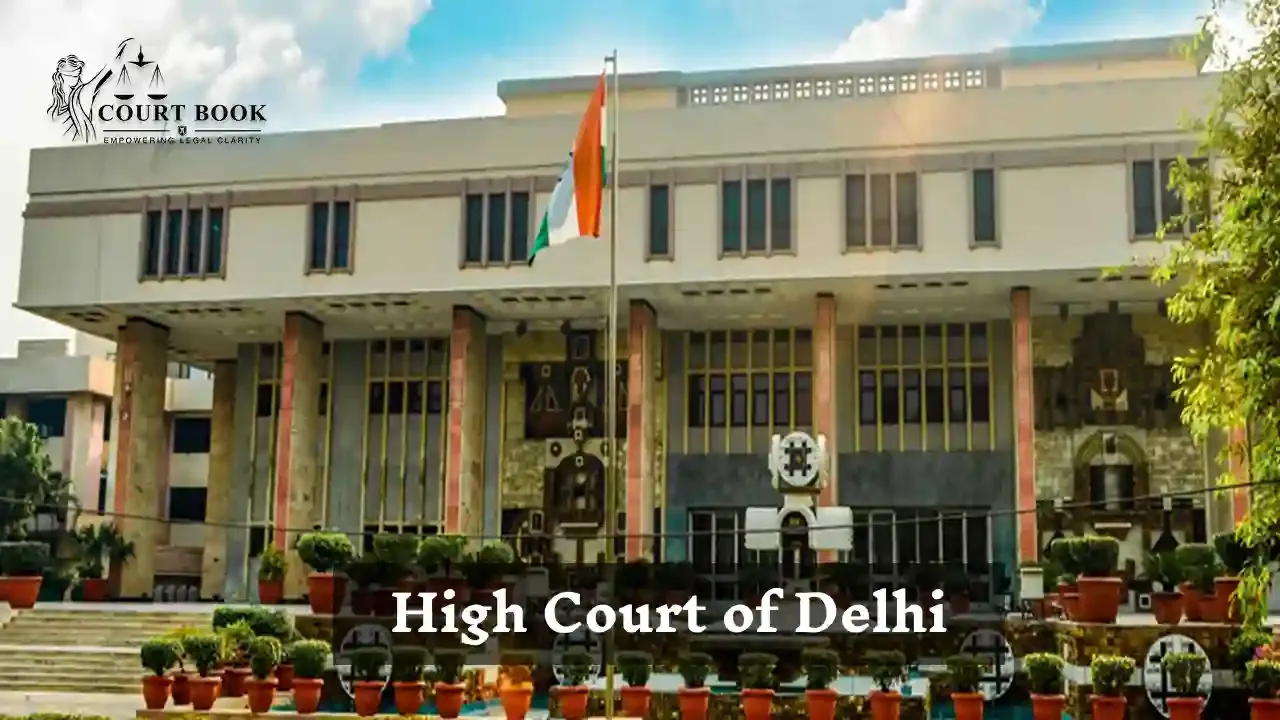
The Delhi High Court has directed the immediate release of two life convicts, Ramesh and Tasleem, after finding that their pleas for premature release had been repeatedly rejected without proper consideration of their conduct, rehabilitation, family circumstances and the applicable remission policy.
Justice A. J. Bhambhani pronounced the judgment on August 10, 2026, in two connected petitions challenging the rejection of their premature-release requests by the Sentence Review Board (SRB) and the Delhi Government.
Background of the Case
Ramesh had undergone more than 31 years of actual imprisonment and over 40 years of custody including remission. His case had been rejected by the SRB on 18 occasions. The High Court noted that the rejections substantially relied on the nature of the original offence and general concerns about society, while failing to meaningfully assess his long-term conduct in prison.
The Court also noted that Ramesh had spent more than 25 years working in Tihar’s Printing Unit, had acquired vocational skills and had been released on parole and furlough on about 32 occasions without any reported misuse. The Court further considered the financial difficulties faced by his family.
Tasleem, meanwhile, had completed more than 15 years of actual imprisonment and had earned more than three years of remission. The Court recorded that he had repeatedly been released on interim bail, parole, emergency parole and furlough without any adverse report or complaint.
Court’s Observations
The High Court emphasised that premature release cannot be decided solely by looking at the gravity or nature of the original offence. The Court said the assessment must also consider post-conviction conduct, the possibility of rehabilitation, the likelihood of reoffending and the socio-economic circumstances of the prisoner’s family.
For Ramesh, the Court found that the SRB had repeatedly treated his conviction as falling under a more stringent category, despite the alteration of his conviction by the Supreme Court. This resulted in what the Court described as a flawed application of the eligibility criteria.
The Court also observed that the SRB had earlier recorded Ramesh as having “Nil” propensity to commit crime, but later relied on the possibility that reoffending “cannot be ruled out” without identifying fresh adverse material.
Regarding Tasleem, the Court found that the SRB had relied on the gravity of the original offence and concerns about the public’s confidence in the legal system, while giving insufficient weight to his good conduct and favourable institutional reports.
Decision
The Court held that Ramesh’s continued confinement served no legitimate purpose in the circumstances and set aside the SRB minutes dated August 30 and September 18, 2024, along with the Delhi Government’s order dated December 4, 2024. It directed that Ramesh be released forthwith.
The Court similarly held that Tasleem was entitled to premature release and directed that he too be released from custody forthwith. The two petitions were accordingly disposed of, with pending applications also disposed of.
Case Title: Ramesh v. State (NCT of Delhi) & Anr.; Tasleem v. State of NCT of Delhi
Case Number: W.P.(CRL) 2875/2025 & W.P.(CRL) 578/2025


