

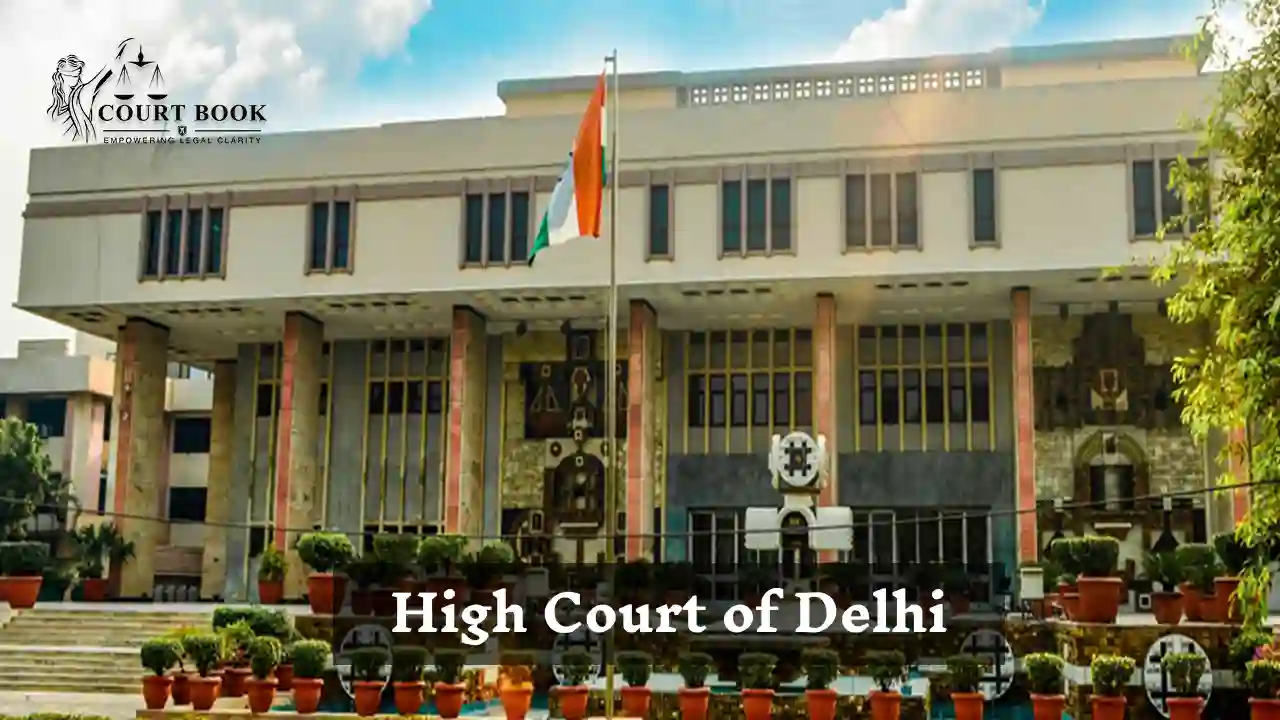
The Delhi High Court has upheld the validity of Rule 22(3)(1)(i) and (iv) of the Delhi Maintenance and Welfare of Parents and Senior Citizens Rules, 2009, which enables senior citizens and parents to seek eviction of children or legal heirs from their property in cases involving non-maintenance or ill-treatment. A Division Bench of Chief Justice Devendra Kumar Upadhyaya and Justice Tejas Karia dismissed a challenge to the provision as well as to an eviction order passed against a daughter-in-law.
Background
The petitioner, Punam, is the daughter-in-law of the senior citizen who sought her eviction. She had married the senior citizen’s son in 1996, and the couple had two children. Following matrimonial differences, Punam had initiated proceedings under the Protection of Women from Domestic Violence Act, 2005, including a claim concerning her right to reside in the shared household.
In 2018, her mother-in-law initiated proceedings under Rule 22(3)(1) seeking her eviction. The District Magistrate initially rejected the application in February 2021 after considering the material and an inquiry report. The Divisional Commissioner subsequently allowed the appeal in July 2022 and directed Punam to vacate the property. The High Court was then approached challenging both the eviction order and the validity of the relevant Rules.
The Bench examined whether the State Government had exceeded its rule-making authority by creating a mechanism for eviction. It held that Section 22 of the Maintenance and Welfare of Parents and Senior Citizens Act, 2007 empowers the State Government to prescribe a comprehensive plan for protecting the life and property of senior citizens. The Court therefore found that Rule 22(3)(1) was connected to the statutory scheme and could not be declared invalid.
The Court also considered the petitioner's claim of a right to reside in the shared household under the Domestic Violence Act. It noted that the Divisional Commissioner had found that Punam was employed as a postgraduate teacher, had a substantial income and possessed a separate house at Bahadurgarh.
The Bench further clarified that proceedings for eviction under Rule 22(3)(1) are separate from proceedings seeking maintenance under the Senior Citizens Act.
The Court observed:
"Such a submission made by learned counsel for the petitioner is non-tenable for the reason that an application for eviction can be filed under Rule 22(3)(1) of the 2009 Rules irrespective of the fact whether maintenance is claimed or not."
The Court also held that the rule could extend to a daughter-in-law, relying on earlier decisions concerning the scope of the expression “son and daughter or legal heirs” under the Rules.
The Delhi High Court held that the challenge to Rule 22(3)(1)(i) and (iv) failed. It further found that the Divisional Commissioner had correctly passed the eviction order and that no interference was warranted.
"The writ petition fails, which is hereby dismissed. The application(s), if any, stands disposed of."
The Court ordered that there would be no order as to costs.
Case Details:
Case Title: Punam v. Divisional Commissioner, GNCT of Delhi & Ors.
Case Number: W.P.(C) 11683/2022 & connected applications
Judge: Chief Justice Devendra Kumar Upadhyaya and Justice Tejas Karia
Decision Date: 30 September 2026


