

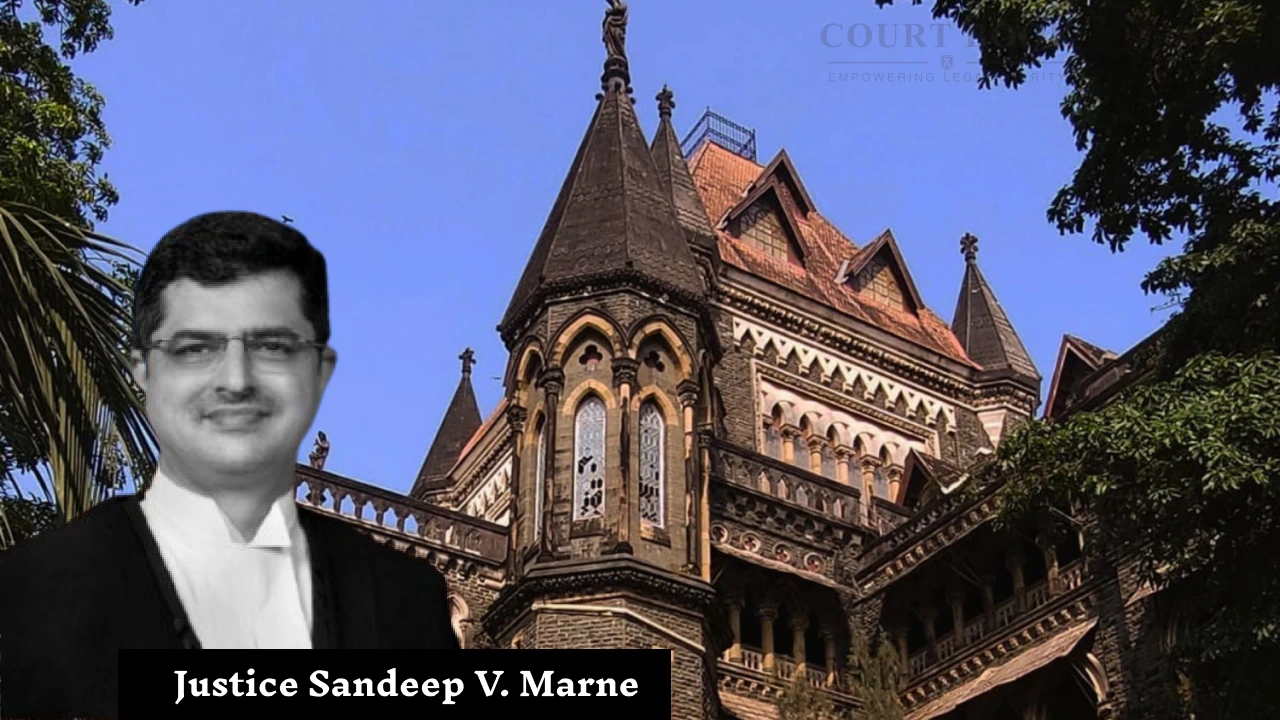
The Bombay High Court has ruled that dismissing an employee over an inflated transport allowance claim was a punishment that went too far in the facts of the case. While the Court found that part of the misconduct had been established, it held that the employer's decision to terminate the employee was "shockingly disproportionate" and replaced reinstatement with a lump-sum compensation of ₹8 lakh.
Justice Sandeep V. Marne delivered the judgment while allowing a writ petition filed by Ananta Rajaram Walunj against Grupo Antolin Pune (P) Ltd.
Background of the Case
The petitioner had been employed at the respondent company's factory and was later assigned to work at its warehouse in Chakan, Pune. Under the company's policy, he received transport allowance calculated on the distance travelled by motorcycle.
According to the employer, the employee claimed transport allowance based on significantly longer travel distances between January 2011 and June 2012, resulting in excess reimbursement. After a verification exercise, the company alleged that the actual distance was much shorter. A departmental inquiry followed, culminating in his dismissal from service on August 9, 2013. His challenge before the Industrial Tribunal failed, prompting him to approach the High Court.
The employee, however, maintained that different routes were available to reach the warehouse. He argued that he initially travelled through a longer route and reduced the claimed distance after discovering shorter alternatives. He also pointed out that the company had approved his claims over an extended period.
Court's Observations
Justice Marne closely examined the evidence recorded during the domestic inquiry, particularly the testimony of the company's witness who had measured the travel distance.
The Court noted that the witness himself acknowledged two possible routes-one measuring approximately 16.5 kilometres one way and another measuring about 22 kilometres. In these circumstances, the Court found it difficult to accept the conclusion that every part of the employee's claim was false.
The judgment observed that the inquiry officer's findings were vague and failed to adequately deal with the evidence regarding the alternate route.
"The whole of the charge cannot be held to be proved and there is some evidence to disprove part of the charge," the Court observed.
The Court held that while claims relating to the earlier periods-when substantially higher distances were claimed-could still be treated as proved, the allegation concerning the final period, when the employee claimed transport allowance for a 44-kilometre round trip, was not fully established.
Punishment Found Excessive
The High Court then examined whether dismissal was an appropriate penalty.
Justice Marne observed that the case did not involve proven misappropriation of company funds in the sense considered by the Supreme Court in earlier decisions relied upon by the employer. Instead, it concerned an incorrect claim regarding travel distance, made in circumstances where even the employer appeared uncertain about the exact distance for some time.
The Court also considered several mitigating circumstances. These included the employee's reduction of the claimed distance after objections were raised, the relatively small difference in later claims, his clean service record spanning about 13 years, and the employer's own acceptance of revised claims during the relevant period.
"The punishment appears to be shockingly disproportionate to the proved misconduct," the bench observed while holding that the employer had imposed the harshest available penalty despite the surrounding circumstances.
Court's Decision
Although the High Court concluded that the dismissal could not stand, it declined to order reinstatement.
The Court noted that the employee had remained out of service since 2013, approximately 13 years had passed, and the employment relationship had substantially deteriorated during the prolonged litigation. It also clarified that the employee was not completely exonerated of the allegations.
Balancing these factors, Justice Marne set aside the Industrial Tribunal's award, declared the dismissal illegal and void, and directed the company to pay lump-sum compensation of ₹8 lakh in lieu of reinstatement and back wages. The amount must be paid within two months, failing which it will carry interest at 8% per annum.
The writ petition was accordingly partly allowed.
Case Details
Case Title: Ananta Rajaram Walunj v. Grupo Antolin Pune (P) Ltd.
Case Number: Writ Petition No. 12101 of 2019
Judge: Justice Sandeep V. Marne
Decision Date: 27 July 2026


