

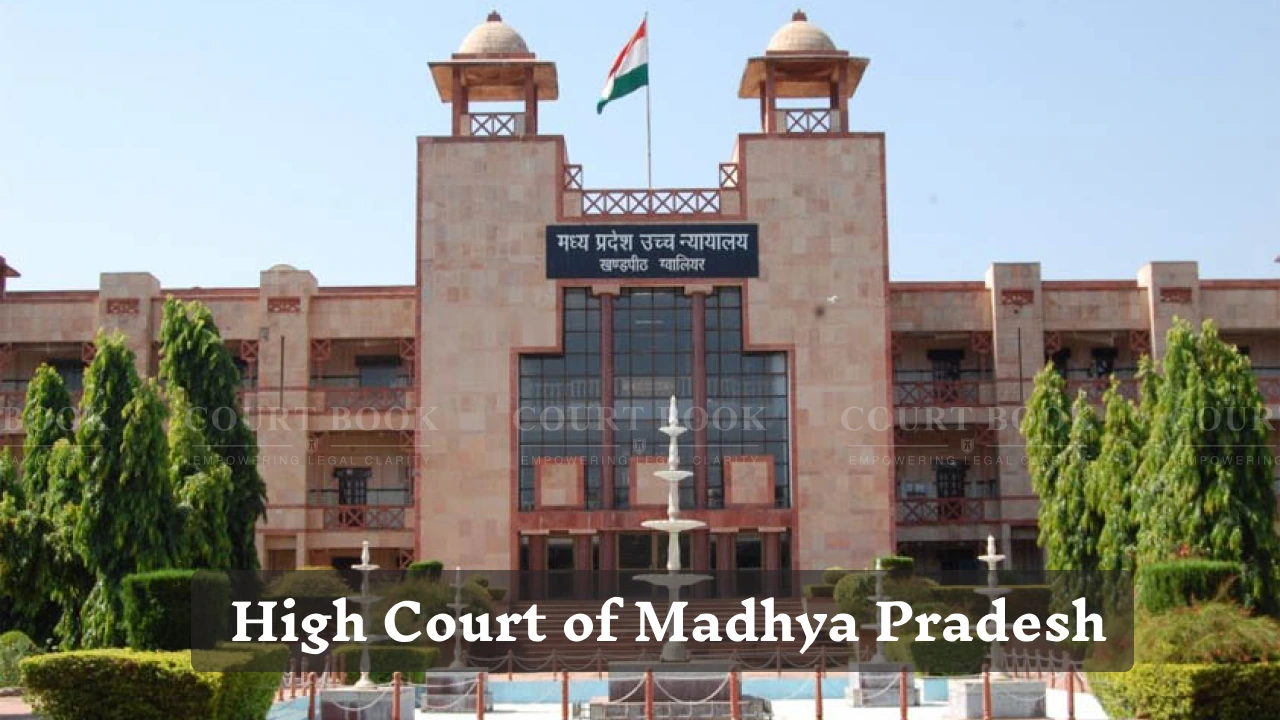
Reaffirming the separation of executive and judicial powers in criminal investigations, the Madhya Pradesh High Court has held that a District Collector has no authority under criminal law to direct the police to recall a closure report or reopen an investigation. The Court observed that once a closure report is submitted, the matter falls within the jurisdiction of the Judicial Magistrate, and executive authorities cannot interfere with that statutory process.
Justice Jai Kumar Pillai delivered the ruling while allowing a writ petition filed by Deepak Manulal Garg and quashed the Collector's orders directing the reopening of an investigation in a criminal case.
Background of the Case
The dispute arose from Crime No. 96/2020 registered at Police Station Kotwali for offences under Sections 420, 467, 468 and 471 of the Indian Penal Code. After completing the investigation, the Investigating Officer concluded that sufficient material was not available against the accused and submitted closure reports through the Station House Officer in May 2024.
However, in September 2025, the District Collector issued directions asking the police authorities to recall the closure report and reopen the investigation. Subsequent communications were also issued to implement those directions. Aggrieved by these orders, the petitioner approached the High Court under Article 226 of the Constitution, challenging their legality and jurisdiction.
The petitioner's counsel argued that the Collector had acted entirely without legal authority because the Code of Criminal Procedure does not empower an executive officer to interfere with an investigation or recall a closure report that has already been forwarded to the competent court.
The State, on the other hand, defended the Collector's action by submitting that the intention was only to ensure a fair investigation. It relied on the provision relating to further investigation under Section 173(8) of the Code of Criminal Procedure.
Court's Observations
Justice Jai Kumar Pillai identified the central issue as whether a District Collector possesses statutory authority to direct the police to recall a closure report and reopen an investigation.
The Court examined the scheme of the Code of Criminal Procedure and noted that once an FIR is registered, investigation is the exclusive responsibility of the police. If the police conclude that no case is made out, they submit a final report before the competent Magistrate under Section 173(2) CrPC.
The Court explained that after such a report reaches the Magistrate, it is the Magistrate alone who decides the next course of action. The Magistrate may accept the closure report, reject it and take cognizance, or order further investigation in accordance with law.
Addressing the State's reliance on Section 173(8), the Court clarified that although the police possess an independent statutory power to conduct further investigation, that power cannot be exercised because of directions issued by the District Collector.
The bench observed,
"The Collector does not exercise any supervisory, appellate, or judicial authority over the statutory investigative process under the Cr.P.C. to compel the SHO to 'recall' a report that has already been forwarded."
It further warned that permitting such executive interference would allow the executive to take over a judicial function, something fundamentally inconsistent with the rule of law.
The Court further remarked that the Collector's directive was entirely outside the framework of the criminal procedure law and amounted to an order passed without jurisdiction.
Court's Decision
Allowing the writ petition, the Madhya Pradesh High Court quashed the Collector's order dated September 8, 2025, along with the subsequent communications directing the reopening of the investigation in Crime No. 96/2020.
At the same time, the Court clarified that its ruling would not prevent the competent Judicial Magistrate from exercising powers available under law regarding the closure report. It also made clear that the investigating agency remains free to undertake further investigation under Section 173(8) CrPC, provided such action is taken independently and strictly in accordance with law, without being influenced by the quashed executive directions.
The writ petition was accordingly allowed, with no order as to costs.
Case Details
Case Title: Deepak Manulal Garg v. State of Madhya Pradesh and Others
Case Number: Writ Petition No. 48444 of 2025
Judge: Justice Jai Kumar Pillai
Decision Date: July 14, 2026


