

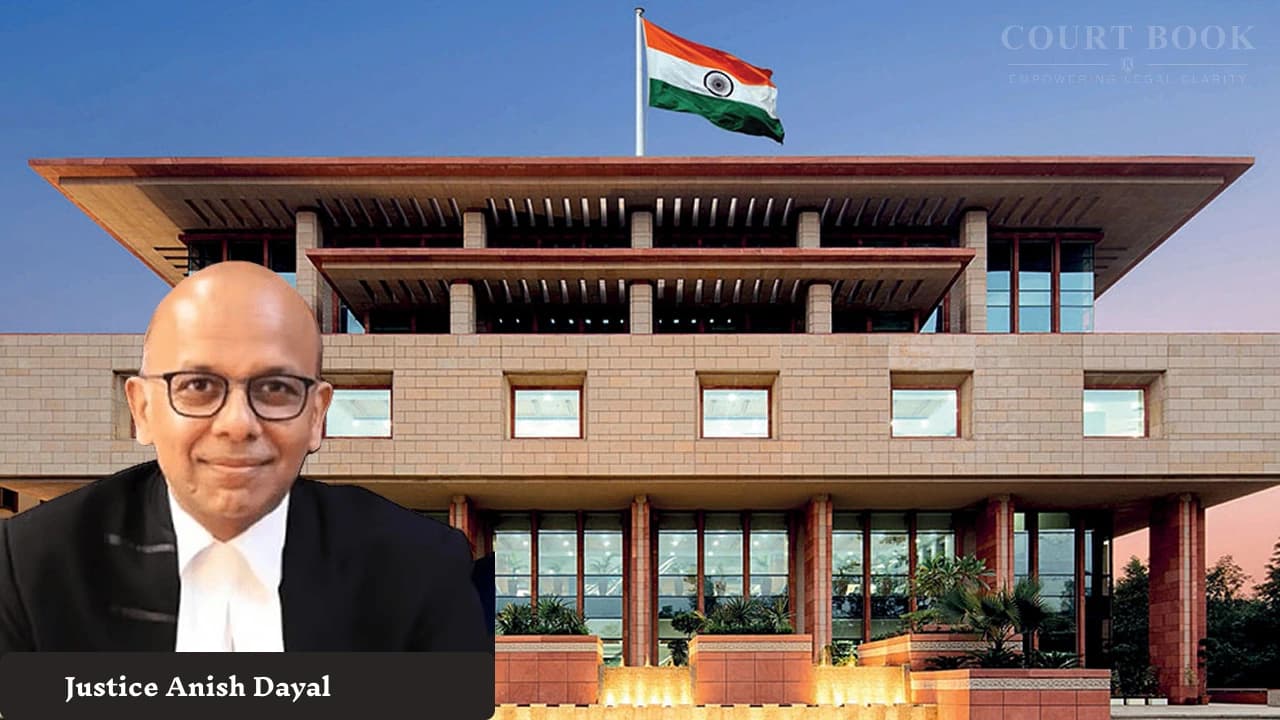
The Delhi High Court has held that a person cannot be denied motor accident compensation merely because they are married, employed or living separately from the deceased. Justice Anish Dayal, while deciding a batch of connected appeals, clarified that the Motor Vehicles Act does not limit compensation claims to family members who were wholly financially dependent on the deceased.
The Court observed that dependency must be assessed in the context of the actual financial arrangements within a family, including monetary support shared between relatives living in separate households. It further explained that the right to maintain a compensation claim and the amount payable to a claimant are two distinct issues, with the extent of financial dependency playing a role in determining the compensation.
Background
The matter arose from a road accident on August 31, 2015, in which Chamanlal and his unmarried daughter Meenu lost their lives. Savita, Chamanlal's other daughter and Meenu's sister, sought compensation for both deaths.
The Motor Accident Claims Tribunal had awarded Rs. 9,27,100 for Meenu's death and Rs. 13,15,600 for Chamanlal's death. However, United India Insurance Company challenged the awards, arguing that Savita was married, had a separate family and was not financially dependent on her father.


Savita, meanwhile, sought enhancement, maintaining that she and her sister had financially supported each other.
After examining previous Supreme Court and High Court decisions, the Court distinguished between a legal representative, a legal heir and a financial dependent. It explained that a person may legally maintain a compensation claim even without proving financial dependency.
The Court observed:
"The claim of dependency has to be seen through the prism of nature of dependency and cannot be put into discrete slots, as has been done in some decisions. A person cannot be straightway shunted out as not being dependent merely because they are married and earning."
It further highlighted the realities of Indian family arrangements, where financial assistance may continue between relatives despite marriage or separate residence.
The judgment stated:
"The mere fact that a person was not financially dependent on the deceased on a day-to-day basis does not necessarily mean that the death resulted in no financial loss to that person or that the person ought to receive no compensation."
The Court also clarified that compensation must be distributed according to the actual extent of dependency. A wholly dependent family member may receive a larger share than someone who was only partially dependent or financially independent.
It added:
"A married and earning daughter, son, spouse or sibling cannot be excluded from compensation per se merely because they are married, employed or residing separately."
Applying these principles, the Court treated Savita as partially dependent on her father and sister. It calculated 50% of their respective incomes towards personal and living expenses and treated the remaining amounts as contributions to the family income.
The compensation for Meenu's death was enhanced to Rs. 14,38,054, an increase of Rs. 5,10,954. For Chamanlal's death, it was enhanced to Rs. 20,20,871.50, an increase of Rs. 7,05,271.50.
The Court also awarded Rs. 40,000 each towards loss of sibling consortium and parental consortium, respectively. Both enhanced amounts would carry interest at 9% per annum from the date of filing the claim petitions.
The Court directed the insurance company to deposit the enhanced amounts with the MACT within four weeks and disposed of all connected appeals.



