

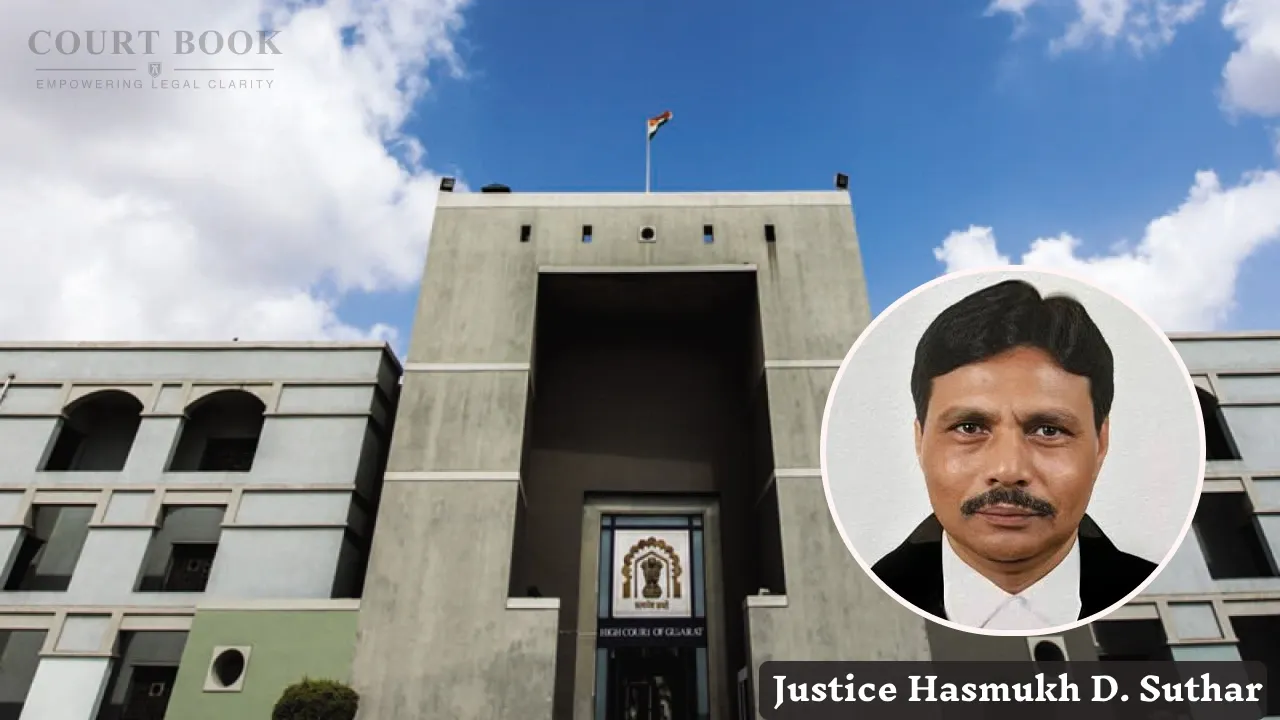
The Gujarat High Court has granted regular bail to Sumersing Bharatlal Meena in a cybercrime case concerning alleged advertisements offering RE-NEET examination papers through Telegram channels. Justice Hasmukh D. Suthar passed the order on October 1, 2026, after considering the investigation papers and the affidavit filed by the Investigating Officer.
Background
The bail application was filed under Section 483 of the Bharatiya Nagarik Suraksha Sanhita, 2023 (BNSS), in connection with FIR C.R. No.11191067260089 of 2026 registered at the Cyber Crime Police Station, Ahmedabad City. The allegations involved offences under Sections 318(4), 319(2) and 54 of the Bharatiya Nyaya Sanhita, 2023.
According to the prosecution case recorded in the order, the applicant was alleged to have acted with co-accused persons in connection with the RE-NEET examination. The allegations included purchasing two SIM cards and promoting advertisements through Telegram channels offering examination papers for different subjects. The amounts mentioned in the advertisements ranged from ₹60,000 to ₹10 lakh.
The applicant's counsel submitted that the investigation was complete, the chargesheet had already been filed, and nothing further remained to be recovered from him. The State opposed bail, citing the gravity of the allegations and the possibility of the applicant fleeing from justice.
Justice Suthar noted that the applicant had been in custody since June 13, 2026. The Court also recorded that the investigation was complete, the chargesheet had been filed, there was nothing further to recover or discover from the applicant, and he had no past criminal antecedents. The alleged offence was triable by the Judicial Magistrate First Class (JMFC).
The Court referred to the Supreme Court's decisions in Sanjay Chandra v. Central Bureau of Investigation and Gudikanti Narasimhulu v. Public Prosecutor, while considering the principles governing bail. The Court observed:
"Obviously, the conclusion of trial will take time and keeping the accused behind the bars is nothing but amounts to pre-trial conviction and therefore, considering the celebrated principle of bail jurisprudence is that “bail is a rule and jail is exception” as well as the concept of personal liberty guaranteed under Article 21 of the Constitution of India, present application deserves consideration."
Without examining the evidence in detail, the High Court held that the case was fit for exercising its discretion in favour of bail. The application was accordingly allowed.
The applicant was directed to be released on regular bail on executing a ₹25,000 personal bond with one local surety of the same amount, subject to conditions including surrender of passport, restrictions on leaving India, monthly police-station attendance for six months, and furnishing his address and contact details to the authorities.
The Court clarified that its preliminary observations would not influence the trial court while deciding the case on evidence.
The rule was made absolute to the stated extent.


