

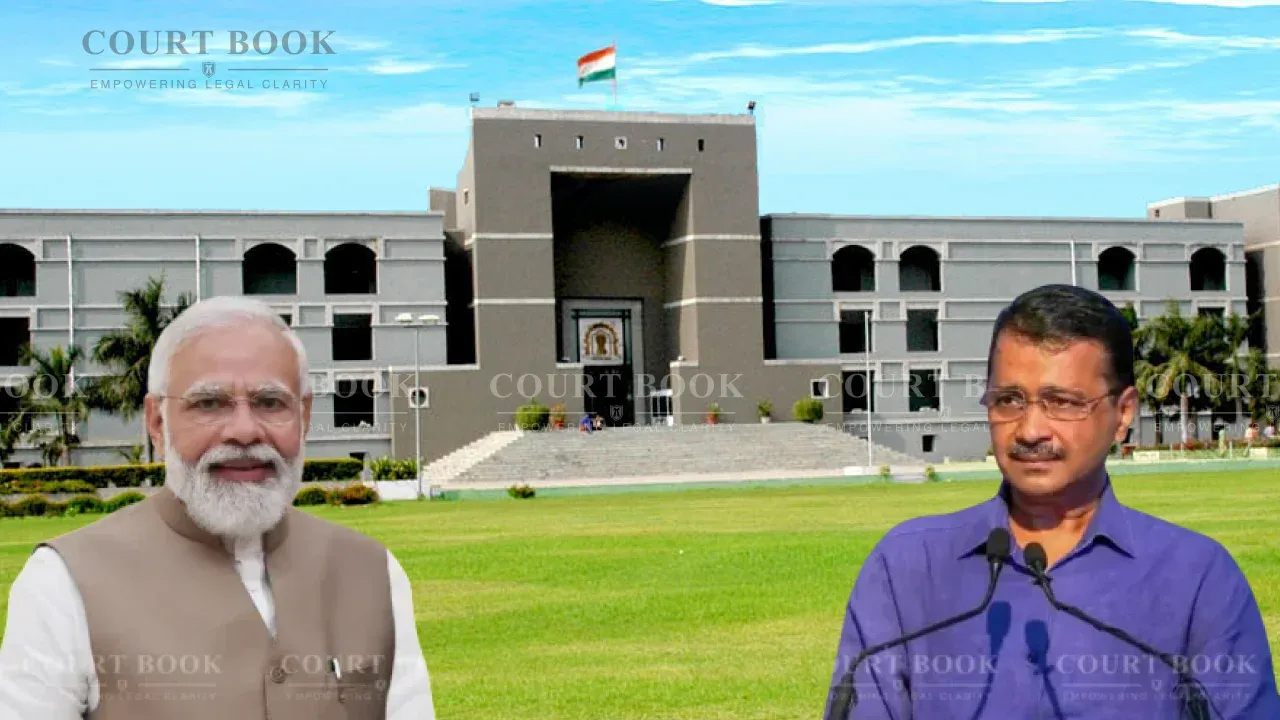
The Gujarat High Court has dismissed Arvind Kejriwal’s intra-court appeal challenging the observations made against him and the ₹25,000 cost imposed in proceedings concerning a request for Prime Minister Narendra Modi’s educational records under the Right to Information Act, 2005.
A Division Bench comprising Chief Justice Sunita Agarwal and Justice D.N. Ray pronounced the judgment on September 29, 2026, in Letters Patent Appeal No. 796 of 2026. The Bench declined to interfere with the earlier judgment of the single judge and also upheld the finding that the Central Information Commission (CIC) had acted beyond its statutory jurisdiction.
Background
The dispute arose from proceedings before the CIC in 2016 concerning information relating to Kejriwal’s electoral photo identity card. During those proceedings, Kejriwal submitted a written response seeking information regarding Prime Minister Modi’s educational qualifications.
The CIC treated the response as an RTI application and directed the Prime Minister’s Office, Delhi University and Gujarat University to facilitate a search for records relating to Modi’s degrees. The Gujarat University challenged the CIC’s order before the High Court.
In March 2023, a single judge quashed the CIC’s directions and imposed ₹25,000 as costs on Kejriwal. His subsequent appeal before the Division Bench was primarily directed against the observations concerning his conduct and the cost imposed on him.
The Division Bench examined the manner in which the CIC had proceeded and held that the Commission could not treat Kejriwal’s response during another RTI proceeding as a fresh application in the manner it had done.
The Court also considered whether educational records could be disclosed merely because the individual concerned holds a constitutional office. It concluded that educational documents such as degrees and marksheets constitute personal information and that universities hold such records in a fiduciary, or trust-based, capacity.
The Court observed:
“Balancing two intersecting rights, namely, the right of privacy of an individual and the right to seek information of a citizen under the RTI Act, 2005, we are of the firm opinion that disclosure of the information, as directed by the CIC, in the instant case, was exempted personal information of an individual falling within the ambit of Section 8(1)(e) and (j) of the RTI Act, 2005 and the respondent University cannot be asked to disclose the same.”
The Bench further held that disclosure could not be justified on the ground of larger public interest in the circumstances of the case. It also declined to expunge the observations made by the single judge regarding Kejriwal’s conduct.
The Gujarat High Court found no error warranting interference with the single judge’s judgment. It therefore dismissed the appeal, leaving the ₹25,000 cost imposed earlier undisturbed. The connected civil application seeking stay was also disposed of.
The Court concluded:
“In the totality of the facts and circumstances of the present case, no error on any of the submissions of the appellant herein, can be found in the judgment impugned. The appeal stands dismissed, accordingly, with no further order as to costs. The Civil Application for stay is disposed of.”


