

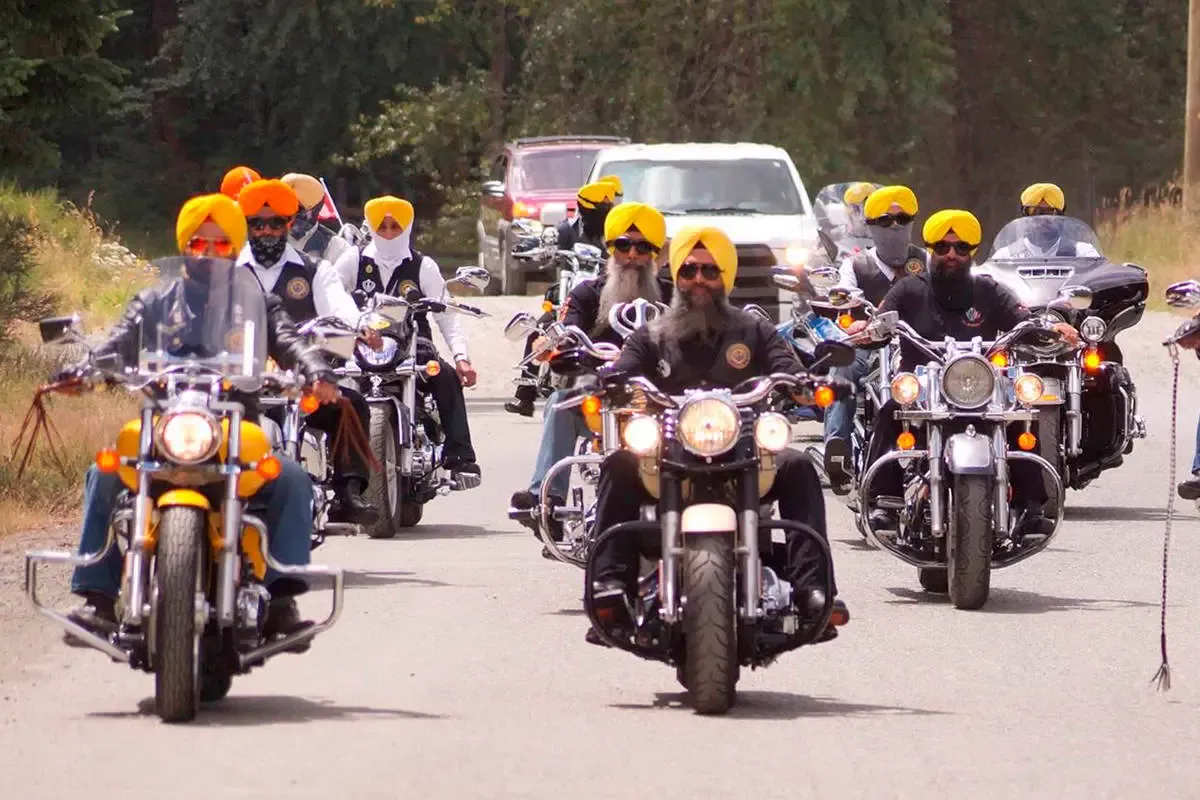
The Bombay High Court's Nagpur Bench has dismissed a public interest challenge to the proviso under Section 129 of the Motor Vehicles Act, 1988, which exempts Sikh persons wearing a turban from the mandatory helmet requirement while riding motorcycles. The court held that the exemption is based on a valid and reasonable classification and does not violate the guarantee of equality under Article 14 of the Constitution.
Background of the Case
The petition was filed by Kirtesh Vikas Chaudhari, a 23-year-old student appearing in person. He questioned the constitutional validity of the first proviso to Section 129 of the Motor Vehicles Act, arguing that exempting Sikhs from wearing helmets amounted to arbitrary discrimination and denied equal protection of laws.
According to the petitioner, Article 14 guarantees equality before the law and does not permit special privileges for any particular class of citizens. He also sought to challenge the related penalty provision under Section 194D of the Act on the same ground.
The Union of India opposed the petition, contending that the exemption is a constitutionally permissible classification and has a reasonable basis.
Court's Observations
A Division Bench of Justice Urmila Joshi-Phalke and Justice Nivedita P. Mehta examined Section 129, which makes it compulsory for persons riding motorcycles to wear protective headgear while in a public place, subject to an exception for Sikhs wearing turbans.
The Bench observed that Article 14 prohibits arbitrary class legislation but allows reasonable classification where there is an intelligible basis and a rational connection with the objective of the law.
The court said:
“Article 14 of the Constitution guarantees equality before the law and prohibits unreasonable discrimination. However, it permits ‘reasonable classification’ meaning thereby the Government can make distinct class for different groups if there is a valid and logical basis and the public purpose.”
The judges noted that the exemption is not intended to create an unjustified privilege based solely on religion. Instead, it takes into account the long-standing practice of Sikh men wearing turbans, which forms the basis for the statutory exception.
Reliance on Earlier Decisions
The High Court referred to several earlier judgments that had already examined the issue.
It relied on the Supreme Court's decision in Ajay Canu v. Union of India, which upheld mandatory helmet rules as a reasonable restriction in the interest of public safety.
The Bench also referred to decisions of the Delhi High Court, including Jamshed Ansari v. State (Government of NCT of Delhi), where the constitutional validity of Section 129 was upheld. That judgment held that Article 14 does not prevent the legislature from making reasonable classifications where there is a rational basis connected to the object of the law.
The court further noted that helmet requirements are intended to reduce fatalities and serious head injuries among riders and pillion passengers and therefore serve an important public purpose.
Decision
Holding that the legal position was already settled by earlier judicial precedents, the Bombay High Court concluded that the proviso exempting Sikhs wearing turbans from the helmet requirement does not violate Article 14 of the Constitution.
“The controversy, therefore, is no more res integra,”
the Bench observed, adding that Section 129 of the Motor Vehicles Act cannot be said to infringe any fundamental right guaranteed under the Constitution. Finding no merit in the challenge, the court dismissed the writ petition and discharged the rule.
Case Details:
Case Title: Kirtesh Vikas Chaudhari vs Union of India
Case Number: Criminal Writ Petition No. 416 of 2026
Judge: Justice Urmila Joshi-Phalke and Justice Nivedita P. Mehta
Decision Date: 29 June 2026


