

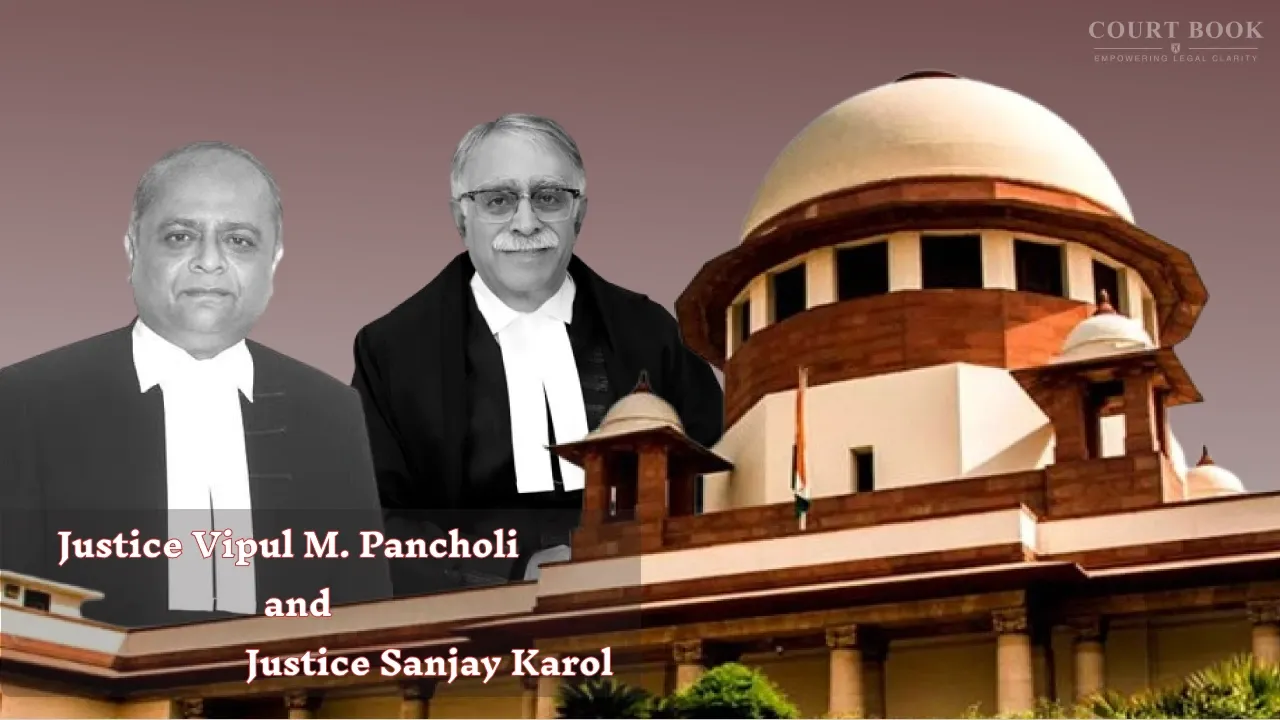
The Supreme Court has set aside a Kerala High Court judgment that had overturned a trial court's decision in a property dispute involving the validity of a Will. Stressing the importance of well-reasoned judicial orders, the Court ruled that a first appellate court cannot reverse a trial court's findings through a brief order without properly examining the evidence and explaining its conclusions.
Background of the Case
The dispute arose after the death of Thankam, whose daughter, Lakshmi, sought partition of the family property. Other family members relied on a registered Will dated March 22, 1999, claiming that Thankam had bequeathed the property in their favour.
The trial court concluded that the Will had not been proved in the manner required under the Indian Succession Act and passed a preliminary decree granting Lakshmi a share in the property.
The Kerala High Court later reversed that decree and dismissed the suit. While doing so, it also criticised the trial judge, stating that the judge had failed to understand the legal issues and directing that the officer be sent for training. Lakshmi challenged that decision before the Supreme Court.
Court's Observations
The Supreme Court observed that a first appellate court is the final court on questions of fact and law in most civil disputes. Therefore, it carries a duty to independently analyse the evidence, frame the issues for determination wherever necessary, and provide clear reasons when disagreeing with the trial court.
The Supreme Court noted that the High Court disposed of the first appeal through a brief judgment comprising only two paragraphs and about three-and-a-half pages, without adequately analysing the evidence before reversing the trial court's findings.
The Court observed:
“Reasons are the life blood of law. Without this, the old adage ‘justice is not only to be done but it also must be seen to be done’ loses its vitality.”
Referring to settled principles governing first appeals, the Bench said that appellate courts cannot dispose of appeals through cryptic orders, particularly when reversing a detailed judgment delivered by the trial court.
Remarks Against Trial Judge Found Unwarranted
The Supreme Court also found fault with the High Court's direction asking that the Principal Sub Judge be sent for training.
The Bench emphasised that judicial criticism should be exercised with restraint and only when it is necessary for deciding the case. Courts should avoid making adverse remarks against judicial officers unless supported by evidence and essential for adjudication.
The judgment stated:
“The attitude to be adopted by appellate Courts should be that of a friend, philosopher and a guide rather than wielding the heavy-handed baton of superior authority pointing out errors committed by its underlings.”
Decision
Allowing the appeal, the Supreme Court set aside the Kerala High Court's judgment dated November 30, 2022, including its direction against the trial judge.
The Court restored the first appeal to the file of the Kerala High Court for fresh consideration, leaving all legal and factual issues open for the parties to raise during the rehearing.
No order as to costs was passed.
Case Details
Case Title: Lakshmi v. Gopi & Others
Case Number: Civil Appeal arising out of SLP (Civil) No. 9510 of 2023
Judge: Justice Sanjay Karol and Justice Vipul M. Pancholi
Decision Date: July 15, 2026


