

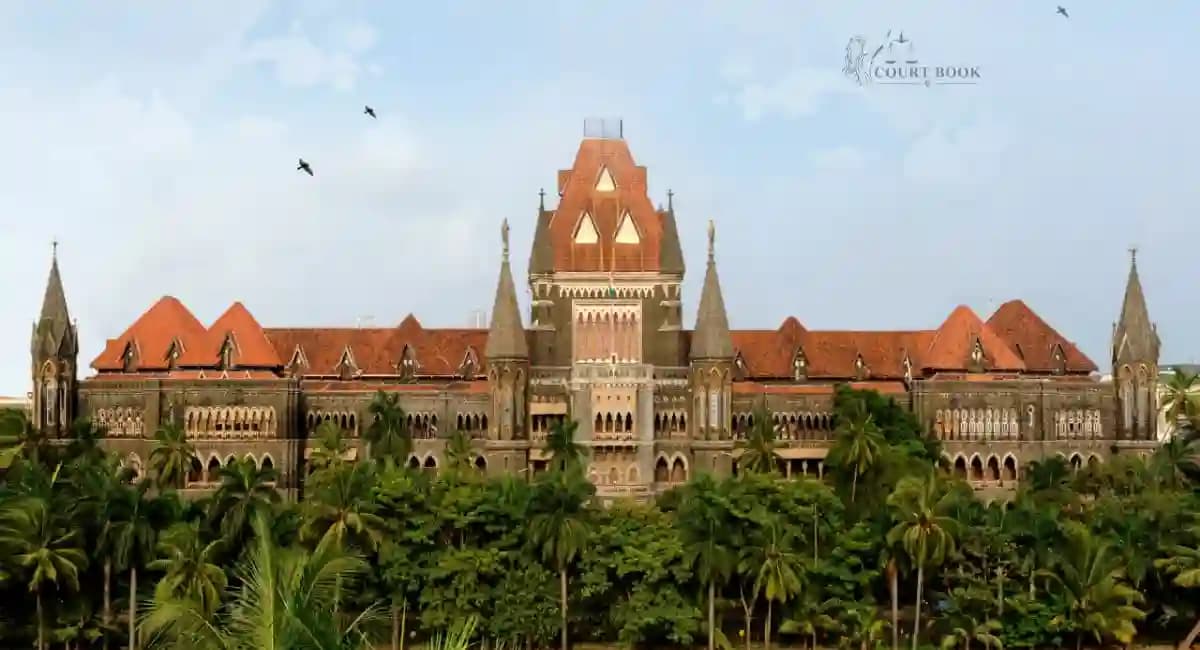
The Bombay High Court ruled that an incoming developer cannot be held liable for the financial defaults of an erstwhile builder. The Court quashed an order issued by the Maharashtra Real Estate Regulatory Authority (MahaRERA) that had directed a new developer to pay interest on a ₹37 lakh refund owed to home buyers by a previous developer.
The ruling clarifies that past monetary liabilities crystallised against a defaulted builder do not automatically pass on to a new developer appointed through a court-sanctioned process.
Background of the Case
The dispute stems from the redevelopment of a tenanted building named 'Samaj Darshan' in Kandivali West, owned by a charitable trust. In 2013-14, the trust partnered with an erstwhile developer to redevelop the property. In January 2015, the builder issued an allotment letter for a flat to two buyers after taking ₹37 lakhs.
However, the builder defaulted on construction and breached its agreement, prompting the trust to terminate the contract in July 2017. Meanwhile, the flat buyers approached MahaRERA seeking a refund. In May 2018, MahaRERA recorded an undertaking by the erstwhile developer to refund ₹37 lakhs without interest. When the builder repeatedly defaulted on this repayment, the buyers sought a review to claim interest.


In 2021, pursuant to directions of the Bombay High Court in arbitration proceedings, a Court Receiver took charge of the site and handed it to the trust, which then engaged H. Rishabraj Developers as the new builder on a 'clean-slate basis'. Despite MahaRERA registering the new promoter with clear exclusions for past liabilities, another bench of the authority later directed both the former builder and the new developer to pay interest on the ₹37 lakh amount from May 2018 onwards. Consequently, revenue authorities attached and froze the new developer's bank accounts.
A Division Bench comprising Justice Suman Shyam and Justice Gautam A. Ankhad observed that MahaRERA erred in foisting the financial default of a former developer onto an incoming party that came into the picture years later.
"As per the order dated 17th May 2018, the liability to pay interest can only be fastened on the party which has the liability to pay principal sum of Rs 37 lakhs, which was of the Respondent No.5 alone. If a default is committed by the Respondent No.5, it cannot be retrospectively transferred to a third party, who has entered the field three years after the said order was passed."
The Court further rejected the argument that the new developer was automatically bound under Sections 2(zk) or 15 of the Real Estate (Regulation and Development) Act, 2016 (RERA).
"In our view, the definition of co-promoter under Section 2(zk) of RERA Act cannot be read as if every financial liability of one promoter is automatically transferred to a subsequent promoter undertaking development of the same property."
"The Petitioner derives its right through a court-sanctioned process and not from Respondent No.5. There is no privity of contract between the Petitioner and Respondent No.5... In this case, a refund order, already passed against Respondent No. 5 on the basis of its own undertaking, is not a 'pending obligation' of the project which passes to whoever completes the building. It is the debt of Respondent No. 5 only."
The High Court allowed both writ petitions filed by the new developer, quashing the MahaRERA order dated March 21, 2022, and the execution warrant to the extent they sought recovery from the new builder. It also set aside the revenue authorities' distraint orders and directed the unfreezing of the developer's bank accounts.
The Court clarified that the judgment does not absolve the erstwhile developer of its debt, leaving it open for the home buyers to enforce recovery proceedings strictly against the defaulted builder.
Case Details
Case Title: H. Rishabraj Developers v. State of Maharashtra & Ors. (with connected petition)
Case Number: Writ Petition No. 894 of 2024 with Writ Petition No. 7618 of 2022
Judge: Justice Suman Shyam & Justice Gautam A. Ankhad
Decision Date: November 5, 2026



