

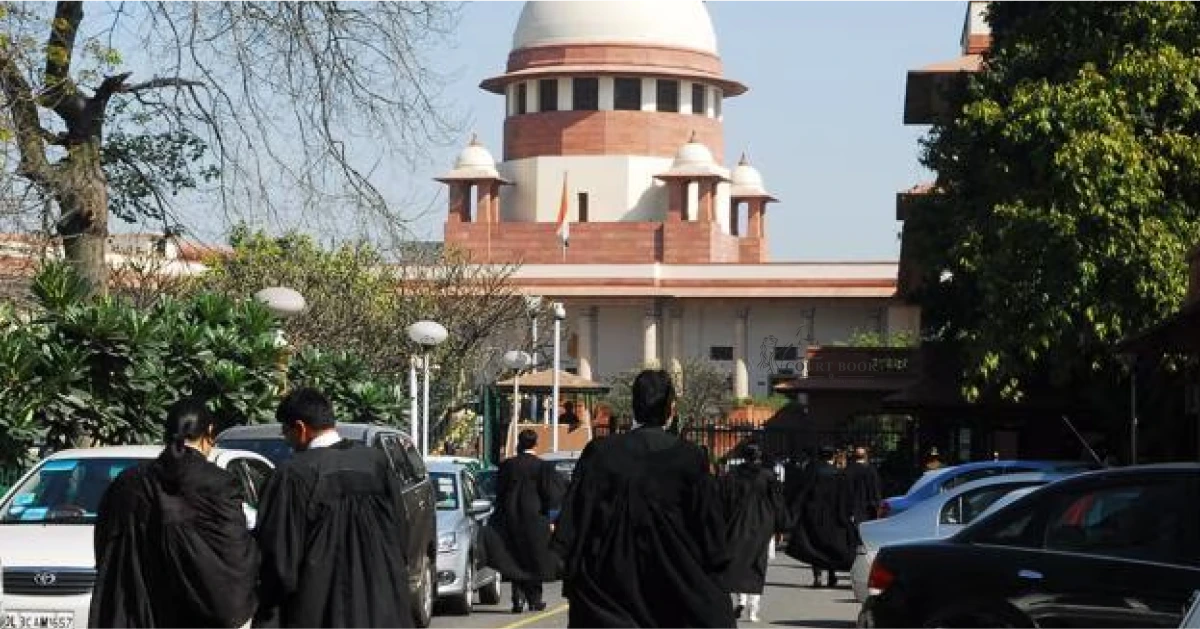
The Supreme Court on Thursday, August 20, 2026, delivered its much-awaited judgment on the meaning of “industry” under Section 2(j) of the Industrial Disputes Act, 1947. A nine-judge Constitution Bench, by a 5:4 majority, held that parts of the “triple test” laid down nearly five decades ago in Bangalore Water Supply & Sewerage Board v. A. Rajappa require refinement.
However, the Court made it clear that the reformulated test will operate prospectively. Pending disputes under the repealed Industrial Disputes Act will continue to be decided using the 1978 triple test.
Background of the Case
The dispute arose from State of U.P. v. Jai Bir Singh, which has been pending in the Supreme Court for more than two decades. The reference ultimately required a nine-judge Bench to reconsider the correctness of the seven-judge decision in Bangalore Water Supply, which had given the word “industry” a broad meaning.
The 1978 judgment evolved a three-part test. Broadly, an activity could fall within the definition where there was systematic activity, organised cooperation between employer and employee, and production or distribution of goods or services intended to satisfy human needs. The Court had also held that the absence of a profit motive was not, by itself, decisive.
A five-judge Bench had referred the issue for reconsideration in 2005 in State of U.P. v. Jai Bir Singh. In January 2017, a seven-judge Bench directed that the matter be placed before a nine-judge Bench.
Supreme Court’s Majority View
Chief Justice of India Surya Kant, heading the Constitution Bench, said that the basic framework of the 1978 judgment had remained relevant, but some parts needed clearer formulation.
“We have felt that some of these constituent elements could have been articulated differently so as to better reflect the scope and contours of Section 2(j). Therefore, we propose to reformulate the triple test.”
The majority accordingly modified the test instead of completely discarding the approach adopted in Bangalore Water Supply.
The Bench also made an important distinction regarding pending litigation. It clarified that the new formulation would not disturb matters that have already attained finality and would not alter the legal position governing cases presently pending under the 1947 Act.
Pending Cases to Follow the 1978 Test
The Court specifically directed that pending proceedings under the Industrial Disputes Act, 1947, should continue to be decided according to the earlier triple test.
“All matters presently pending before courts, tribunals, labour authorities or other fora under the Industrial Disputes Act, 1947 may be adjudicated in accordance with the triple test as laid down in Bangalore Water Supply.”
The majority also clarified that concluded judgments, settlements and determinations would remain undisturbed.
Four Judges Dissent
Justices BV Nagarathna, Dipankar Datta, Ujjal Bhuyan and Joymalya Bagchi dissented from the majority's approach, although their views were not identical.
Justice Nagarathna considered the reference unnecessary and maintained that the Bangalore Water Supply interpretation should continue for pending matters. Justice Datta, joined by Justice Bhuyan, also questioned the necessity of reopening an interpretation that had governed labour law for decades.
Justice Bagchi held that the reference was maintainable but disagreed with the majority's reformulation, finding the original triple test sufficient for the 1947 Act.
Justice PS Narasimha, while agreeing with the majority, separately emphasised that the Industrial Relations Code, 2020 must be interpreted on its own language and context.
Industrial Relations Code Not Examined
The Supreme Court deliberately refrained from deciding the meaning of “industry” under the Industrial Relations Code, 2020. The present ruling is confined to the interpretation of the repealed Industrial Disputes Act, 1947.
The nine-judge Bench thus disposed of the long-pending reference by reformulating the triple test prospectively while preserving the 1978 test for pending proceedings under the earlier legislation.
Case Details:
- Case Title: State of U.P. v. Jai Bir Singh
- Case Number: Civil Appeal No. 897 of 2002 and connected matters
- Judge: CJI Surya Kant, Justices BV Nagarathna, PS Narasimha, Dipankar Datta, Ujjal Bhuyan, Satish Chandra Sharma, Joymalya Bagchi, Alok Aradhe and Vipul M. Pancholi
- Decision Date: August 20, 2026


