

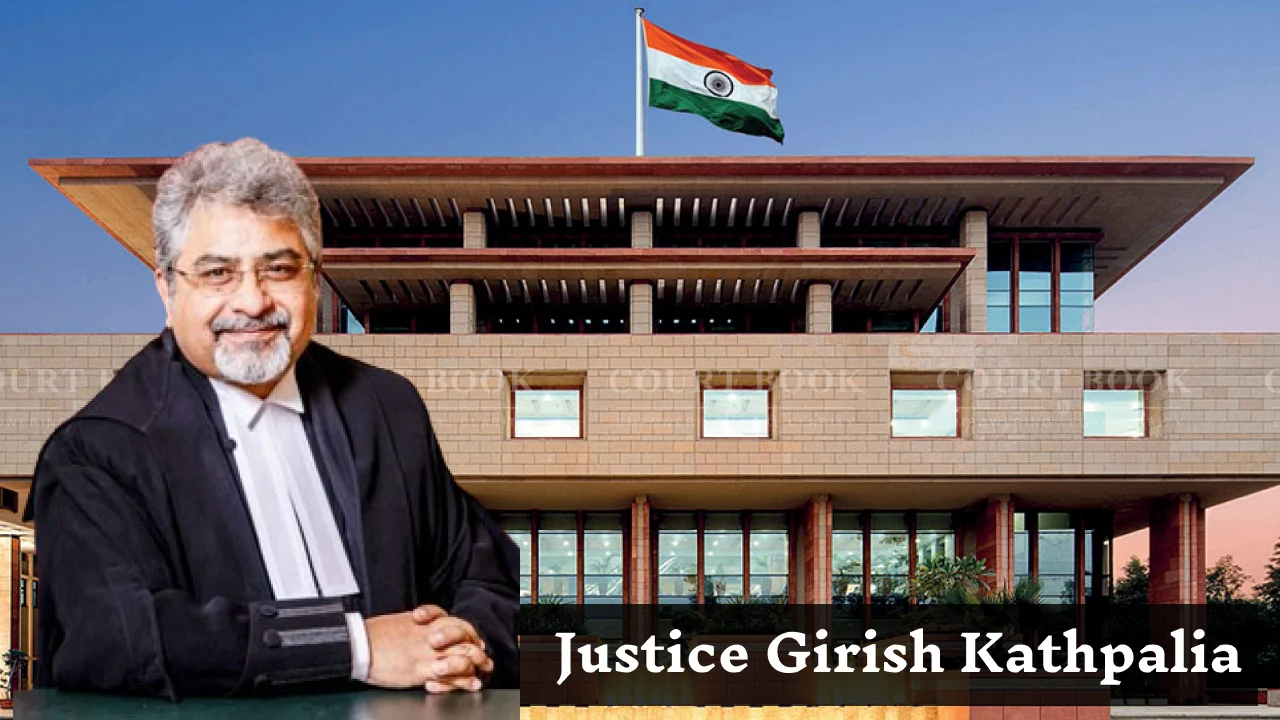
The Delhi High Court has dismissed a petition seeking registration of an FIR in a complaint concerning the death of the petitioner’s wife during the COVID-19 pandemic. Justice Girish Kathpalia held that the High Court’s inherent powers under Section 528 of the Bharatiya Nagarik Suraksha Sanhita (BNSS) cannot ordinarily be used to bypass the statutory bar applicable after a party has already pursued a criminal revision.
The Court, however, clarified that inherent powers may still be exercised in exceptional circumstances where refusing to intervene would result in gross injustice or a serious miscarriage of justice.
Background
The petitioner had approached the Magistrate with a complaint and an application seeking directions for registration of an FIR. The allegations related to the treatment of his wife at a hospital during April 2021, when she was suffering from COVID-19. According to the complaint, the petitioner alleged that his wife was initially taken to one hospital but was refused admission due to lack of beds. She was subsequently admitted at another hospital after the petitioner alleged that money was demanded for arranging a bed.
The Magistrate dismissed the application seeking police investigation and directed that the complaint proceed through pre-summoning evidence. The petitioner challenged that decision before the Sessions Court, but the revision petition was also dismissed. The Sessions Court had considered the allegations, relevant judicial precedents concerning medical negligence and the report of the Delhi Medical Council.
The petitioner thereafter approached the High Court under Section 528 BNSS, contending that the inherent jurisdiction of the High Court remained available despite the earlier revision proceedings.
Justice Girish Kathpalia examined the relationship between Section 438(3) BNSS, which corresponds to the earlier Section 397(3) CrPC, and Section 528 BNSS, corresponding to Section 482 CrPC.
The Court noted that the statutory bar is intended to prevent repeated revisional proceedings and unnecessary delays. It observed that inherent powers are wide, but they are not completely unrestricted.
"While exercising inherent powers, the High Court must be cautious not to permit a backdoor entry to what is explicitly prohibited by sub Sections (2) and (3) of Section 438 BNSS. If inherent powers are exercised in a routine manner by the High Court, it would make sub Sections (2) and (3) of Section 438 BNSS completely otiose."
The Court also considered Supreme Court precedents, including Krishnan v. Krishnaveni and Dhariwal Tobacco Products Ltd. v. State of Maharashtra, concerning the circumstances in which inherent jurisdiction can be exercised despite the availability or previous use of revisional remedies.
The High Court found that the circumstances did not amount to gross injustice. A significant factor was that the petitioner’s complaint was still pending before the Magistrate, where he could lead pre-summoning evidence.
The Court observed that the petitioner was therefore not left remediless merely because police investigation and FIR registration had not been ordered.
The Court further held that the extraordinary jurisdiction available under Section 528 BNSS should be invoked sparingly and only in appropriate cases involving circumstances such as gross injustice, abuse of process or serious miscarriage of justice.
Concluding that the case did not fall within the category of gross injustice or a rare case warranting exercise of inherent powers, the Delhi High Court declined to interfere with the orders of the Magistrate and Sessions Court.
Justice Girish Kathpalia held that the petitioner’s complaint remained pending before a competent court and that he could pursue the available procedure by leading pre-summoning evidence.
The Court consequently dismissed CRL.M.C. 119/2026 as not maintainable.


