

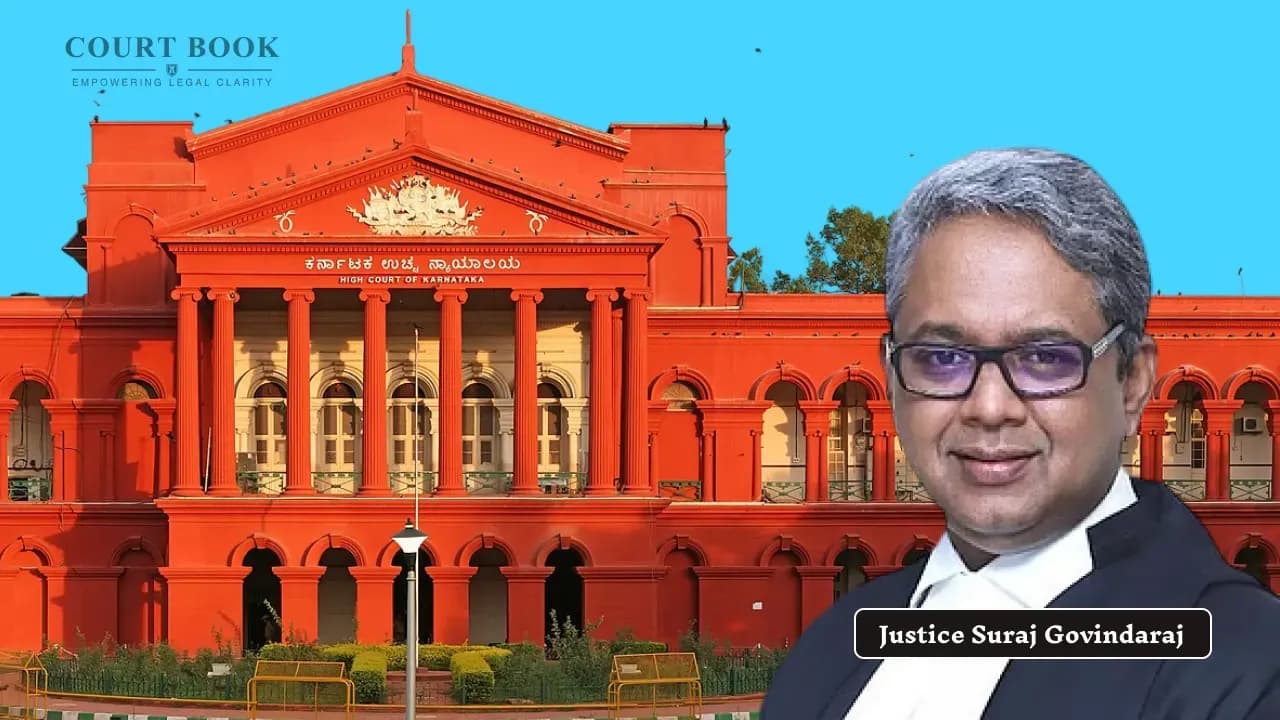
The Karnataka High Court has dismissed a petition seeking to quash a criminal case after finding that the petitioner stayed away from court-referred mediation. Justice Suraj Govindaraj passed the order on 12 October 2026.
Background
The petitioner approached the High Court under Section 482 of the old Code of Criminal Procedure, now Section 528 of the Bharatiya Nagarik Suraksha Sanhita. This provision lets a High Court prevent misuse of court process. He wanted the entire proceedings pending before the 11th Additional Chief Metropolitan Magistrate Court, Mayo Hall Unit, Bengaluru, set aside.
The case was registered by the East Zone Women Police. It involves Sections 323, 498(A), 504 and 506 of the Indian Penal Code and Section 3 of the Dowry Prohibition Act.
The matter was sent to mediation with the consent of both sides. The petitioner attended the first sitting but did not appear on the next two dates, even though the other side was present each time.


The Court noted that having agreed to mediation, the petitioner was expected to take part seriously.
“The matter was referred to mediation with the consent of the parties, thereby affording them an opportunity to resolve the dispute amicably. Having consented to such a reference, the petitioner was duty-bound to participate in the mediation proceedings sincerely and diligently. The petitioner could not have sought the benefit of a reference to mediation and thereafter frustrated the process by remaining absent.”
The Court found that the repeated absence, without a satisfactory explanation, showed the petitioner did not intend to pursue mediation in good faith. It observed that the reference appeared to have been used to obtain an adjournment. On this, the Court said:
“A party cannot be permitted to invoke the mediation process to secure time from the Court and thereafter frustrate that very process by failing to participate.”
It added that the conduct wasted the time of the mediator and of the other party, who attended in good faith.
Holding that the petitioner was not entitled to further indulgence, the Court dismissed the petition on this ground. It then dealt with the pending application for stay:
“In view of dismissal of the main petition, pending IA’s does not survive for consideration. Hence, IA stands dismissed.”




