

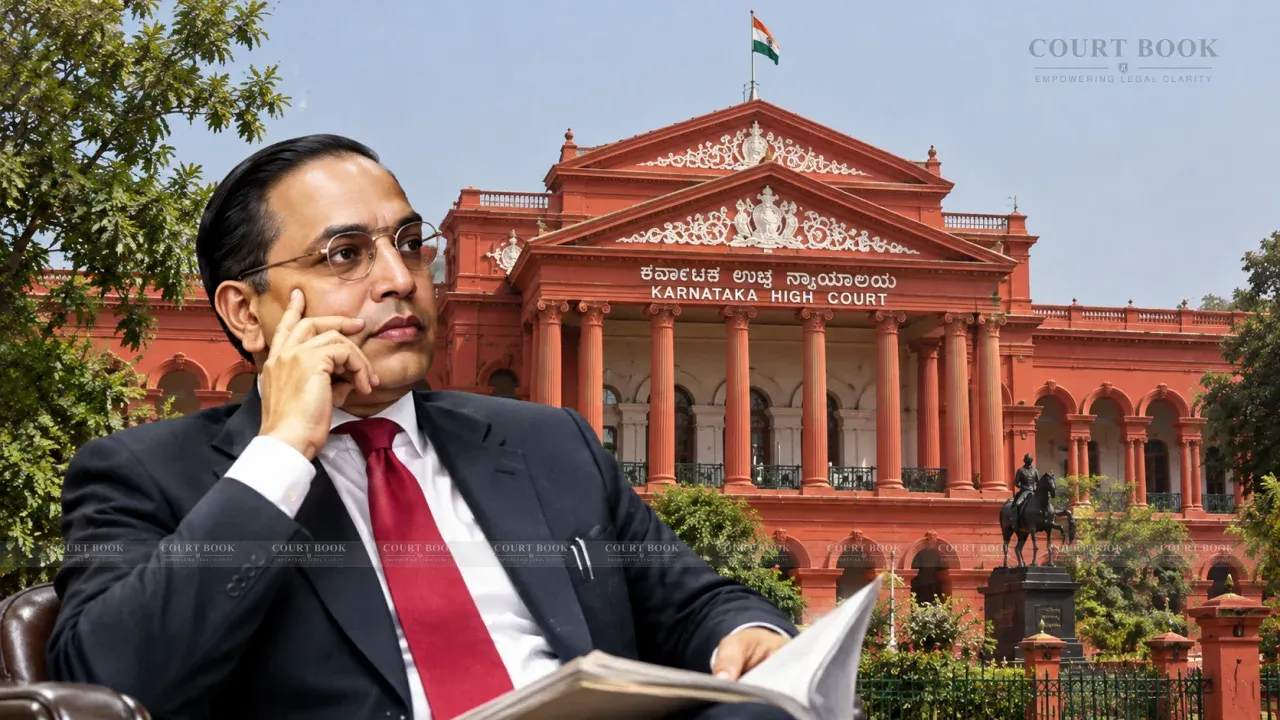
The Karnataka High Court has dismissed the State government's appeal against the acquittal of several accused in a 2009 case involving the alleged removal of a signboard and a portrait of Dr BR Ambedkar at a community building in Bommanahalli village, Chamarajanagar district. Justice G Basavaraja held that the trial court had committed no legal or factual error warranting interference with its decision.
Background
According to the prosecution, the incident occurred around 7 pm on June 6, 2009. The accused were alleged to have assembled unlawfully, damaged the signboard of the Samudaya Bhavana bearing Dr Ambedkar’s name and photograph, and assaulted and abused members of a Scheduled Caste community.
The prosecution alleged that the incident involved the use of weapons, physical injuries and caste-based abuse. The accused faced charges under various provisions of the Indian Penal Code, including Sections 143, 147, 148, 341, 323, 324, 506, 427 and 295A, along with provisions of the Scheduled Castes and Scheduled Tribes (Prevention of Atrocities) Act, 1989.
During the trial, the prosecution examined 13 witnesses, produced 21 documents and marked 25 material objects. The trial court acquitted the accused covered by the present appeal, prompting the State to challenge the decision before the High Court.
The State argued that the trial court had failed to properly appreciate the evidence. Its counsel submitted that injured witnesses had described the alleged assault, caste-based abuse and damage to the community building’s signboard.
The State contended that the evidence did not justify disbelieving these witnesses and sought the reversal of the acquittal.
The respondents opposed the appeal, maintaining that the trial court had assessed the evidence in accordance with law and that no grounds existed for interference.
Justice Basavaraja examined the evidence presented during the trial, including the testimony of the injured witnesses, medical evidence and investigation records.
The trial court had identified concerns about the witnesses’ ability to observe the incident in darkness. The evidence indicated that electricity supply to the village had stopped at around 6:45 pm, yet the witnesses had not explained how they saw the incident or what light enabled them to identify those involved.
The trial court had also found material contradictions in the witnesses’ accounts, raising doubts about the prosecution’s version of events. It concluded that the prosecution had failed to establish the accused’s guilt beyond reasonable doubt.
After reviewing the record, the High Court found no legal or factual error in that assessment.
The Karnataka High Court dismissed the State’s appeal and upheld the trial court’s judgment of acquittal dated August 20, 2015.
Case Details
- Case Title: State of Karnataka through Terakanambi Police v. Sri Paramesha & Ors.
- Case Number: Criminal Appeal No. 1428 of 2015 (A)
- Judge: Justice G Basavaraja
- Decision Date: October 1, 2026


