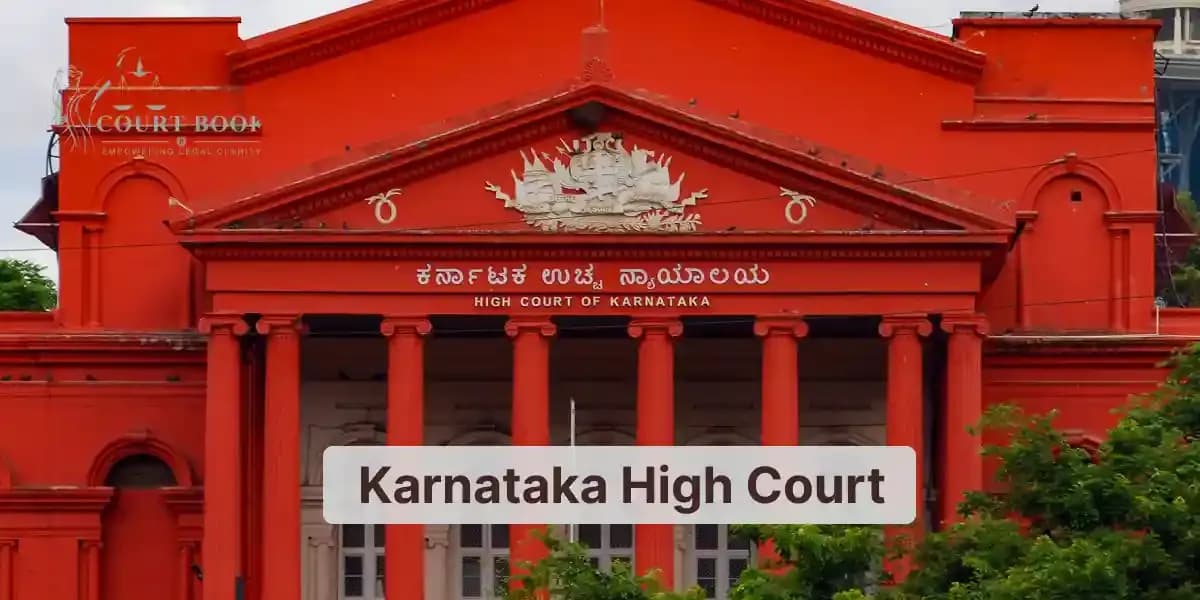
Justice Vijaykumar A. Patil delivered the order on August 25, 2026, in W.P. No.23294/2022. The petition challenged an appellate court order directing the petitioners to undergo three months’ detention in civil prison.
The dispute arose from O.S. No.171/2014, in which M.P. Noronha sought an injunction restraining the defendants from publishing defamatory statements, photographs, pictures or articles concerning him.
The trial court granted the temporary injunction on April 10, 2015. The order was later challenged in appeal but was confirmed. The High Court noted that despite the injunction, an article concerning the respondent was published in Karavali Ale on April 18, 2015. A proceeding under Order XXXIX Rule 2A CPC was subsequently initiated.
In September 2021, the trial court directed the petitioners to publish an unconditional apology within 30 days and prescribed 15 days’ civil imprisonment in case of default. The petitioners subsequently published an apology in the newspaper.
The finding that the injunction had been disobeyed was not challenged by the petitioners and had therefore attained finality. The respondent, however, challenged the form of punishment imposed by the trial court.
The High Court examined whether a trial court could impose a penalty other than those specifically mentioned in Order XXXIX Rule 2A CPC.
The provision permits attachment of the property of a person who disobeys an injunction and also allows detention in civil prison for up to three months.
Justice Patil relied on earlier decisions, including the Supreme Court’s ruling in State of Madhya Pradesh v. Centre for Environment Protection Research and Development, to hold that where a statute prescribes a penalty, a court cannot create another form of punishment outside that statutory framework.
"The legal maxim Nulla poena sine lege means no punishment without law, the Court is duty bound to award a punishment within the framework of law and cannot invent new penalties."
The Court concluded that Order XXXIX Rule 2A provides only two forms of punishment—attachment of property and detention in civil prison. Therefore, directing the petitioners to tender an apology as an independent form of punishment was not permissible under the provision.
The Karnataka High Court dismissed the writ petition and upheld the appellate court’s direction for three months’ detention in civil prison. However, it permitted the petitioners to withdraw the ₹2 lakh deposited before the High Court, holding that the amount could not operate as compensation or substitute for the punishment prescribed under Order XXXIX Rule 2A CPC.
Case Title: Sathish N. Vaidya & Ors. v. M.P. Noronha
Case Number: W.P. No.23294/2022 (GM-CPC)
Judge: Justice Vijaykumar A. Patil
Decision Date: August 25, 2026