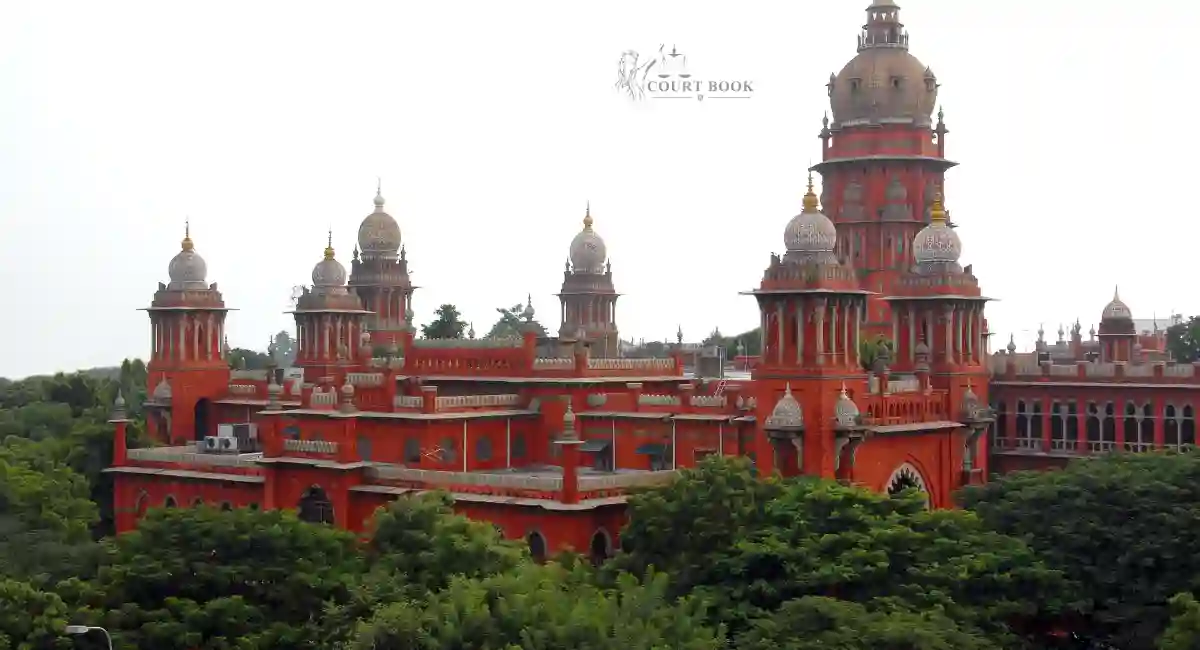
The Madras High Court has held that properties acquired by a Catholic priest after entering a religious order and undertaking the associated obligations belong to the religious society, rather than his natural heirs. A Division Bench of Justice N. Anand Venkatesh and Justice K. K. Ramakrishnan delivered the ruling while deciding competing claims over fixed deposits worth ₹56 lakh.
Background
The dispute concerned the deposits left by Reverend Father Deivakumar Arulanantham, a member of the ABVM Society of the Catholic Apostolate (Pallottines), who died on February 24, 2018.
His two brothers and his sister’s daughter sought a succession certificate to claim the deposits maintained with the State Bank of India’s Kulithalai branch in Karur district. They relied on their status as his legal heirs and pointed out that the deposits stood in his name.
The Society filed a separate petition, arguing that the priest had entered religious life in 1989 and that the money represented assets acquired for the institution. It also relied on a handwritten document dated July 2, 1988, titled “My Last Will”, which recorded his commitment regarding his personal belongings and the Society’s rights.
The Principal District Judge, Karur, had allowed the relatives’ petition and dismissed the Society’s claim on September 18, 2024. The Society challenged both orders before the High Court.
The Bench examined the document relied upon by the Society and clarified that it could not operate as a valid will because the statutory requirements for execution and attestation had not been satisfied. However, the Court considered it as evidence of the priest’s religious undertaking.
The judgment observed:
“The true nature and legal effect of a document have to be gathered from its substance, contents and the circumstances in which it came to be executed.”
The Court also examined the religious order’s rules and Canon Law, which govern the obligations of its members. It noted that the priest’s brother had acknowledged the religious discipline requiring priests to place properties and earnings acquired after taking the relevant vows at the Society’s disposal.
The Bench distinguished property acquired during religious life from property inherited independently from one’s family. It made clear that the Society’s claim concerned assets acquired after the priest entered the religious order, not property inherited from his family merely because of his religious status.
The Court concluded that the relatives could not claim the disputed deposits solely on the basis of their relationship with the deceased.
The High Court allowed both appeals, set aside the orders passed by the Principal District Judge and allowed the Society’s succession petition.
Since the relatives had received the fixed-deposit amount during the appeals, the Court directed them to return the amount received to the Society within one month of receiving a copy of the judgment, without interest. If they failed to do so, the amount would carry interest at 9% per annum from the date of the judgment until payment.
No costs were awarded.
Case Details
- Case Title: ABVM Society of the Catholic Apostolate (Pallottines) v. A. Deiva Nayagam & Ors.
- Case Number: C.M.A.(MD.) Nos. 560 and 623 of 2026
- Judges: Justice N. Anand Venkatesh and Justice K. K. Ramakrishnan
- Decision Date: October 13, 2026