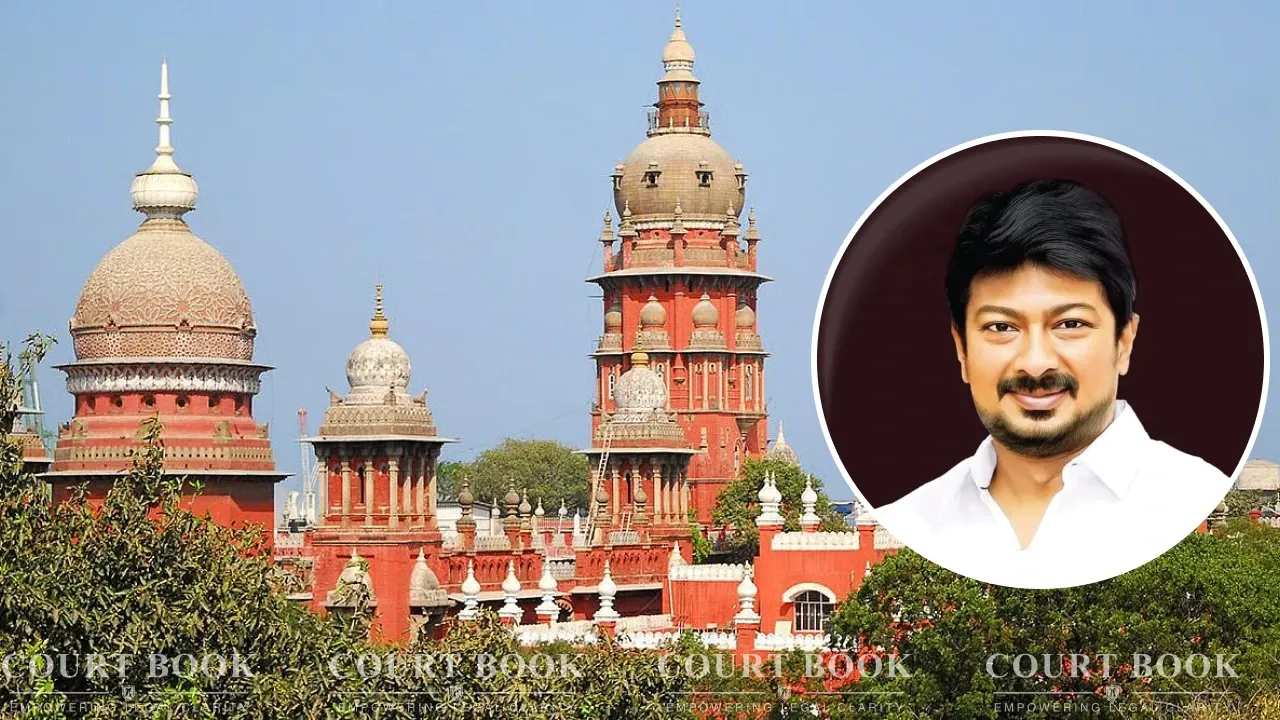
The Madras High Court on Tuesday (4 Aug...) directed the Tamil Nadu Police to release Leader of the Opposition Udhayanidhi Stalin on station bail after questioning him in connection with a criminal case arising from remarks made during a public meeting in Thanjavur. The State government informed the Court that it had no intention of seeking his judicial custody.
Background of the Case
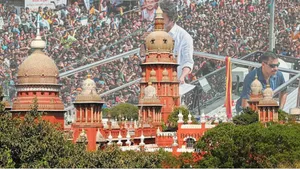
The case stems from a speech delivered by Udhayanidhi Stalin at a public rally on the Cauvery water-sharing issue in Thanjavur. During the event, he allegedly made remarks after a section of the crowd raised slogans referring to actress Trisha. The comments later drew criticism from several political parties, following which a complaint was lodged with the Thanjavur Police.
An FIR was registered under various provisions of the Bharatiya Nyaya Sanhita (BNS), the Information Technology Act, and the Tamil Nadu Prohibition of Harassment of Women Act. Stalin subsequently approached the High Court seeking anticipatory bail. However, he was detained by the police before the plea could be heard.
Court's Observation
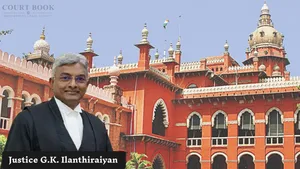
The matter came up before Justice G.K. Ilanthiraiyan after senior counsel sought an urgent hearing. During the proceedings, Advocate General P.S. Raman Vijay Narayan informed the Court that the State only intended to question Udhayanidhi Stalin and would not seek his remand.
Recording the submission, the bench observed that the anticipatory bail plea had become difficult to maintain after the arrest but noted that the Court retained the power to grant appropriate relief if required.
“The State does not intend to remand him. He will be released today itself on station bail,” the Advocate General informed the Court.
Court's Decision
Accepting the State's assurance, Justice G.K. Ilanthiraiyan directed the police to release Udhayanidhi Stalin on station bail after completing the interrogation on the same day.
The Court also instructed him to cooperate with the investigation whenever required and did not examine the merits of the allegations in view of the State's stand.





-300x169.webp)