

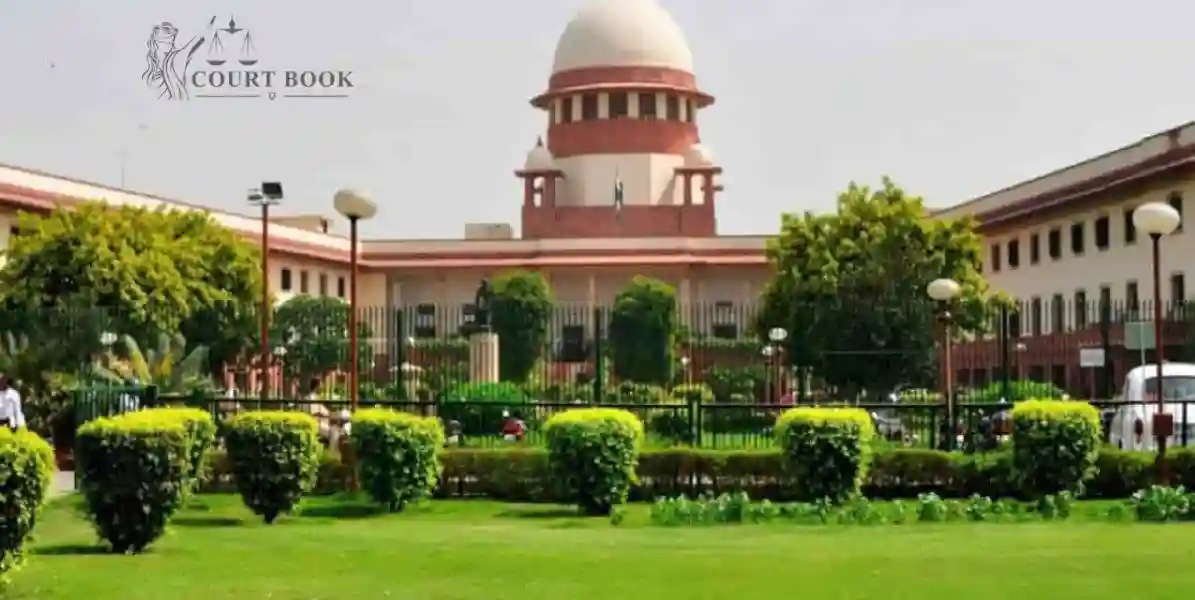
The Supreme Court has ruled that the Maharashtra government had no authority to hand over its power of referring wage-related disputes of journalists to Labour Courts to subordinate officers. A bench of Justice Dipankar Datta and Justice Sheel Nagu delivered this verdict on August 11, 2026, settling a long-running legal tangle involving journalists from Dainik Bhaskar and All India Reporter Private Limited.
Background of the Case
The dispute traces back to Section 17 of the Working Journalists and Other Newspaper Employees (Conditions of Service) and Miscellaneous Provisions Act, 1955 - a law meant to protect the interests of newspaper employees. Under this Section, if a journalist claims unpaid dues from an employer and a dispute arises over the amount, the State Government is supposed to refer the matter to a Labour Court.
In 2016, the Maharashtra government issued a notification delegating this referral power to certain officers - the Additional Commissioners of Labour and Deputy Commissioners of Labour - instead of exercising it directly. Acting on this delegated power, these officers referred several wage disputes to Labour Courts across the state.
Years later, employers like Dainik Bhaskar and All India Reporter challenged this arrangement before the Bombay High Court, arguing that only the State Government itself, not any delegated authority, could make such references under the law. The High Court's Aurangabad and Nagpur benches agreed with the employers, setting aside the references and the resulting Labour Court awards. Aggrieved employees and journalist unions then approached the Supreme Court.
Court's Observations
The bench closely examined the structure of Section 17 and noted a key distinction. While sub-section (1) of the law expressly allows the State Government to delegate its function of verifying undisputed dues, sub-section (2) - dealing with referring disputed amounts to Labour Courts - carries no such delegation power.
The Court invoked the principle that when a law expressly permits delegation in one part but stays silent in another, it means the legislature never intended delegation there. The bench reasoned that the express mention of one excludes the other, so the legislature did not intend the power of delegation to be conferred on the State Government for making a reference to the Labour Court under Section 17(2).
The judges also drew on earlier rulings on administrative delegation, holding that referring a dispute requires the government's own satisfaction that a genuine dispute exists - a responsibility that cannot simply be passed down.
Decision
Despite finding the 2016 notification invalid, the Court chose not to nullify years of proceedings built upon it. Invoking its special powers under Article 142 of the Constitution, the bench directed the Maharashtra government to revisit every reference made by the delegated officers and independently record fresh satisfaction on whether each dispute genuinely warranted referral.
Where such satisfaction is recorded, references will continue and pending Labour Court proceedings will resume from where they left off. Where the government finds no valid dispute existed, employees will be free to pursue recovery through other legal remedies.
The government has been given six months to complete this exercise, and all pending proceedings will remain on hold until then.
Case Details:
Case Title: Sudhir & Ors. vs. Head of Human Resource, Dainik Bhaskar Group (D.B. Corp. Ltd.) & Ors. (with connected appeals)
Judge: Justice Dipankar Datta and Justice Sheel Nagu
Decision Date: August 11, 2026


