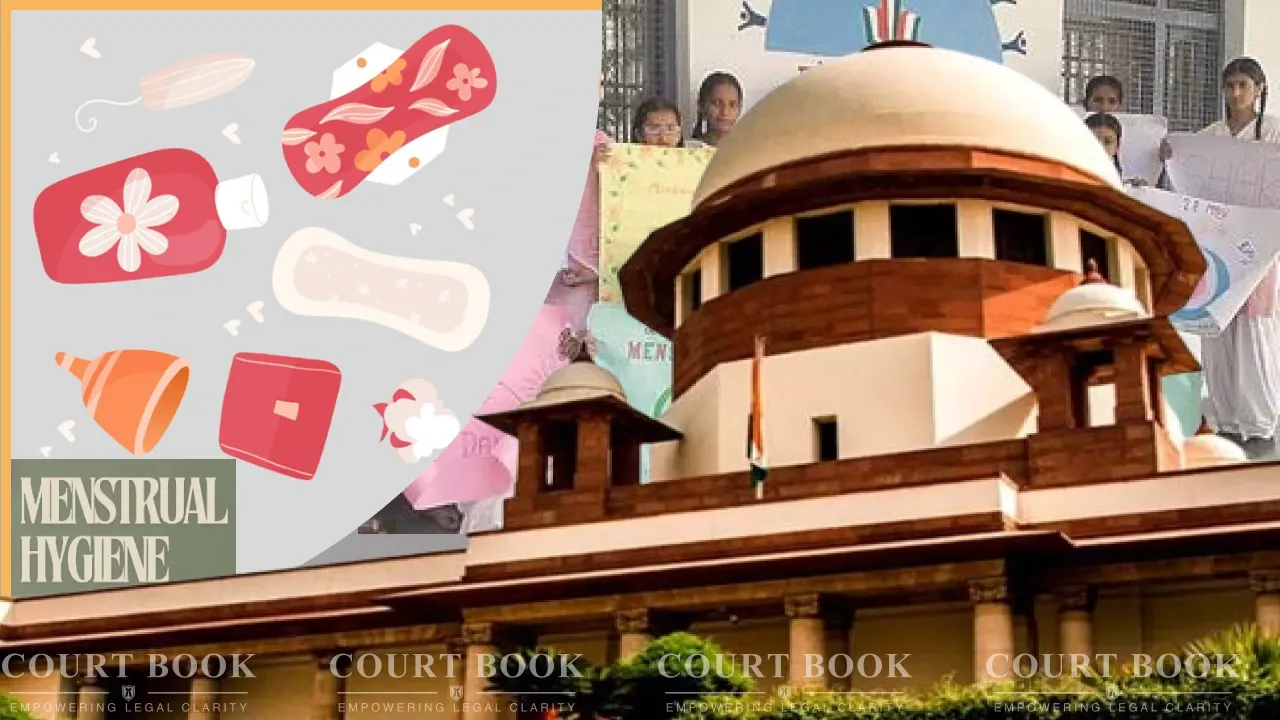
The Supreme Court has modified its earlier directions on sanitary napkins supplied to girl students in schools, replacing the requirement of oxo-biodegradable napkins with biodegradable, biocompatible and compostable sanitary napkins meeting specified standards.
The order was passed in Jaya Thakur v. Government of India & Ors., Writ Petition (Civil) No. 1000 of 2022, while reviewing compliance with its earlier directions on menstrual hygiene facilities in schools.
Background
In its earlier judgment dated January 30, 2026, the Supreme Court had directed all States and Union Territories to ensure free availability of oxo-biodegradable sanitary napkins in government and private schools, in both urban and rural areas.
The direction required such napkins to comply with ASTM D-6954 standards and be made easily accessible to girl students, preferably through vending machines or designated distribution points.
During the subsequent compliance proceedings, the Indian Compostable Polymer Association pointed out concerns regarding oxo-biodegradable materials. The Court was informed that such materials may break down into microplastics and nanoplastics under certain disposal conditions.
The Union Government also requested the Court to consider biodegradable sanitary napkins as an alternative.
After considering the material placed before it, the Court distinguished between compostable, biodegradable and oxo-biodegradable materials. It noted that biodegradable and compostable napkins made from materials such as bamboo, jute, banana, starch and corn could provide a more sustainable approach to menstrual waste management.
The Court accordingly modified its earlier direction.
It ordered that the reference to
“oxo-biodegradable sanitary napkins manufactured in compliance with the ASTM D-6954 standards” would now be read as requiring “biodegradable, biocompatible and compostable sanitary napkins in compliance with ISO 17088 read with IS 5405 standards.”
The responsibility for ensuring that such products are safe and effective was placed on the State and Union Territory governments.
The Court also encouraged States and UTs to gradually move towards other scientifically validated menstrual absorbents, including reusable sanitary napkins, cloth-based products, menstrual cups and period panties.
The Bench also expressed concern over the manner in which several States and UTs had reported compliance. It found discrepancies between claims of complete coverage and the actual figures submitted regarding toilets, sanitary napkin availability and disposal systems.
The Court observed:
“It is one thing to say that policy exists, it is another thing that it is reaching the beneficiaries.”
The Court directed District Education Officers to form teams of teachers and conduct surprise inspections of schools to obtain information regarding compliance with the earlier directions. Future reports must identify the actual gaps, their causes and the time required to bridge them.
The Supreme Court disposed of the interim application in the above terms and directed that the matter be listed again on September 29, 2026.
Case Details:
Case Title: Jaya Thakur v. Government of India & Ors.
Case Number: Writ Petition (Civil) No. 1000 of 2022
Judge: Justice J.B. Pardiwala and Justice R. Mahadevan
Decision Date: September 1, 2026