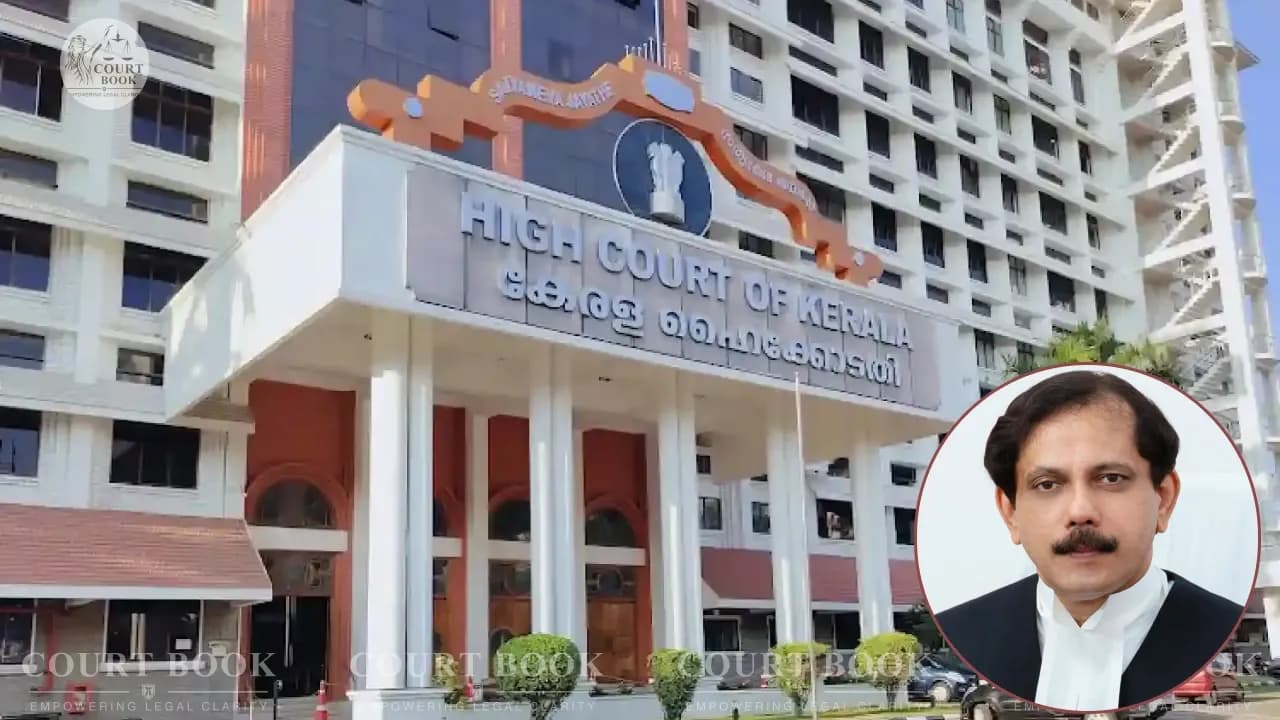
The Kerala High Court has held that an alleged failure to conduct an inquiry into a decree-holder’s mental capacity cannot be used to reopen a decree that has attained finality through earlier rounds of litigation.
Justice C.S. Dias dismissed a civil revision petition filed by James V. Kurian, Susan James and Jincy, holding that the objection could not be revived at the execution stage under Section 47 of the Code of Civil Procedure (CPC).
Background
The dispute arose from a suit instituted in 2017 seeking a declaration of title, a mandatory injunction and other consequential reliefs. The suit was decreed in favour of the plaintiffs, including V.K. Sam, who subsequently died.
The judgment debtors had contended in their written statement that Sam was of unsound mind and that no inquiry had been conducted under Order XXXII Rule 15 CPC to determine his mental capacity. They argued that the omission affected the maintainability of the suit.
According to them, the issue remained unaddressed during the earlier proceedings before the trial court, appellate court, High Court and Supreme Court. After their special leave petition was dismissed, they approached the execution court, claiming that the decree was a nullity. The execution court rejected their application, prompting the present revision petition.
The High Court examined whether Section 47 CPC permitted the judgment debtors to raise the objection again during execution proceedings.
Explaining the scope of the provision, the Court observed:
“The language of Section 47, read in the light of the above decision, makes it clear that an alleged irregularity in conducting an enquiry under Order XXXII Rule 15 does not fall within the purview of Section 47. Sub-section (3) of Section 47 is to enable the Court to decide whether a person is or is not the representative of a party, when the status is in dispute.”
The Court noted that the petitioners were not claiming to be representatives of the deceased decree-holder. Their objection concerned the alleged absence of an inquiry into his mental capacity, an issue that had already been raised during the earlier litigation.
Justice Dias held that the findings in the earlier proceedings operated as res judicata, a legal principle that prevents parties from reopening an issue already conclusively decided between them.
The Court also referred to the Supreme Court’s decisions in Periyammal (Dead) Through LRs v. V. Rajamani and Rahul S. Shah v. Jinendra Kumar Gandhi, which emphasise that execution proceedings cannot be used to revive concluded disputes or issues that could have been raised during the original proceedings.
The Court further observed that the suit had been decreed in Sam’s favour and that there was no basis to conclude that the next friend had acted against his interests.
It added:
“In any event, the Execution Court is not the forum to decide the question after the decree has attained finality.”
Finding no illegality, impropriety or irregularity in the execution court’s order, the Kerala High Court dismissed the civil revision petition as devoid of merit and directed the Registry to forward a copy of the order to the execution court.