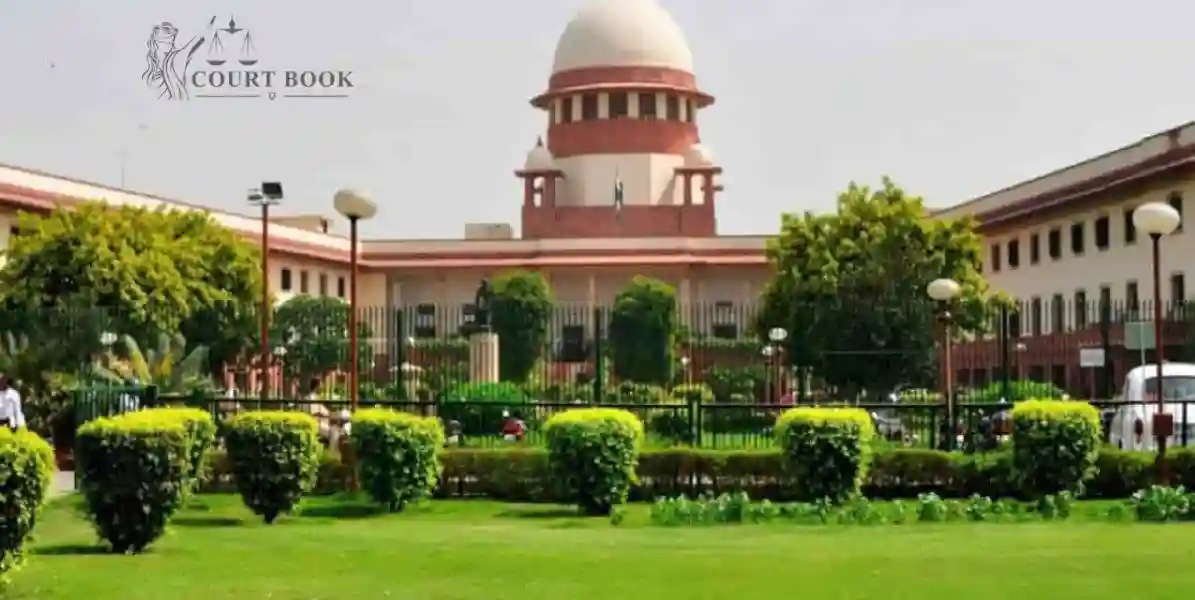
The Supreme Court has settled an important procedural question concerning appeals arising from a suit and a counterclaim decided through a common judgment. The Court held that a party can challenge both in a single composite appeal, even where separate decrees have been drawn up.
A Bench of Justice J.B. Pardiwala and Justice K. Vinod Chandran delivered the judgment on August 11, 2026, in Basudev & Ors. v. Sanjay Kumar & Ors., arising from SLP (C) No. 4338 of 2025.
Background Of The Case
The dispute arose from a suit in which the plaintiffs claimed a half share in property and sought an injunction against interference. The defendants, in response, raised a counterclaim asserting ownership over the entire property.
The Trial Court allowed the suit claim and rejected the counterclaim. The defendants then filed a single appeal. In that appeal, the suit was dismissed while the counterclaim was allowed.
However, the High Court held that the single appeal was not maintainable and relied upon an earlier Division Bench ruling which took the view that separate appeals were required.
Supreme Court Examines Conflicting Views
The Supreme Court noted that different High Courts had taken conflicting approaches on whether two appeals were mandatory when a suit and counterclaim were decided by one common judgment.
The Bench examined provisions of the Code of Civil Procedure, particularly Order VIII Rules 6A to 6D. It observed that a counterclaim is treated as a cross-suit, but the statutory scheme also provides for both the original claim and counterclaim to be adjudicated in a common proceeding.
The Court further noted that the requirement of filing two appeals could create unnecessary procedural complications, particularly when the appeal provisions permit a judgment to accompany the memorandum of appeal.
Court's Observation
The Bench emphasised that procedural rules should assist the administration of justice rather than obstruct it.
Referring to the principle that
“procedure is meant to subserve and not rule the cause of justice,” the Court held that there was no provision in the CPC which either expressly required two appeals or prohibited a composite appeal in such circumstances.
The Court clarified that where a suit and counterclaim are decided through a single common judgment, they can be challenged through one composite appeal. However, the appellant must separately state the grounds challenging the decree concerning the suit and those concerning the counterclaim. The appeal must also be valued as two appeals and the applicable court fees must be paid accordingly.
Decision
The Supreme Court restored the first appeal and set aside the orders of the High Court and the First Appellate Court. It permitted the appellant to file a fresh memorandum containing separate grounds and to pay the court fee for the additional appeal.
The Court directed that the appeal be considered on merits along with the other appeal. It clarified that although another appeal was directed to be filed in the present case because one appeal had already been instituted, henceforth a challenge to a common judgment deciding a suit and counterclaim may be made through a composite appeal.
The appeal was accordingly allowed.
Case Details:
Case Title: Basudev & Ors. v. Sanjay Kumar & Ors.
Case Number: Civil Appeal arising out of SLP (C) No. 4338 of 2025
Judges: Justice J.B. Pardiwala and Justice K. Vinod Chandran
Decision Date: August 11, 2026