
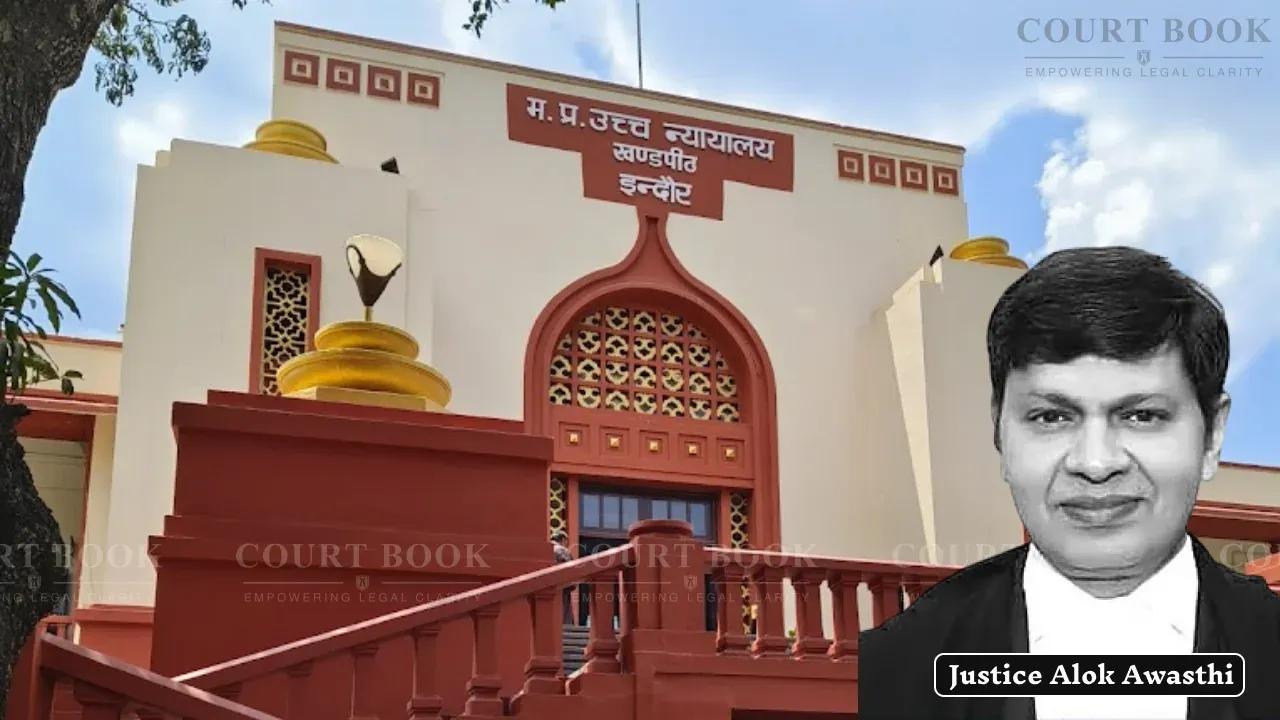
The Madhya Pradesh High Court at Indore has restored the conviction of a husband for cruelty and dowry demand, holding that the absence of a pre-marriage agreement fixing the amount of dowry cannot, by itself, defeat a prosecution based on subsequent demands.
Justice Alok Awasthi delivered the judgment on October 13, 2026, in Criminal Appeal No. 3639 of 2019. The Court partly allowed the appeal and reinstated the one-year rigorous imprisonment sentence imposed by the trial court, along with a fine of ₹1,000 under each of the two provisions.
The prosecution alleged that the woman’s matrimonial family expected ₹25 lakh but received only ₹17 lakh at the time of marriage. According to the complaint, she was subsequently harassed for the remaining ₹8 lakh and subjected to physical and mental cruelty.
In 2017, the trial court convicted the accused under Section 498-A of the Indian Penal Code (IPC), which deals with cruelty by a husband or his relatives, and Section 4 of the Dowry Prohibition Act, which penalises dowry demands.


However, in March 2019, the Sessions Court acquitted the accused on appeal, citing discrepancies in the evidence and concerns about the prosecution’s account of the alleged dowry demand. The woman challenged that decision before the High Court.
Justice Awasthi found that the appellate court had failed to properly assess the evidence supporting the alleged repeated demands. The woman’s testimony was supported in material particulars by statements from her mother, brother, father and her father’s friend.
The Court emphasised that a formal agreement specifying dowry before marriage is not a legal prerequisite for establishing a subsequent demand connected with the marriage.
The judgment observed:
“The prosecution was not required to establish that a particular amount had formally fixed as dowry before the marriage. A subsequent demand connected with the marriage can attract the provision.”
The High Court also rejected the appellate court’s inference that the wife had left her matrimonial home voluntarily merely because she was seen leaving her Pune residence with luggage. Justice Alok Awasthi observed that her departure did not, by itself, disprove the allegations of earlier harassment. The Court held:
“If a person packs up and leaves his/her home after a quarrel, it does not mean he/she was not already being bullied or harassed before that quarrel.”
The Court explained that Section 498-A IPC recognises harassment intended to force a woman or her relatives to meet an unlawful demand as a separate category of cruelty. In such a case, the prosecution need not additionally establish conduct likely to drive the woman to suicide.
The Court further held that minor discrepancies in witness statements, particularly concerning events several years earlier, should not automatically undermine otherwise credible evidence.
The High Court set aside the Sessions Court’s judgment to the relevant extent and affirmed the surviving accused’s conviction under Section 498-A IPC and Section 4 of the Dowry Prohibition Act. It restored the sentence of one year’s rigorous imprisonment and a fine of ₹1,000 under each provision.
The acquittals under Sections 406 and 506 Part II IPC remained undisturbed. The appeal abated against the other accused following his death on March 19, 2024. The surviving accused was directed to surrender before the trial court within seven days to serve the remaining sentence.