

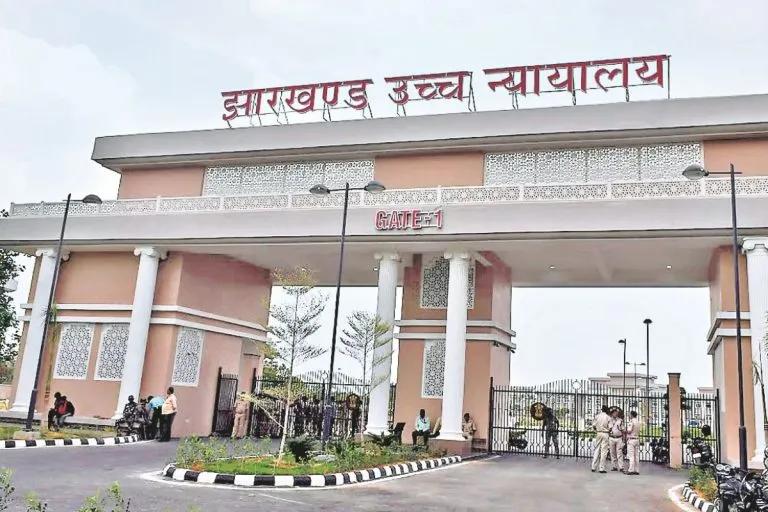
The Jharkhand High Court has dismissed appeals against a trial court order convicting men in a gang rape case. It held that the woman’s testimony was “absolutely reliable and trustworthy” and was backed by medical findings. A Division Bench of Justice Ananda Sen and Justice Pradeep Kumar Srivastava found that the three-day gap in filing the FIR, her initial inability to name the accused, and the absence of sperm in the medical report did not weaken her account.
Background
According to the prosecution, the woman was travelling from her matrimonial home to her parental home on 5 November 2013. Near the Lapit Chhencha forest at around 3 pm, four men from village Jerka allegedly caught her, took her to a drain in the forest and raped her one after another. They reportedly fled when people cutting firewood nearby heard her screams.
A village panchayat was called the next morning, but the accused did not attend. The woman’s written report was lodged on 8 November 2013 at Patamda Police Station. In August 2018, the Additional Sessions Judge-X-cum-FTC, Jamshedpur, convicted the four men under Section 376D of the IPC. The judgment links this provision to Section 70 of the Bharatiya Nyaya Sanhita.
The appellants argued that nothing tied them to the incident and that the witnesses contradicted one another. They pointed out that the medical report found no spermatozoa and no injury to the private parts. The woman’s clothes were never sent for forensic testing, the accused were not medically examined, and no test identification parade was held. They also stressed that one witness turned hostile and claimed they were falsely implicated. Alternatively, they asked for a lighter sentence. The State defended the trial court’s findings.


The Bench relied on the Supreme Court’s ruling in Krishan Kumar Malik v. State of Haryana, which says a victim’s sole testimony can support a conviction if it inspires confidence. It found the woman’s account reliable and consistent across her court testimony, her statement before the magistrate and the written report.
On the medical evidence, the court noted that the examination took place about 72 hours after the incident. It said:
“It further appears that the prosecutrix is a widow lady aged about 50 years and there was a gap of 72 hours in between the incident of rape and medical examination, hence, non-detection of sperm is natural phenomena. However, the presence of marks of violence on other parts of her body especially the breast, lower back are very important corroborative piece of evidence to establish the occurrence of rape.”
The court also rejected the objection that she could not name the accused correctly, saying:
“It further transpires that the prosecutrix could not have identified all the accused persons by their names but behind the dock, she has identified them by their faces, who were involved in commission of gang rape with her, so only due to fact that she could not identify the accused persons by their names, her evidence cannot be doubted.”
The defence claim of a false case was also turned down. The Bench noted that two witnesses stated the man alleged to be involved with her was her full-blood brother. It added that no evidence supported the “village politics” theory.
Concluding the matter, the Bench held:
“In view of the aforesaid discussion and reasons, we find that learned trial court has committed no error of law in convicting the appellants for the offence under section 376(D) of IPC, which is, hereby, upheld and confirmed. We do not find any merits in these appeals, which stands dismissed.”
Hemento Singh alias Hemant Singh alias Hato Singh remains in custody. The other three appellants, Ramnath Singh alias Munda Singh, Vibhishan Singh alias Pnchu Singh and Fagu Hansda alias Sufal Hansda, were on bail.
The court cancelled their bail bonds and directed them to surrender before the trial court within two months.