

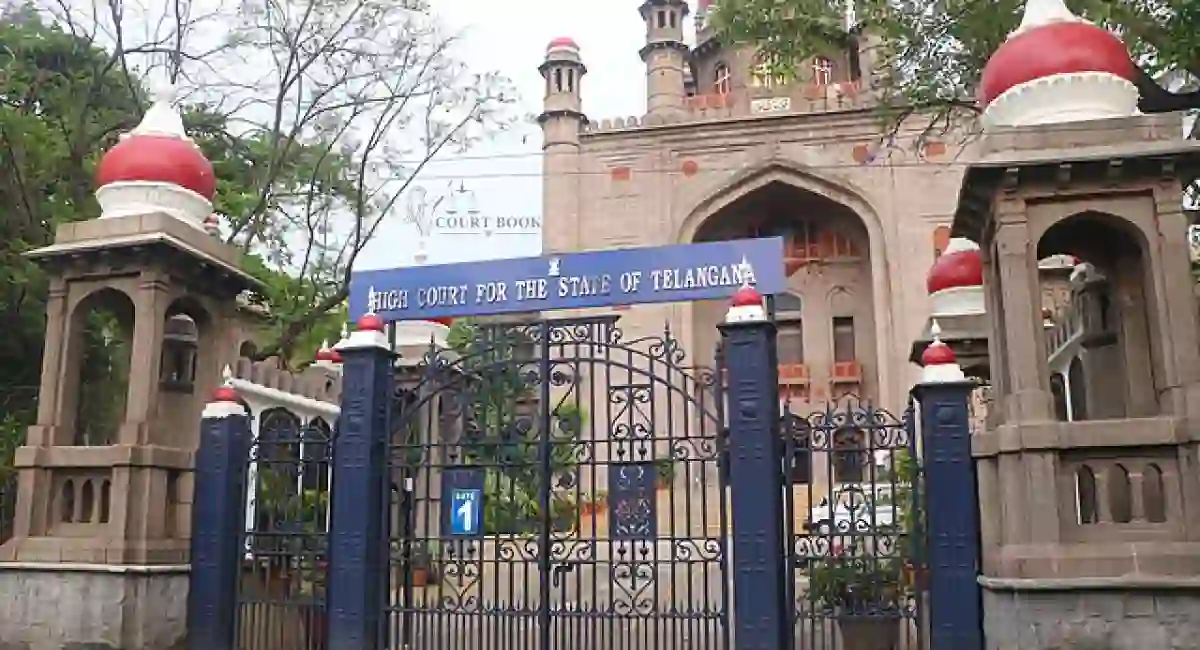
The Telangana High Court has held that when police investigate an accidental or suspicious death under Section 174 of the Code of Criminal Procedure (CrPC), any final report concluding the investigation must be placed before the jurisdictional Judicial Magistrate First Class, and not an Executive Magistrate.
Justice Suddala Chalapathi Rao, while dealing with a plea concerning the death of R. Laxman after he fell into a water-pipeline ditch, also held that the affected complainant should be duly informed before such a final report is filed.
Background of the Case
R. Jaya Laxmi approached the High Court after her husband, R. Laxman, died on May 18, 2014. According to the petition, he had gone out to purchase medicines and fell into a ditch dug for laying a water pipeline on the main road at Yapral.
The police registered Crime No.445 of 2014 under Section 174 CrPC and investigated the incident. A post-mortem examination found that Laxman died from head injuries. The police concluded that the death was accidental and that the investigation had not disclosed foul play.
The petitioner, however, alleged that the ditch had been left without adequate safety precautions and sought reinvestigation and action against those responsible.
Court’s Observation
The High Court examined the scope of Section 174 CrPC, which deals with police inquiries into deaths caused by accidents, suicide, or other suspicious circumstances.
The Court noted that such an inquiry has a limited purpose - mainly to determine the apparent cause and circumstances of death. However, it made an important distinction regarding what happens after the investigation is completed.
“Section 174 of Cr.P.C. does not envisage the filing of a final report before the Executive Magistrate,” the Court observed.
Referring to Section 173(2) CrPC, the Court held that where the investigation does not disclose a cognizable offence, the final report has to be submitted before the jurisdictional Judicial Magistrate First Class.
It further held that the police should have given notice to the complainant before filing the report. Filing the report before the Executive Magistrate was therefore held to be “per se untenable” and a violation of the affected person’s statutory right.
Decision
Despite finding the procedure followed by the police to be legally improper, the High Court declined to order reinvestigation. The Court noted that the incident had occurred in 2014 and the writ petition had remained pending for several years.
“Such a request cannot be entertained at this length of time,” the Court held, closing the writ petition.
The Court directed that, henceforth, even investigations conducted under Section 174 CrPC, now corresponding to Section 194 of the Bharatiya Nagarik Suraksha Sanhita, 2023, must result in the final report being filed before the jurisdictional Judicial Magistrate First Class under the applicable provision.
Case Details
Case Title: R. Jaya Laxmi v. The State of Telangana & Ors.
Case Number: Writ Petition No. 5775 of 2015
Judge: Justice Suddala Chalapathi Rao
Decision Date: July 29, 2026


