

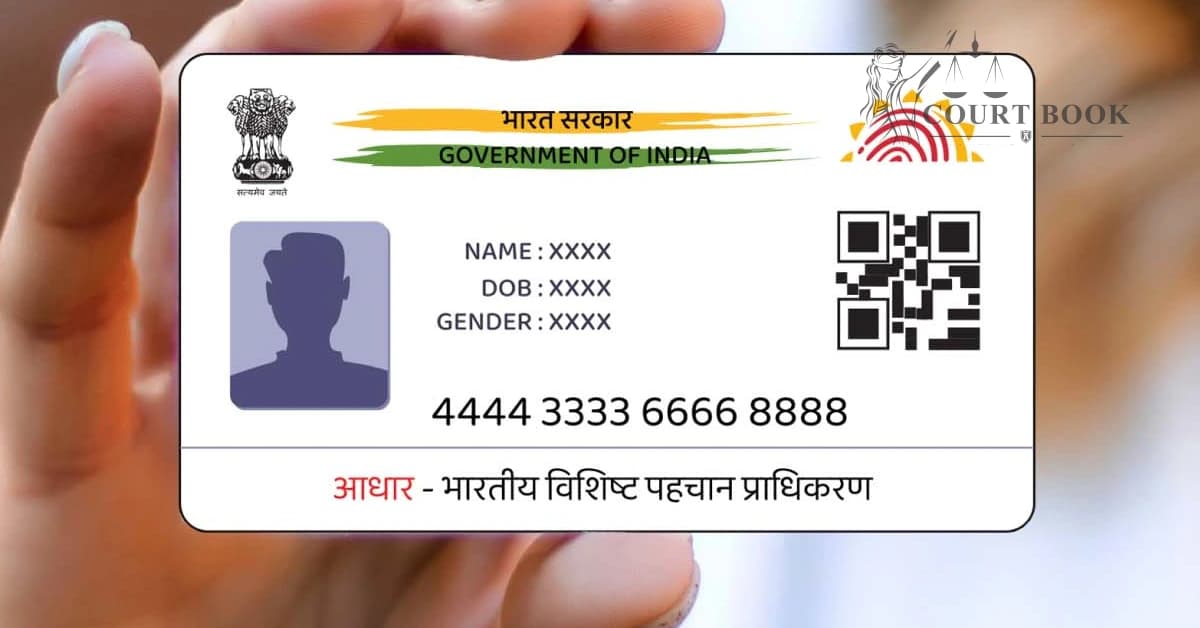
The Madhya Pradesh High Court has held that the age recorded in a postmortem report can be a more reliable basis than an Aadhaar Card for determining a deceased person's age in a motor accident compensation case, depending on the circumstances.
Justice Amit Seth observed that Aadhaar is primarily an identity document and cannot, by itself, be treated as conclusive proof of age. The Court relied on the medical assessment recorded in the postmortem report, which mentioned the deceased minor's age as 13 years.
The Court also modified the compensation awarded to the deceased child's parents, enhancing it from ₹5.45 lakh to ₹8.25 lakh.
Background
The matter arose from a motor vehicle accident that occurred on December 24, 2019, resulting in the death of minor Harendra Singh Baghel. The Motor Accident Claims Tribunal, Bhind, had awarded ₹5,45,000 with 6% annual interest to his parents.


The parents challenged the award, seeking higher compensation. The Insurance Company also filed cross-objections, questioning the deceased's age and the multiplier of 18 used by the Tribunal.
The Insurance Company argued that the Aadhaar Card showed the deceased's age as 14 years, 7 months and 9 days, whereas the postmortem report recorded his age as 13 years.
Justice Seth accepted the medical assessment in the circumstances of the case and observed:
"An Aadhaar Card is primarily an identity document and cannot, by itself, be treated as conclusive proof of the age of its holder. On the other hand, the age recorded in the postmortem report is based upon medical assessment conducted in the course of postmortem examination."
The Court accordingly determined the deceased's age as 13 years.
The Court also examined whether the multiplier should be 15 or 18. Referring to the Supreme Court's decision in Divya v. The National Insurance Company Limited, it held that a multiplier of 15 was applicable to a deceased person below 15 years of age.
The Court observed:
"In view of the aforesaid legal position, this Court is of the considered opinion that, having regard to the age of the deceased, which was below 15 years at the time of the accident, the appropriate multiplier to be applied in the present case is 15 and not 18, as applied by the learned Claims Tribunal."
Taking monthly notional income as ₹7,950 and deducting 50% towards personal expenses, the Court calculated the compensation at ₹7,15,500 towards loss of dependency. It additionally awarded ₹80,000 towards parental consortium, ₹15,000 for funeral expenses and ₹15,000 for loss of estate.
The total compensation was enhanced to ₹8,25,500, with an additional ₹2,80,500 payable to the parents. The enhanced amount will carry 6% annual interest from the date of filing the claim petition.
The appeal was partly allowed, and the Insurance Company's cross-objections were also allowed concerning the deceased's age and the applicable multiplier.
Case Details
Case Title: Rajesh Singh and Anr. v. Rahul Singh and Others
Case Number: Misc. Appeal No. 6071 of 2022
Judge: Justice Amit Seth
Decision Date: 3 November 2026



