

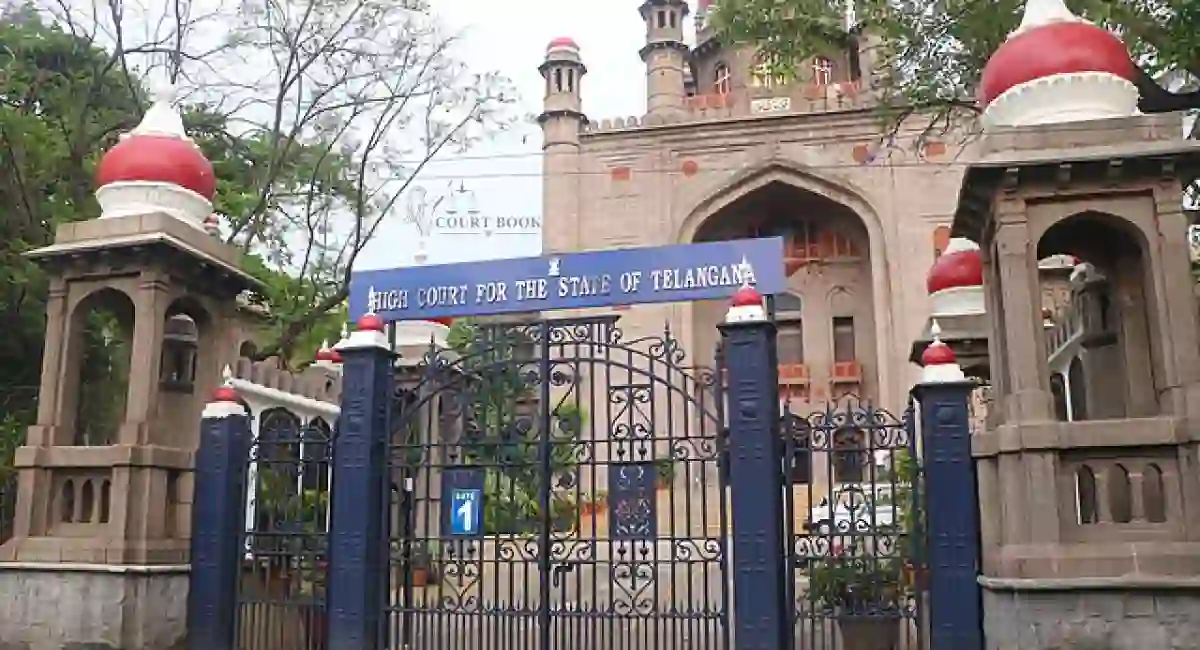
The Telangana High Court has set aside an order directing IPS officer trainee M. Uday Krishna Reddy to undergo a potency test during an ongoing criminal investigation, holding that such a medical examination cannot be ordered routinely without showing its relevance to the allegations under investigation.
Justice J. Sreenivas Rao passed the order on September 9, 2026, in Criminal Petition No. 13846 of 2026. The Court was examining a challenge to the August 17 order of the trial court permitting the investigating officer to take Reddy to a government hospital for a medico-legal potency examination.
Background
The proceedings arose from Crime No. 824 of 2026 registered at Attapur Police Station, Hyderabad, following a complaint lodged on July 18, 2026. The case initially involved several provisions of the Bharatiya Nyaya Sanhita (BNS) and the Information Technology Act. During the investigation, additional provisions, including Section 64(1) read with Section 63(b)(iii) and Section 109 of the BNS, were added.
The prosecution had earlier sought police custody of Reddy for, among other purposes, conducting a potency test. On August 5, the trial court declined that part of the request because the prosecution had not explained why the test was required or how it would assist the investigation. It subsequently filed another application seeking permission for the medical examination.
The High Court noted that the prosecution's case specifically concerned an allegation of digital penetration. The later application, however, did not provide specific reasons explaining the relevance of the potency test to that allegation or identify any changed circumstances after the earlier order.
The High Court considered earlier decisions concerning potency and other scientific examinations. It noted that such examinations must be connected to the facts of the particular case and cannot be ordered merely as a routine investigative step.
The Court stated:
“The common principle emerging from Kajendran (supra), R. Rajendran (supra), and Archana Patil (supra), is that medical or scientific examinations of an accused, including potency and DNA tests, cannot be ordered routinely or mechanically. Such examinations must be based on the facts and circumstances of the particular case and satisfy the requirements of relevance, necessity and proportionality, while safeguarding the accused’s privacy, bodily autonomy, personal liberty and dignity under Article 21 of the Constitution. In particular, potency testing is not a mandatory requirement in sexual-offence cases and cannot be insisted upon merely because an allegation or defence relating to potency has been raised.”
The Court also clarified that there was no dispute in the case about whether digital penetration could fall within the legal meaning of rape or whether the law permits a potency examination in an appropriate case. The issue was whether the prosecution had established a sufficient connection between this particular test and the allegation under investigation.
The High Court found that the prosecution had not supplied specific reasons showing why the potency test was necessary or relevant, despite having earlier sought the same relief and being refused for want of such reasons.
Justice J. Sreenivas Rao held that the trial court's reliance on the seriousness of the allegations and the investigating agency's general power to collect evidence was insufficient in the circumstances. The August 17, 2026 order in Crl.M.P. No. 461 of 2026 was therefore set aside.
The criminal petition was allowed. The Court clarified that its order would not prevent the prosecution from filing an appropriate application in accordance with law if the necessity for such an examination arises.


