

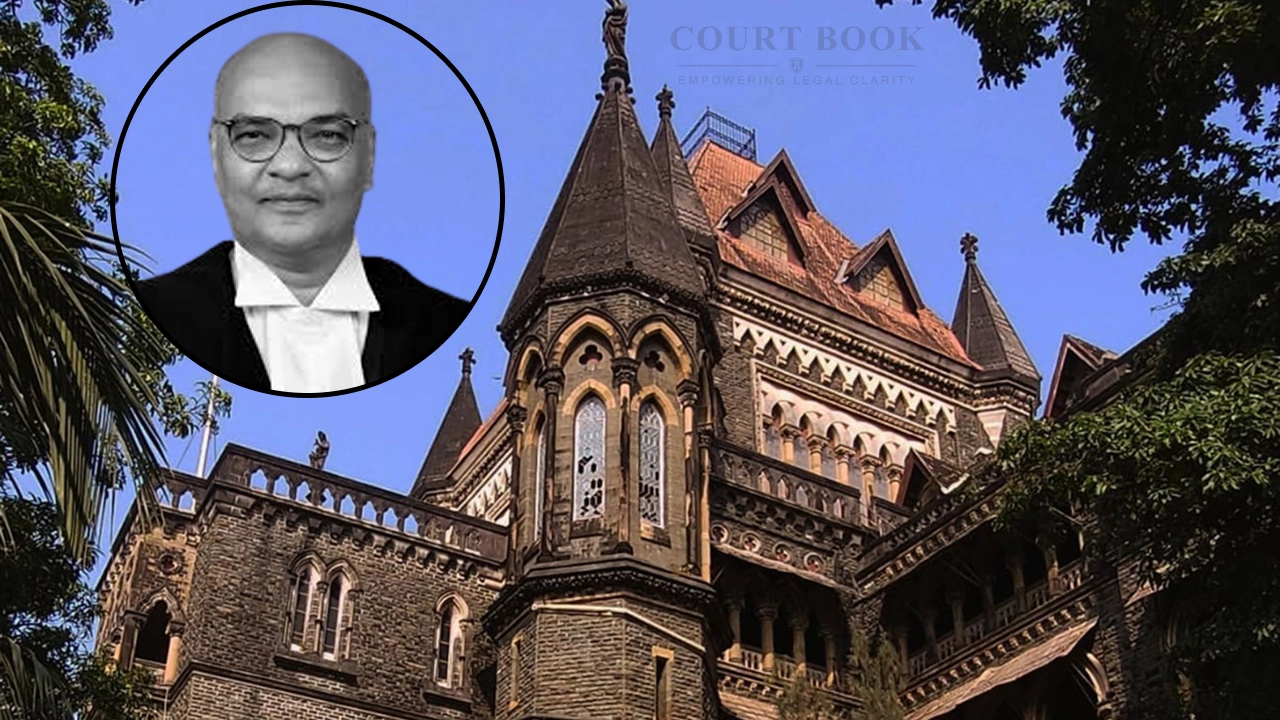
In a significant ruling on arbitration law, the Bombay High Court has held that arbitral awards passed through unilateral appointment of an arbitrator before 23 October 2015 do not automatically become void merely because one party appointed the arbitrator. Justice Jitendra Jain clarified that such appointments remain legally valid where the arbitration agreement itself authorised the appointment or named the arbitrator. The Court, however, distinguished cases where an arbitrator was appointed without any contractual authority or the consent of the other party.
Background of the Case
The decision arose while hearing a batch of connected execution proceedings filed by Paisalo Digital Limited (formerly M/s. S.E. Investments Ltd.) against several judgment debtors, including Star Bazaar Private Limited, Hareram Cotton Industries, Maple Composite Containers Limited and Sezal Glass Limited. The central dispute concerned whether recent Supreme Court rulings on arbitrator independence could invalidate arbitral awards in proceedings that had commenced before the 2015 amendments to the Arbitration and Conciliation Act.
The Court framed two legal questions: whether unilateral appointment of an arbitrator before 23 October 2015 was without jurisdiction and whether an executing court could refuse to enforce such an award even if it had never been challenged earlier.
Court's Observations
Justice Jain undertook a detailed examination of the Arbitration and Conciliation Act, the 2015 amendments, the Law Commission's recommendations, and several Supreme Court decisions, including Bhadra International (India) Pvt. Ltd. v. Airports Authority of India, Dharma Prathishthanam v. Madhok Construction (P) Ltd., and BCCI v. Kochi Cricket Pvt. Ltd.
The Court observed that the 2015 amendment introducing Section 12(5) and the Fifth and Seventh Schedules fundamentally strengthened safeguards regarding arbitrator independence. However, these provisions were intended to apply prospectively to arbitral proceedings commenced on or after 23 October 2015 unless the parties agreed otherwise.
Referring to Supreme Court precedent, the bench noted that the relevant date for determining the applicability of the amendment is the date on which the notice invoking arbitration was received by the respondent. Where arbitration had already commenced before the amendment, the new disqualification provisions could not ordinarily be invoked. As the judgment states,
“Since the arbitral proceedings in the present case commenced prior to 23/10/2015... the Arbitration and Conciliation (Amendment) Act, 2015 would not apply.”
The Court further explained that not every unilateral appointment made before 2015 was legally defective. It drew a distinction between appointments expressly authorised by an arbitration agreement and appointments made without any contractual basis or the consent of the opposite party.
Decision
Answering the reference, Justice Jain held that unilateral appointments made before 23 October 2015 where the arbitration clause named the arbitrator, identified an appointing authority, or authorised one party to appoint an arbitrator were not without jurisdiction and did not render the resulting proceedings or awards void.
However, the Court clarified that where there was no contractual provision authorising such unilateral appointment and one party nevertheless appointed an arbitrator without the other party's consent, the appointment would be void. In such limited circumstances, an executing court could treat the arbitral award as void unless the challenge had already been adjudicated unsuccessfully.
The connected execution proceedings have been listed for further consideration on 15 September 2026.
Case Details
Case Title: Paisalo Digital Limited (formerly M/s. S. E. Investments Ltd.) v. Star Bazaar Private Limited and Connected Petitions
Case Number: Interim Application No. 2007 of 2026 in Commercial Execution Application No. 59 of 2016 and connected matters
Judge: Justice Jitendra Jain
Decision Date: 4 August 2026


