

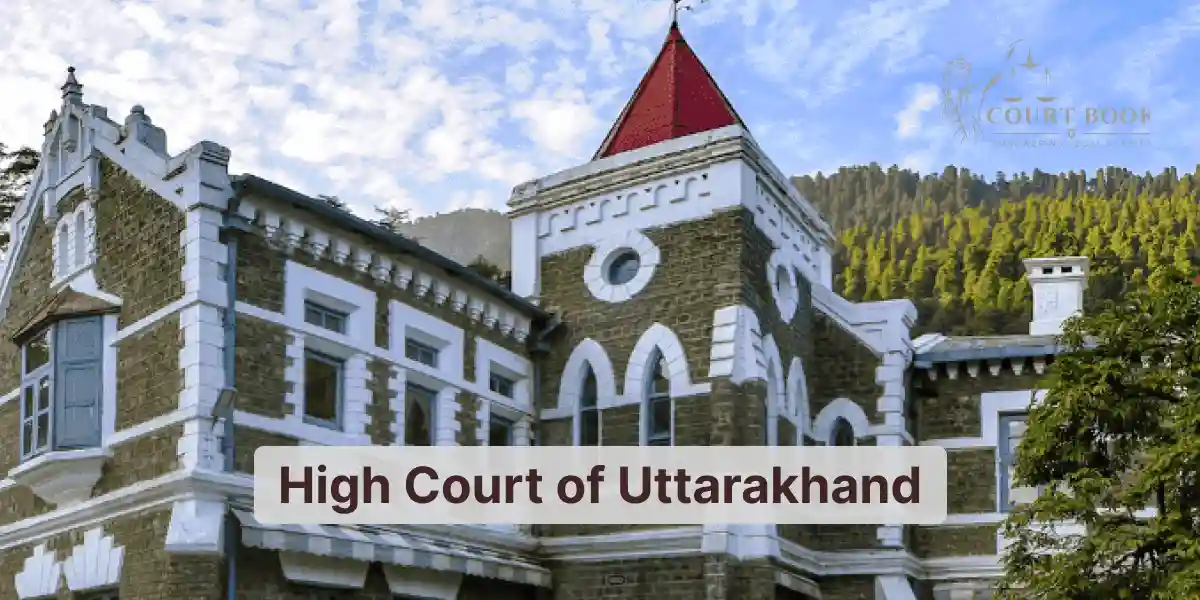
The Uttarakhand High Court has dismissed petitions filed by businessman Rakesh Mehra and his two daughters seeking to quash criminal proceedings arising from an alleged cheating case linked to long-standing business dealings with Divya Pharmacy and Patanjali Ayurveda Limited. The Court held that there was sufficient material collected during the investigation to allow the trial to continue and ruled that a proclaimed offender cannot invoke the High Court's inherent jurisdiction through a power of attorney holder.
Background of the Case
The dispute stems from an FIR registered on June 7, 2022, at Kankhal Police Station, Haridwar, alleging offences under Sections 420 and 506 of the Indian Penal Code. According to the prosecution, the dispute arose from commercial transactions between firms owned by Rakesh Mehra and Divya Pharmacy and Patanjali Ayurveda Limited.
Mehra argued that the matter was purely commercial in nature and should have been resolved through civil proceedings or arbitration. He also claimed that outstanding tax issues relating to non-supply of Form 'C' and business losses had led to the dispute.
His daughters, who were later charge-sheeted along with him, contended that they had no role in the business transactions and that money credited to their accounts was part of a family settlement.
Court's Observation
Justice Rakesh Thapliyal first examined whether Rakesh Mehra's petition, filed through his power of attorney holder, was maintainable.
The Court answered the question in the negative, observing:
"An accused person cannot execute a power of attorney in favour of a power of attorney holder to invoke the jurisdiction of the High Court under Section 482 Cr.P.C."
The Court noted that Mehra had not joined the investigation despite notices, had been declared a proclaimed offender, and a Look Out Circular had been issued against him. It also observed that he failed to appear before the trial court even after interim protection was granted.
Rejecting the explanation that he remained abroad due to security concerns, the bench said such apprehensions could not justify avoiding the judicial process.
Civil Dispute Argument Rejected
The petitioners argued that the case was essentially a commercial dispute arising out of business transactions and therefore criminal proceedings should not continue.
The High Court, however, found that the investigation had produced documentary evidence, including bank records, audit reports and a Chartered Accountant's report. It also noted allegations that substantial amounts were transferred to the accounts of Mehra's daughters after the FIR was registered.
The bench observed:
"If the complaint discloses a cognizable offence... civil and criminal liability co-exist and existence of one does not exclude the other."
The Court clarified that while exercising jurisdiction under Article 226 of the Constitution or Section 482 Cr.P.C., it could not conduct a detailed appreciation of evidence or examine its probative value, as those issues must be decided during trial.
Decision
Finding no ground to interfere with the charge-sheet or the criminal proceedings, the Uttarakhand High Court dismissed both petitions. It vacated all interim orders and directed the trial court to proceed with the case in accordance with law without being influenced by the observations made in the judgment.
Case Details
Case Title: Rakesh Mehra v. State of Uttarakhand & Others
Case Number: Criminal Misc. Application No. 135 of 2024 & Writ Petition (Criminal) No. 159 of 2023
Judge: Justice Rakesh Thapliyal
Decision Date: 17 June 2026


