

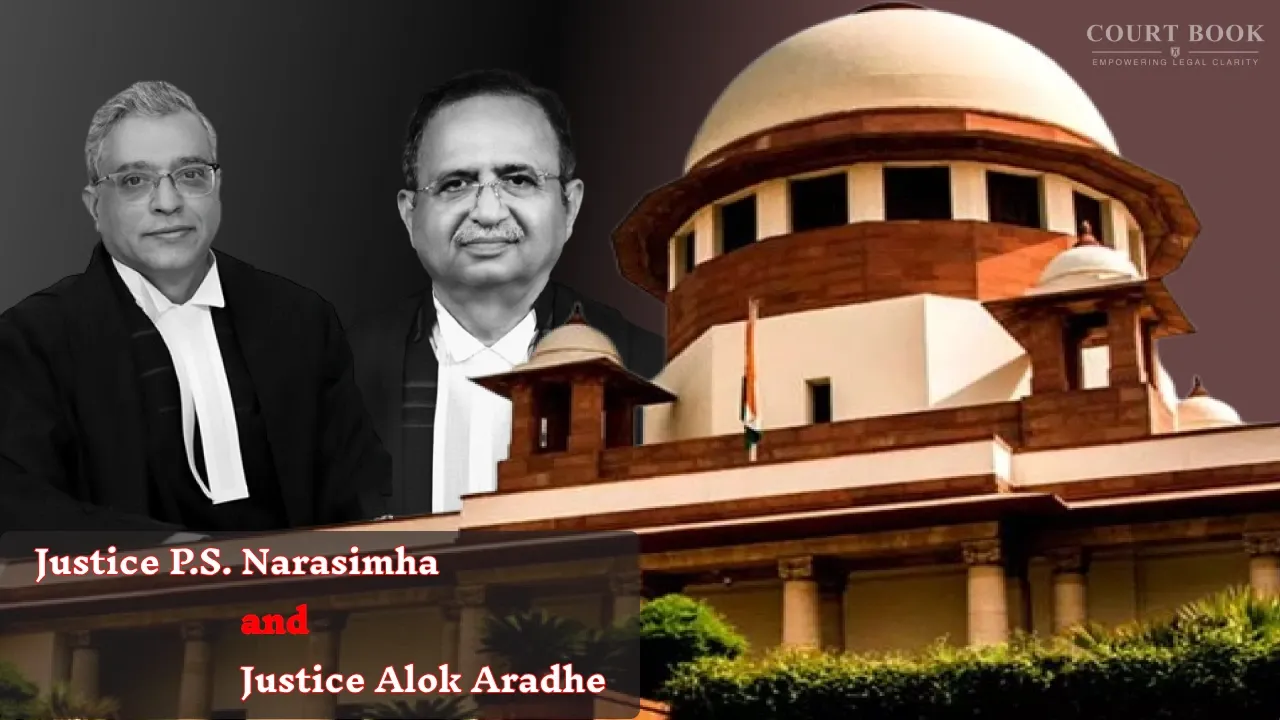
The Supreme Court has set aside a recovery order under which ₹84.17 lakh was deducted from amounts payable to a contractor under three ongoing road-construction contracts to recover an alleged overpayment relating to earlier works. The Court held that the contractual provisions relied upon by the State did not authorise such cross-contract recovery in the manner adopted.
A Bench comprising Justice P. Sri Narasimha and Justice Alok Aradhe delivered the judgment on September 30, 2026.
Background
M/s Awadhesh Singh Gautam, a partnership firm, had been awarded several works under the Pradhan Mantri Gram Sadak Yojana through the Chhattisgarh Rural Road Development Agency (CGRRDA).
The dispute arose from two earlier road contracts awarded in January 2023. A committee constituted after complaints regarding execution reported that the firm had received ₹3.55 crore, while the work actually executed was valued at about ₹1.54 crore. It consequently identified an alleged excess payment of ₹2.01 crore and recommended recovery.
Later, the Executive Engineer issued an order dated September 27, 2025, blocking ₹84,17,003 from amounts otherwise payable to the firm under three separate ongoing contracts. The firm challenged the deduction before the Chhattisgarh High Court, but its writ petitions were dismissed.
The matter then reached the Supreme Court.
The Supreme Court examined the contractual clauses relied upon by the State, including provisions concerning liquidated damages, termination, the Integrity Pact and technical examination.
The Court found that the clause concerning technical examination specifically required the contractor to be given an opportunity to explain its case before recovery. It also required recovery following a technical audit to have the approval of the Chief Executive Officer, CGRRDA.
The Bench noted that neither such an opportunity nor the required approval was shown to have been provided.
The Court observed:
"Clause 4.1 incorporates within itself, certain principles of natural justice. As already noticed, the recovery order was passed without notice, consent and sanction, and no other clause, nor any provision of law, permits the amount said to be due under the earlier works to be adjusted against sums payable under a separate and subsisting contract without the contractor's consent."
The Court also clarified that the alleged overpayment had not been finally adjudicated. Until established in accordance with law, the claim could not simply be treated as an ascertained debt and adjusted against money payable under separate contracts.
The Supreme Court held that none of the contractual provisions relied upon by the respondents authorised the deduction of the disputed amount from the three subsequent contracts in the manner adopted.
It therefore quashed and set aside the recovery order dated September 27, 2025.
The respondents were directed to release ₹84,17,003 to the appellant along with interest at 6% per annum from September 27, 2025, until actual payment.
The Court clarified that the judgment would not prevent the respondents from initiating appropriate proceedings in accordance with law for recovery of any amount ultimately found due in relation to the earlier works. It also made clear that its findings did not decide the pending criminal proceedings or the correctness and quantum of the alleged overpayment.
The appeals were accordingly allowed, with no order as to costs.


