

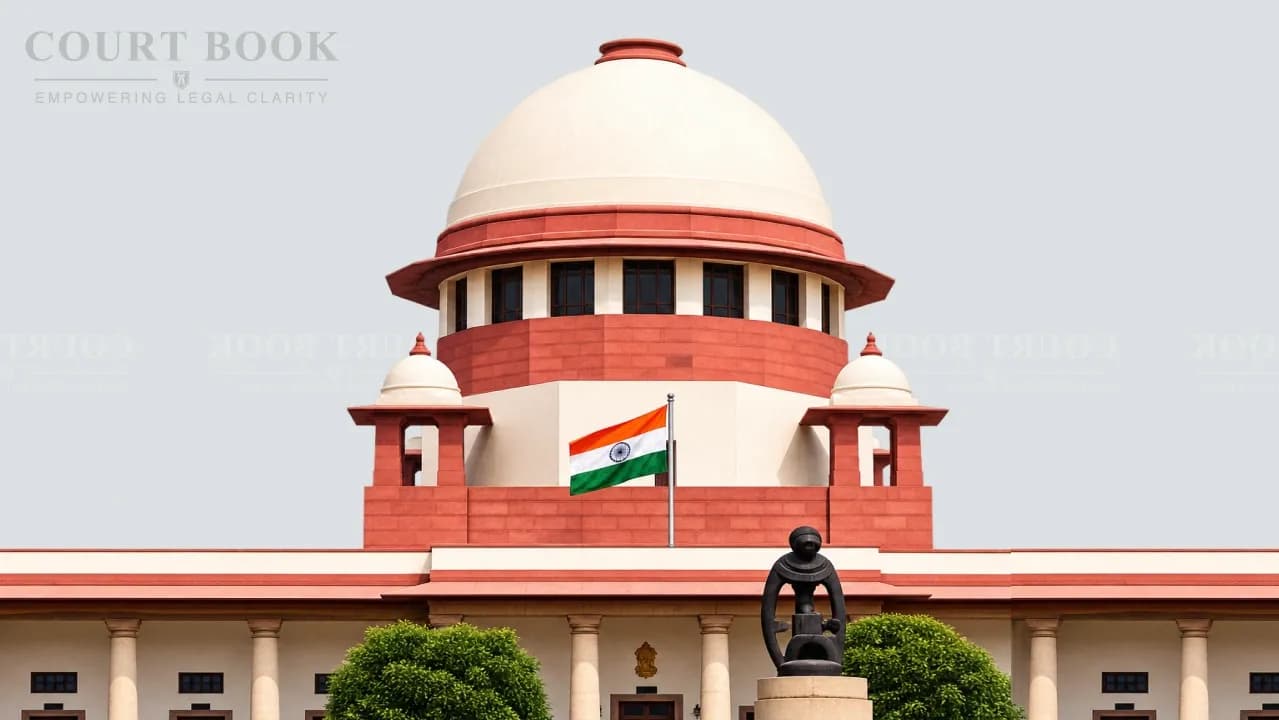
The Supreme Court of India has discharged Santhosh Kumar N.P. from criminal proceedings alleging rape, cheating and offences relating to a second marriage, holding that the allegations did not establish a prima facie case. A Bench of Justice B.V. Nagarathna and Justice R. Mahadevan allowed his appeals on October 30, 2026, setting aside the orders of the Kerala High Court and the trial court.
The Court emphasised that the end of a consensual adult relationship cannot, by itself, turn earlier sexual acts into criminal offences. It also clarified that allegations of deception must be assessed against the specific legal requirements of the offences invoked.
Background
The complainant had previously been married and later divorced. She alleged that the appellant presented himself as a bachelor and married her in a temple in Mysuru in 1996. They lived together until 2003, and she maintained that her consent to sexual relations was based on her belief that they were legally married.
The dispute arose after she allegedly learned that the appellant had an earlier marriage and two children. Criminal proceedings followed, invoking Sections 376, 420, 493, 494 and 495 of the Indian Penal Code. The trial court declined to discharge him, and the Kerala High Court upheld that decision, prompting him to approach the Supreme Court.


Explaining the distinction between consent allegedly obtained through deception from the outset and regret following the end of a relationship, the Court cautioned against treating the two situations as legally identical:
“There is thus a need to distinguish between an absence of consent in its entirety because of it having been built entirely on a mirage of deceit and falsehood at the outset on the one hand from the experiencing of regret over having consented to past sexual acts, owing to the later demise of the relationship. While the latter scenario is unfortunate, such hindsight on its own cannot constitute a consensual relationship as a crime and set the gears of the criminal justice system into motion in a manner that deprives the accused of his liberty and reputation.”
The Court further explained that ending a relationship does not, by itself, establish deceit or retrospectively change the legal character of earlier intimacy:
“In such a scenario, can it be said that the man had no right to withdraw from the relationship? Can such a decision be termed as deceit or fraud? Clearly not. In such cases, physical intimacy that occurred during the currency of a functioning relationship cannot be retrospectively branded as acts of rape merely because the relationship soured and no longer subsists.”
The Bench also made clear that its reasoning should not discourage genuine survivors from seeking justice. It acknowledged the seriousness of sexual violence while warning against using criminal proceedings as a means of retaliation after a relationship ends.
The judgment stated:
“Rape is an offence that strikes at the core of a woman’s bodily autonomy and dignity. It continues to be heavily underreported and victims are encouraged to choose silence so as to protect their and their family’s honour and reputation over seeking justice. For every case where the provisions related to rape are misused, there are several cases that never see the light of day. We must emphasise that genuine cases must be pursued with vigour where the facts clearly show sexual assault and violence. But equally, the justice system must not be turned into a tool of vengeance when relationships fail.”
Applying these principles to the case, the Court examined the available material concerning the alleged marriage, the complainant’s knowledge of the appellant’s earlier marriage and their continued cohabitation. It found that the essential ingredients of the alleged offences were not established on the record.
The Court also found insufficient material to support the cheating charge under Section 420 IPC, including the necessary element concerning inducement to deliver property or valuable security. It concluded that the material did not justify continuing the criminal proceedings under the invoked provisions.
The Supreme Court set aside the Kerala High Court’s orders, allowed the appellant’s discharge application and discharged him from the alleged offences.
The appeals were accordingly allowed.



