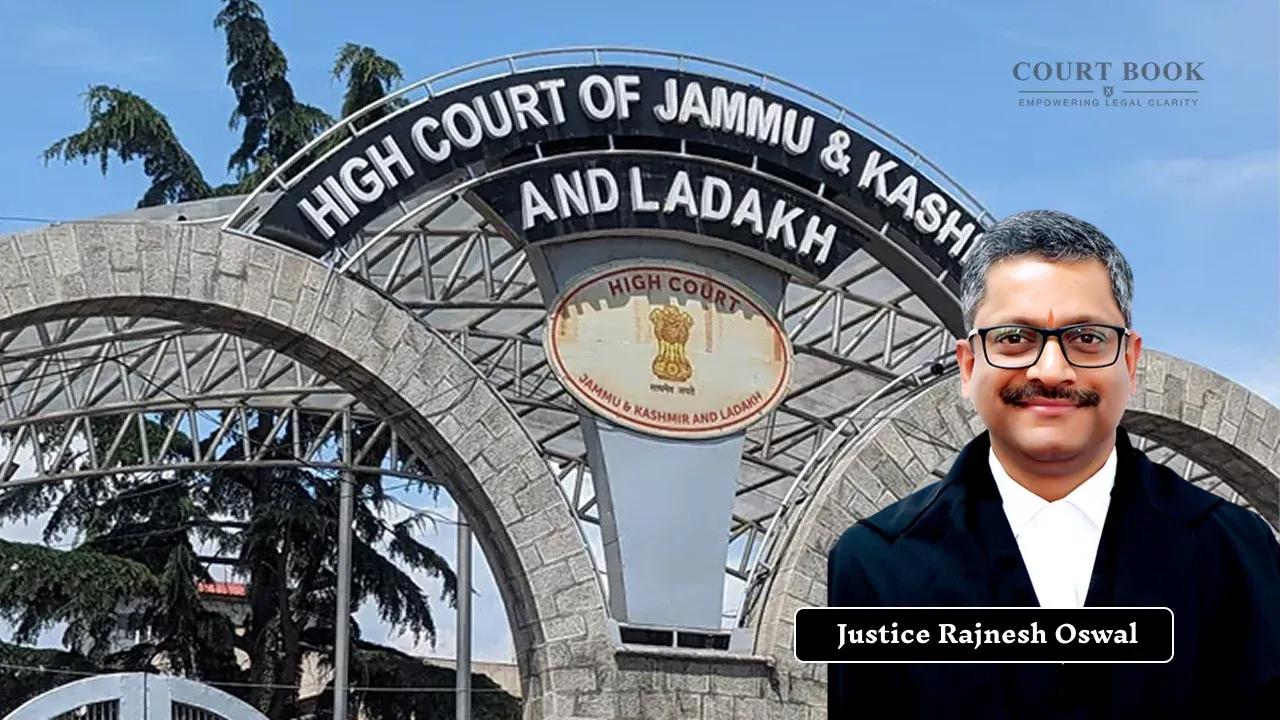
The Jammu & Kashmir and Ladakh High Court has clarified that police cannot compel a person to produce documents under Section 91 of the Code of Criminal Procedure (CrPC) while merely conducting preliminary verification of a complaint, without a formal investigation or inquiry under the Code.
Justice Rajnesh Oswal delivered the ruling while quashing criminal proceedings against Jaydeep Singh Jadeja, who had challenged a complaint filed by the Crime Branch and an order issued by the trial court.
Background
The case originated from a complaint by Mohd. Shafiq Sohil, who alleged that Jadeja, director of M/s Ashpura Road Lines, had duped him of ₹40 lakh in connection with a highway construction subcontract under the National Highway Development Project Phase-II.
During preliminary verification, the Crime Branch issued notices seeking documents and Jadeja’s appearance. The agency alleged that he failed to provide the required records and cooperate. A complaint under Section 175 IPC followed, and the trial court issued process against him on February 27, 2024.


Jadeja approached the High Court, arguing that Section 91 CrPC could not be invoked because no formal investigation or inquiry had begun.
The State’s counsel acknowledged that the Crime Branch was conducting only preliminary verification to determine whether an FIR should be registered. Justice Oswal held that Section 91 CrPC could not be used in these circumstances.
The Court explained that preliminary verification is meant to determine whether information discloses a cognizable offence, not to compel a proposed accused to submit documents to establish the truth of the allegations.
The judgment stated:
“Once it is conceded by the respondent that no investigation or inquiry under the Code of Criminal Procedure had been initiated, the authority could not have lawfully resorted to Section 91 CrPC.”
It further clarified:
“The object of a preliminary verification is strictly limited to ascertain whether the allegations disclose the commission of a cognizable offence. The preliminary verification cannot partake the character of investigation to ascertain veracity of the allegations and the enquiry officer cannot compel the proposed accused to share documents or information.”
The Court also found that the trial court had issued process mechanically. Since the demand for documents was legally impermissible at that stage, the resulting complaint under Section 175 IPC could not be sustained.
Allowing Jadeja’s petition, the High Court quashed the complaint pending before the trial court and its order dated February 27, 2024.
However, it preserved the Enquiry Officer’s liberty to proceed with the original complaint in accordance with law.
Case Details
- Case Title: Jaydeep Singh Jadeja v. UT of J&K
- Case Number: CRM(M) No. 1295/2025
- Judge: Justice Rajnesh Oswal
- Decision Date: September 26, 2026