

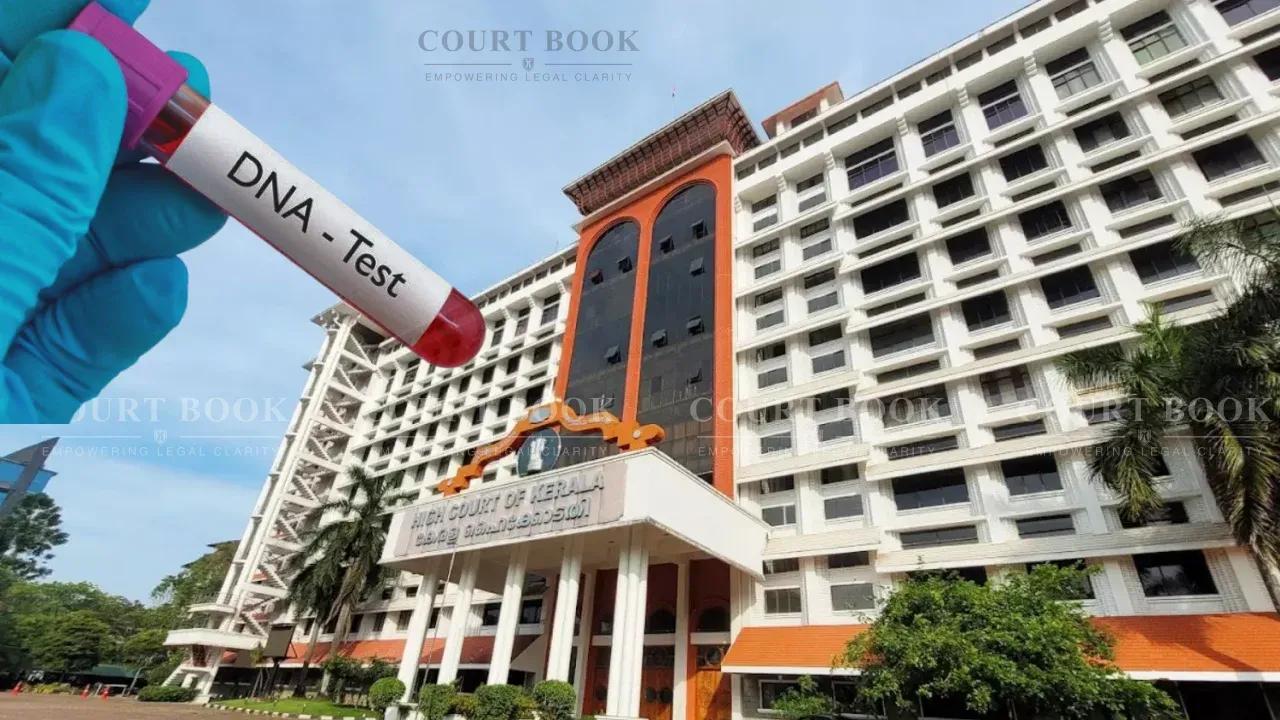
The Kerala High Court has held that a civil court cannot order a second DNA test merely because the opposing party would not be harmed by it. Justice Easwaran S. set aside a trial court order that had sent a paternity dispute for fresh testing. The court said a party unhappy with a scientific report must first show specific flaws in it.
Background
The dispute arises from O.S. No. 367/2013 before the Munsiff’s Court, Parappanangadi. The plaintiff seeks a declaration that he is not the biological father of defendants 2 and 3, born to the first defendant on 11.06.2012. He says allegations raised against him by the first defendant harmed his reputation.
In 2015, the trial court referred the parties for DNA profiling at the Rajiv Gandhi Centre for Biotechnology, Thiruvananthapuram, with the defendants’ agreement. Its 2016 report concluded that the plaintiff is not the biological father. The defendants then sought a fresh test at the Centre for DNA Fingerprinting and Diagnostics, Hyderabad. That request was dismissed in 2017, but in October 2024 the High Court sent the application back for reconsideration. After the expert was examined, the trial court found nothing to show the report was unacceptable. Even so, it allowed a fresh test because paternity was in question. The plaintiff challenged that order.
The High Court noted that the defendants had neither objected to the first reference nor applied to set aside the report. It also rejected their argument that the scientist, who holds a PhD in Botany, was unqualified. The court observed:


“Pertinently, neither Section 45 of the erstwhile Indian Evidence Act, 1872, nor Section 39 of the Bharatiya Sakshya Adhiniyam, 2023, requires an expert to hold a specific degree, such as a PhD in Forensic Science. Rather, anyone specially skilled in the relevant science and officially appointed at a premier national institute qualifies as a competent expert.”
On when a retest is justified, the court said:
“Moreover, to justify an order for retesting, the defendant must establish specific, verifiable defects in the original process; general appeals to fairness are insufficient. Credible evidence must indicate that the blood or buccal-swab samples were mixed up, improperly sealed, or left unguarded in transit to the laboratory.”
The court also found that the Supreme Court’s ruling in Aparna Ajinkya Firodia, which concerns Section 112 of the Evidence Act, did not help the defendants. Addressing the “no prejudice” argument, it held:
“The issue is whether the courts acted properly in ordering a second DNA test as a matter of course, merely because the person against whom the report was made found it unacceptable. Court proceedings are governed by procedural law. A party challenging the accuracy of a scientific report must establish that it is materially flawed. Without proof of such defects, the court cannot order a fresh examination of the same subject.”
The High Court allowed the original petition and set aside the trial court’s order dated 31.01.2026. It dismissed I.A. No. 31/2017 and made no order as to costs.



